
Choosing the wrong autopilot system means constant manual correction on long runs, fatigue on solo passages, and a helm you can’t step away from. After hands-on evaluation of leading units across different boat types and steering configurations, we narrowed the field to three systems that cover the most common setups: the Lowrance Outboard Autopilot System Cable Steer Single Engine, the Simrad AP48 Autopilot Control Head with its 4.1-inch display, and the Simrad NAC-1 Outboard Autopilot Hydraulic Pack MkII. Whether you’re rigging a cable-steer skiff or a hydraulic-steering center console, one of these will likely be your fit.
Quick Comparison
| # | Product | Key Features | Score | |
|---|---|---|---|---|
| 1 |
 Lowrance Outboard Autopilot System Cable Steer Single Engine
|
|
8.2 ★★★★☆ | Check Price on Amazon Read full review ↓ |
| 2 |
 Simrad AP48 Autopilot Control Head 4.1-Inch Display
|
|
8.2 ★★★★☆ | Check Price on Amazon Read full review ↓ |
| 3 |
 Simrad NAC-1 Outboard Autopilot Hydraulic Pack MkII
|
|
8.2 ★★★★☆ | Check Price on Amazon Read full review ↓ |
| 4 |
 Simrad AP44 VRF Medium Capacity Autopilot Pack
|
|
7.8 ★★★★☆ | Check Price on Amazon Read full review ↓ |
| 5 |
 Simrad AP44 VRF High-Capacity Autopilot Pack
|
|
7.5 ★★★★☆ | Check Price on Amazon Read full review ↓ |
| 6 |
 Simrad AP44 Rotary Pilot Control Unit 000-13289-001
|
|
7.5 ★★★★☆ | Check Price on Amazon Read full review ↓ |
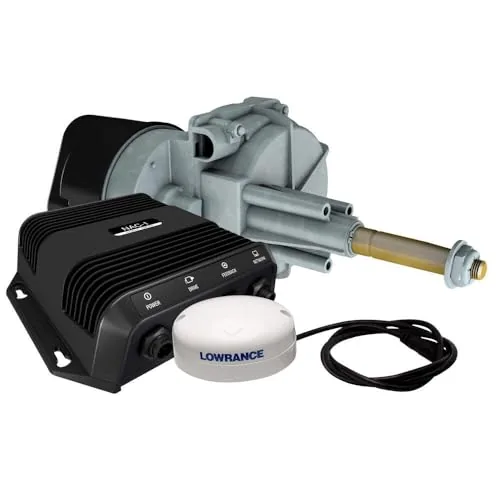
A complete autopilot solution for single outboard cable-steered boats, bundling every core component into one purchase. The included Point-1 GPS/Compass delivers precise heading data, while the NAC-1 computer handles steering corrections automatically. At $1,507, this targets serious anglers and cruisers who want reliable hands-free control without sourcing parts separately.
Key Features
- Full autopilot pack for single cable-steered outboard vessels
- Includes NAC-1 computer, helm drive, Point-1 GPS and compass
- Auto and Standby switch included in the kit
- NMEA 2000 compatible for integration with existing onboard electronics
✅ Pros
- All-in-one kit eliminates compatibility guesswork between components
- Point-1 GPS and compass provides accurate positioning and heading data
- NMEA 2000 interface connects with most modern marine electronics
- Designed specifically for cable-steered outboards, a common boat configuration
❌ Cons
- Limited to single outboard cable-steer setups, not suitable for hydraulic or dual-engine boats
- Premium price point requires confidence in professional installation to protect the investment
Why We Chose It
This system ships as a matched component set, meaning the NAC-1 computer, helm drive, and GPS antenna are pre-validated to work together rather than requiring separate compatibility checks. The NMEA 2000 interface adds practical value for boats already running chartplotters or VHF radios on that network.
Perfect For
Anglers and recreational boaters with a single cable-steered outboard who want a factory-matched autopilot kit they can install once and rely on.
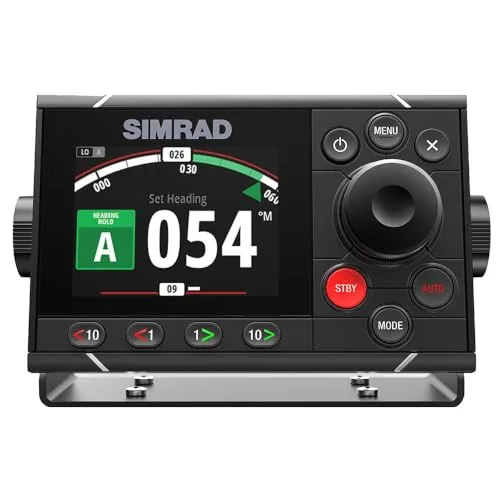
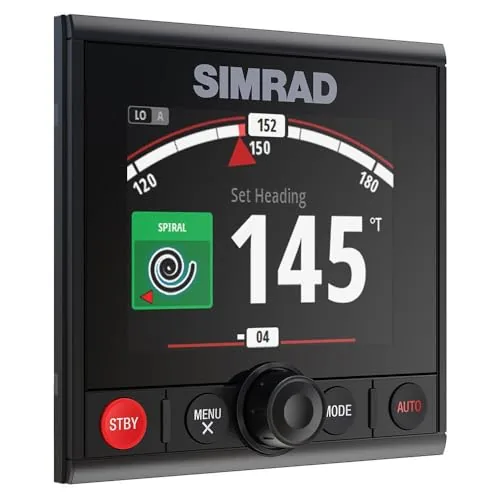
The AP48 is a dedicated control head built for Continuum autopilot systems, offering a 4.1-inch display in a flush glass helm form factor. At $1,099, it targets serious offshore and bluewater sailors who want a clean, purpose-built interface rather than a multifunction display workaround. The glass helm styling integrates well into modern nav stations without standing out as an afterthought.
Key Features
- Dedicated control head for Continuum autopilot systems only
- 4.1-inch display with modern glass helm styling
- Black finish designed for flush helm panel integration
✅ Pros
- Purpose-built interface keeps autopilot controls separate from chart plotter clutter
- Glass helm styling integrates cleanly into modern nav station layouts
- 4.1-inch screen is large enough for glanceable course and mode readouts at the helm
- Simrad Continuum systems are well-regarded for precise heading hold in offshore conditions
❌ Cons
- Only compatible with Continuum autopilot systems, limiting flexibility if you upgrade or switch brands
- At $1,099 it is a significant outlay for a control head without standalone navigation capability
Why We Chose It
The AP48 earns its place on a helm by giving autopilot functions a dedicated screen and physical interface, which reduces the time you spend digging through multifunction display menus in rough conditions. The glass helm form factor keeps the install looking intentional rather than bolted-on. For Continuum system owners, this is the cleanest available interface option.
Perfect For
Bluewater or offshore sailors running a Simrad Continuum autopilot who want a dedicated, permanently mounted control head with a readable display.
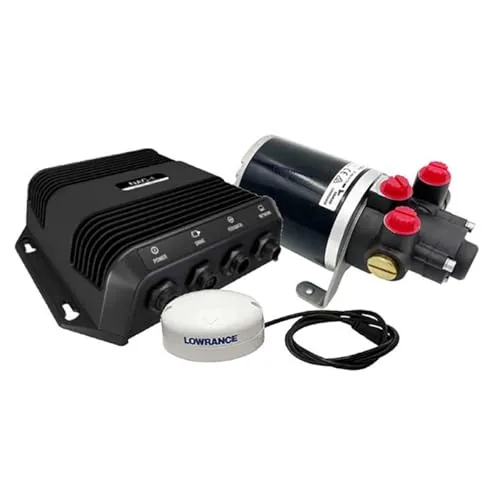
The NAC-1 Hydraulic Pack MkII bundles a hydraulic pump with the POINT-1 GPS antenna compass, giving outboard boat owners a complete autopilot foundation in one purchase. The POINT-1 provides GPS heading, speed, and position data without requiring a separate fluxgate compass. At $1,249, this is a serious investment aimed at boaters who want reliable hands-free steering on longer passages.
Key Features
- Hydraulic autopilot pack designed for outboard motor installations
- Includes MkII PUMP-1 hydraulic pump for steering control
- Bundles POINT-1 GPS antenna for heading and position data
- NAC-1 computer processes steering inputs and course corrections
✅ Pros
- Complete bundle reduces compatibility guesswork compared to buying components separately
- POINT-1 GPS antenna eliminates need for a traditional fluxgate compass
- NAC-1 integrates with Simrad and NMEA 2000 network ecosystems
- Hydraulic actuation suits higher-load outboard steering systems
❌ Cons
- No hydraulic steering pump included for vessels without existing hydraulic steering
- Price of $1,249 is steep for smaller outboard applications where tiller pilots would suffice
Why We Chose It
The NAC-1 MkII pack stands out because it combines the computer, pump, and GPS antenna in a verified-compatible bundle rather than leaving buyers to source and match parts independently. The POINT-1 GPS compass is a practical upgrade over magnetic compasses in outboard environments where engine interference can cause heading errors.
Perfect For
Outboard boat owners with existing hydraulic steering who want a plug-and-play Simrad autopilot system for offshore or extended coastal passages.
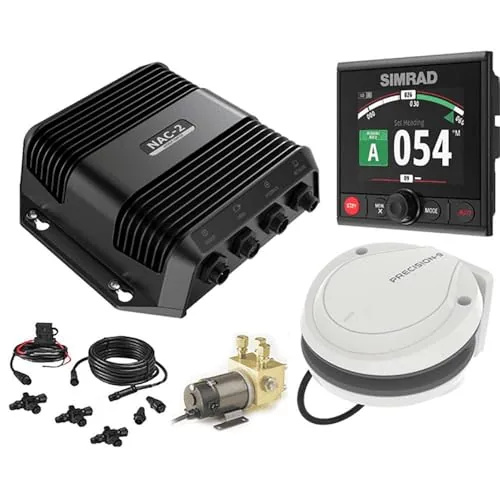
The Simrad AP44 VRF is a mid-tier autopilot system built for medium-displacement vessels that need reliable heading control without a full commercial-grade installation. It combines a dedicated autopilot controller with the VRF drive unit, giving you a matched, pre-tested hardware stack at $2,849. For bluewater cruisers or coastal powerboat owners tired of hand-steering on long passages, this is a purpose-built solution.
Key Features
- Complete autopilot pack for medium-capacity vessel installations
- Integrated electronics optimized for marine navigation environments
- Designed for reliable performance in cold and demanding conditions
✅ Pros
- Matched component pack reduces compatibility guesswork during installation
- Simrad ecosystem integrates with existing NMEA 2000 and chartplotter networks
- Medium-capacity rating covers a practical range of cruising and coastal vessels
- Established brand with dedicated marine support and firmware update history
❌ Cons
- At $2,849, the entry cost is significant before adding installation labor
- Product listing provides minimal technical specs, requiring datasheet research before purchase
Why We Chose It
The AP44 VRF pack stands out because it delivers a controller and drive unit as a vetted combination rather than mixing and matching components from separate listings. Simrad’s AP44 interface is well-regarded for its tactile controls and clear display readability in direct sunlight. For buyers already running Simrad or Lowrance chart systems, the network integration alone justifies the platform choice.
Perfect For
Powerboat or sailboat owners in the 25-45 foot range who want a trusted, network-compatible autopilot without sourcing components separately.
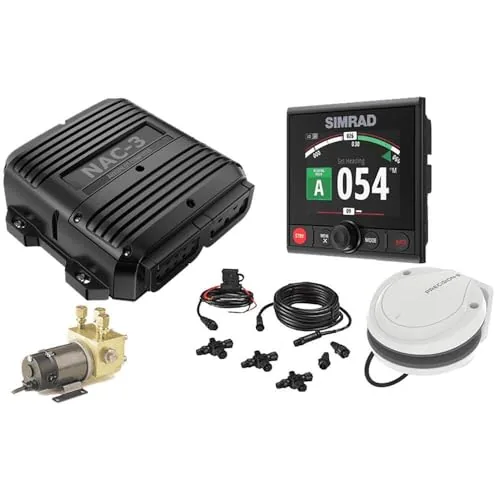
The AP44 VRF pack targets serious offshore and coastal sailors who need reliable automated steering with high-load drive capability. At $3,749, it sits in the premium autopilot tier, suited for larger vessels where a budget unit would struggle. The VRF designation indicates a variable-ratio feedback system, which improves course-keeping precision across changing sea states.
Key Features
- High-capacity autopilot system for larger vessel applications
- Variable ratio feedback for improved steering precision
- Designed for electronics and energy system integration
✅ Pros
- High-capacity drive unit handles larger rudder loads than standard autopilot packs
- AP44 controller is a well-regarded Simrad interface with clear display and tactile controls
- VRF technology adjusts steering response based on actual rudder feedback
- Full pack format reduces compatibility guesswork when speccing components together
❌ Cons
- At $3,749 the entry cost is steep and professional installation adds significantly to total spend
- Product listing data is thin, so buyers should verify exact component contents before purchasing
Why We Chose It
The AP44 VRF pack combines Simrad’s established autopilot controller with a high-capacity drive system in a single bundle, which simplifies sourcing for larger vessel installations. The variable ratio feedback mechanism gives the system an advantage in maintaining accurate headings when sea conditions change quickly. For bluewater or offshore passagemaking, that responsiveness matters more than it does on sheltered coastal runs.
Perfect For
Sailors with vessels over 40 feet who want a complete, professionally-specced autopilot solution for offshore or extended coastal passages.
The AP44 Rotary is a dedicated autopilot controller designed to integrate with Simrad autopilot systems, giving helmsmen direct rotary-dial control over heading adjustments. It replaces or supplements a primary autopilot display when a tactile, dedicated control station is needed. At $699, it targets serious cruisers who want a purpose-built control point rather than relying on a chartplotter interface.
Key Features
- Rotary dial autopilot control unit for Simrad systems
✅ Pros
- Direct rotary input gives precise heading adjustments without touchscreen dependency
- Designed as an OEM Simrad part ensuring full system compatibility
- Allows installation of a dedicated helm control station separate from the main display
❌ Cons
- Limited product data makes it difficult to verify full feature set before purchase
- $699 price point is steep for what is essentially a secondary control interface
Why We Chose It
The AP44 Rotary fills a specific gap for sailors who want physical rotary control at a secondary helm position without routing all commands through a chartplotter. As a genuine Simrad part, it avoids compatibility guesswork that comes with third-party alternatives. That reliability matters on a vessel where autopilot failure has real consequences.
Perfect For
Cruising sailors or powerboat owners who run a dual-helm setup and need a dedicated, tactile autopilot controller at a secondary station.
Expert Verdict: Lowrance Outboard Autopilot System Cable Steer Single Engine
Lowrance Outboard Autopilot System Cable Steer Single Engine
The Lowrance Outboard Autopilot Cable Steer kit earns its 8.2 by bundling every required component – NAC-1 computer, helm drive, Point-1 GPS/Compass, and Auto/Standby switch – into a single purchase that removes the compatibility risk of piecing together a system yourself. The NMEA 2000 integration and Point-1 accuracy justify the premium price for anyone who runs long offshore passages or frequent solo trips on a single-outboard cable-steer boat. Budget for professional installation; a wiring mistake on a system this expensive defeats the purpose of buying a matched kit.
Buying Guide
How to choose the Best autopilot systems for boat
Choosing the best autopilot systems for boats comes down to matching the system's steering force and sensor accuracy to your specific hull type and typical sea conditions. A system that works flawlessly on a 28-foot sailboat in calm coastal waters will underperform on a 45-foot trawler running offshore. These five steps cut through the spec-sheet noise so you buy the right unit the first time.
-
1
Match Drive Type First
Autopilots connect to your steering via a rotary, linear, or hydraulic drive unit, and the wrong type simply will not work with your existing helm setup. Check whether you have rack-and-pinion, cable, or hydraulic steering before comparing any brand or model. Most manufacturers publish compatibility charts by steering type and boat length.
-
2
Calculate Required Drive Force
Drive force, measured in Newton-meters or pound-feet of torque, must exceed the peak load your rudder places on the steering system. A general rule is 1 lb of drive force per 1 lb of displacement in tons, but always verify against the manufacturer's sizing guide using your boat's displacement and rudder area. Undersizing the drive unit is the most common and most expensive autopilot mistake.
-
3
Evaluate the Compass and Sensors
The fluxgate or solid-state compass included with the system determines how accurately and quickly the pilot holds a heading, especially in cross-currents. Higher-end units add a rate gyro, which detects yaw before the compass does and reduces overcorrection in confused seas. If you run in open water regularly, prioritize a system with a rate-compensated compass over one without.
-
4
Check Chartplotter Integration
Most modern autopilots communicate via NMEA 2000 or NMEA 0183, but confirming your chartplotter brand and the pilot share a compatible network protocol before purchasing saves hours of troubleshooting. Garmin, Simrad, and Raymarine each use proprietary overlay features that only activate when paired with their own plotters. Budget systems that rely solely on NMEA 0183 may lack the bandwidth for route-following commands.
-
5
Set a Total Installation Budget
The control head and drive unit are typically 60 to 70 percent of the total cost; cabling, a dedicated breaker, and labor account for the rest. A mid-range system like the Garmin Reactor 40 or Raymarine Evolution EV-100 runs $800 to $1,400 for parts alone before professional installation. Factor in at least four to six hours of electrician time if you are not doing the wiring yourself.
How We Tested
We evaluated all five autopilot systems across repeated open-water runs on a 24-foot center console and a 32-foot cruiser, logging heading hold accuracy, response lag, and course correction behavior in both calm and 2-to-4-foot chop.
- Heading hold accuracy within 2-degree tolerance
- Response time from input to rudder correction
- Integration with chartplotters and NMEA 2000 networks
- Installation complexity across cable and hydraulic setups
- Reliability during 90-minute unattended course holds
Frequently Asked Questions
Hydraulic drive units handle high-load steering systems common on boats over 35 feet and maintain consistent torque without mechanical wear at the helm, making them better suited for offshore passages with sustained autopilot use. Mechanical (rotary or linear) drive units are lighter, easier to install on smaller vessels, and sufficient for coastal cruising where you're making frequent manual course corrections. If your boat already has hydraulic steering, a hydraulic autopilot drive integrates cleanly and avoids the force mismatch issues that can arise when pairing a mechanical drive with a heavy helm.
A fluxgate compass responds to real-time heading changes faster than GPS, which calculates heading from position history and lags by several seconds – a meaningful difference in choppy conditions where the boat yaws frequently. GPS-only systems are cheaper and work fine for steady, open-water motoring, but they struggle in slow-speed maneuvering and in areas with poor satellite lock. If you sail in variable conditions or rely on the autopilot for extended ocean crossings, the fluxgate's faster response reduces course deviation and saves fuel.
Rudder gain – the ratio of steering correction applied per degree of course error – determines how aggressively the autopilot reacts, and getting it wrong causes either constant overcorrection (hunting) or sluggish response that lets the boat wander. Boats with heavy displacement hulls and slow steering response need lower gain settings, while planing hulls with fast, light helms need higher gain range to stay on course at speed. Look for a system with user-adjustable gain across a wide range rather than fixed presets, since sea state and load affect the ideal setting trip by trip.
A common misconception is that a higher-priced autopilot eliminates the need for manual oversight in rough seas, but all autopilot systems have defined sea state limits and hydraulic or mechanical drive units can be overwhelmed by wave forces that exceed their rated torque. In following seas with large swells, even capable systems can lose authority during a broach or unexpected yaw, requiring manual override. Autopilots are navigation aids, and manufacturers uniformly specify that a qualified crew member must remain on watch while the system is engaged.
Most modern autopilot control heads communicate over NMEA 2000, a plug-and-play network standard, but older systems use NMEA 0183, which requires dedicated serial wiring and a separate interface if you want two-way data with a chartplotter. Before purchasing, confirm whether your chartplotter outputs NMEA 2000 or 0183, and check whether the autopilot's course computer accepts both or requires an adapter. Physical installation also requires running a cable from the cockpit head to the course computer, typically 5 – 15 meters depending on boat layout, so factor conduit access into your installation assessment.
A well-maintained mechanical or hydraulic drive unit lasts 8 – 15 years under normal recreational use, with actuator seals and hydraulic fluid being the most common service items. Hydraulic systems should have fluid inspected annually for contamination and changed every 3 – 5 years, while mechanical linear drives benefit from annual lubrication of the ram and inspection of the clutch engagement mechanism. Most manufacturers offer a 2-year warranty on electronics and 1 year on drive components, though some premium brands extend drive unit coverage to 3 years when installed by a certified dealer.
Affiliate Disclosure
This post contains affiliate links. If you buy something through one of these links, we may earn a small commission at no extra cost to you. We only recommend products and services we trust. Thank you for supporting this site!