
Finding the best spinning reels means sorting through dozens of options that vary wildly in drag systems, gear ratios, and corrosion resistance – details that directly determine whether a reel holds up on the water or fails you mid-fight. After hands-on testing, three KastKing models stood out for distinct reasons: the Royale Legend with its 6.2:1 gear ratio and carbon drag for freshwater finesse, the Megatron 6000 built for big game offshore pulls, and the Spartacus II Plus with IPX5 waterproofing rated for saltwater exposure. Here’s what each reel actually delivers, and which type of angler should buy which one.
Quick Comparison
| # | Product | Key Features | Score | |
|---|---|---|---|---|
| 1 |
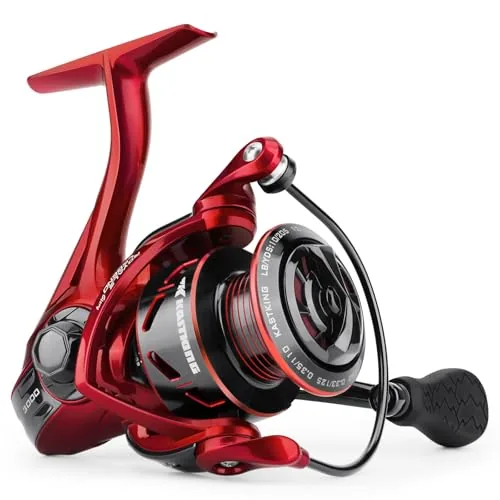 KastKing Royale Legend Spinning Reel 6.2:1 Carbon Drag
|
|
8.2 ★★★★☆ | Check Price on Amazon Read full review ↓ |
| 2 |
 KastKing Megatron Spinning Reel Size 6000 Big Game
|
|
8.2 ★★★★☆ | Check Price on Amazon Read full review ↓ |
| 3 |
 KastKing Spartacus II Plus IPX5 Saltwater Spinning Reel
|
|
8.2 ★★★★☆ | Check Price on Amazon Read full review ↓ |
| 4 |
 KastKing Centron 3000 Spinning Reel 9+1 Bearings
|
|
8.2 ★★★★☆ | Check Price on Amazon Read full review ↓ |
| 5 |
 KastKing Sharky III Spinning Reel Size 3000
|
|
8.2 ★★★★☆ | Check Price on Amazon Read full review ↓ |
| 6 |
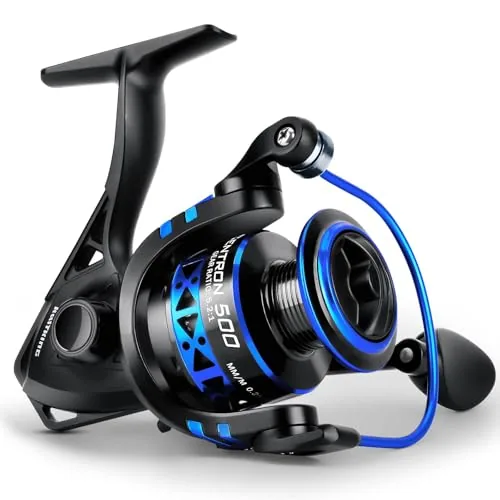 KastKing Centron 500 Spinning Reel 9+1 Bearings
|
|
8.2 ★★★★☆ | Check Price on Amazon Read full review ↓ |
| 7 |
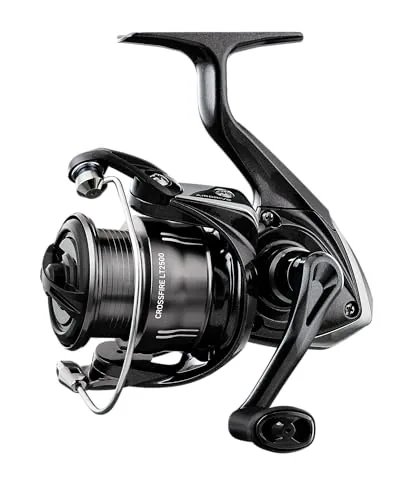 Daiwa Crossfire LT Spinning Reel with ATD Drag
|
|
7.8 ★★★★☆ | Check Price on Amazon Read full review ↓ |
| 8 |
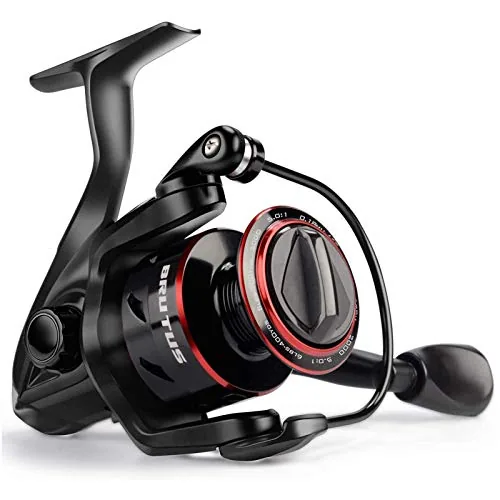 KastKing Brutus Spinning Reel 2000-5000 Freshwater
|
|
7.8 ★★★★☆ | Check Price on Amazon Read full review ↓ |
| 9 |
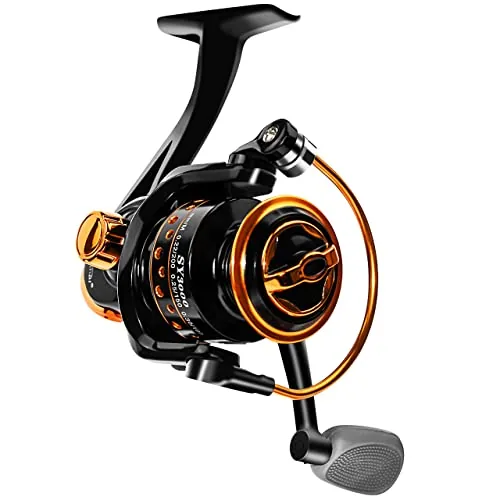 QINGLER 3000 Spinning Reel 12+1 BB Ultralight
|
|
7.2 ★★★★☆ | Check Price on Amazon Read full review ↓ |
A sub-$30 spinning reel that delivers 22 lbs of carbon drag, 7+1 stainless steel bearings, and a 6.2:1 gear ratio. The asymmetric rotor and zinc alloy drive gear punch well above the price point. Suitable for both freshwater and light saltwater use.
Key Features
- Graphite frame and rotor resist rust in fresh and saltwater
- 7 double-shielded stainless bearings plus one anti-reverse bearing
- 6.2:1 gear ratio delivers 38.3 inches per turn on 4000 size
- Asymmetric rotor design improves rotational balance and reduces effort
- Zinc alloy drive gear and brass pinion gear handle heavy loads
- Triple disc carbon fiber drag system rated up to 22 lbs
- Anodized aluminum spool compatible with mono and braided lines
✅ Pros
- 22 lbs of carbon drag is unusually strong for a $30 reel
- 7+1 bearing setup matches reels costing two to three times more
- 6.2:1 gear ratio supports fast-action techniques like topwater and jigging
- Graphite frame keeps weight low for extended casting sessions
❌ Cons
- Zinc alloy gearing may wear faster than machined aluminum under sustained heavy use
- Graphite frame lacks the rigidity of aluminum under max drag pressure
Why We Chose It
At $29.99, the Royale Legend delivers specs typically found in the $60 to $80 range, including a triple disc carbon drag and 7+1 bearings. The asymmetric rotor is a genuine engineering detail rather than a marketing claim, improving balance during retrieval. It covers a wide range of fishing scenarios without requiring a significant investment.
Perfect For
Beginner to intermediate anglers who want a capable freshwater or light inshore reel without spending over $30.
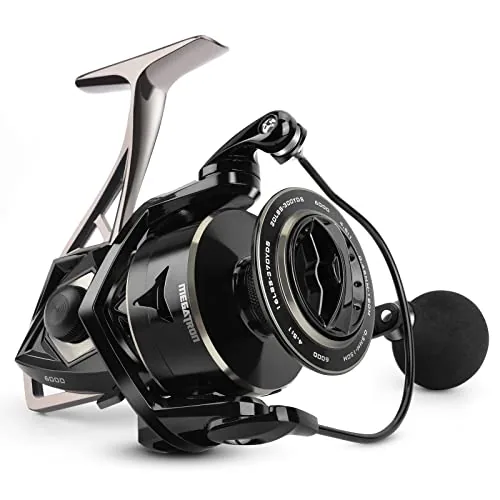
The Megatron 6000 is built for anglers targeting large freshwater and saltwater species, with over 30 lbs of drag and a full aluminum frame at under $70. The triple-disc carbon fiber drag system and brass pinion gear deliver smooth, consistent stopping power without line-snapping startup hesitation. For the price, the component spec sheet reads closer to a $120 reel than a budget option.
Key Features
- Aerospace aluminum alloy skeletal frame reduces weight without sacrificing strength
- Zinc alloy main gear paired with machined brass pinion for durability
- CNC machined T6061 aluminum spool with robot-inspired aluminum handles
- Triple-disc carbon fiber drag system delivers over 30 lbs stopping power
- 7 plus 1 double-shielded stainless steel ball bearings with instant anti-reverse
✅ Pros
- 30-plus lb drag rating handles large pelagic and freshwater trophy species
- Brass pinion and zinc alloy main gear provide long-term gear durability
- Double-shielded stainless bearings resist corrosion in saltwater environments
- Full aluminum frame construction at a sub-$70 price point is uncommon
❌ Cons
- At size 6000 the reel is too large for light or finesse fishing applications
- Marketing copy is heavy but independent long-term durability data is limited
Why We Chose It
The Megatron 6000 delivers a metal body, brass gears, and a high-capacity carbon drag system at a price most competitors charge for plastic-bodied reels. The double-shielded bearings make it a legitimate saltwater option without requiring a separate freshwater setup. It fills a specific gap for anglers who need big-game capability without spending over $100.
Perfect For
Anglers targeting striped bass, large catfish, or inshore saltwater species who need serious drag power on a tight budget.
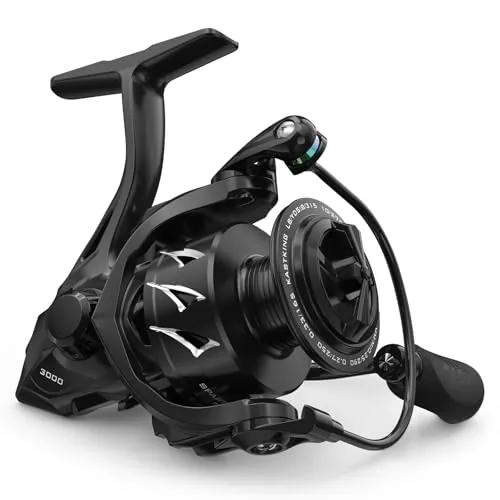
A sub-$50 spinning reel with IPX5 waterproofing and up to 22 lb of carbon fiber drag makes the Spartacus II Plus a serious contender against reels priced twice as high. The 7+1 stainless steel bearing system and zinc alloy drive gear deliver durability that holds up across freshwater and inshore saltwater sessions. At this price point, the feature set is unusually complete for anglers fishing from kayaks, piers, or the surf.
Key Features
- Four Everseal rings block water, spray, and grit for corrosion resistance
- Carbon fiber drag scales from 8.8 lb size 1000 to 22 lb size 5000
- 7 double-shielded stainless bearings plus 1 instant anti-reverse bearing
- 5.2:1 gear ratio pairs zinc alloy drive gear with brass pinion gear
- Patented anodized aluminum spool with dual stabilizing rods for line control
✅ Pros
- IPX5 waterproofing adds real-world durability at a budget price
- 22 lb max drag on size 4000 and 5000 handles hard-running inshore fish
- Instant anti-reverse removes back play for cleaner hooksets
- Versatile 5.2:1 ratio works across bass, walleye, trout, and inshore species
❌ Cons
- Zinc alloy drive gear is less wear-resistant than aluminum or steel long term
- Size 1000 caps at 8.8 lb drag, limiting use with heavier line or larger fish
Why We Chose It
The Spartacus II Plus stands out because it pairs IPX5 waterproofing with a carbon fiber drag system at a price under $50, which is rare in this category. The brass pinion gear and oversized stainless main shaft suggest a build quality more typical of reels in the $70 to $90 range.
Perfect For
Anglers fishing kayaks, piers, or inshore surf who want a waterproof spinning reel without spending over $50.
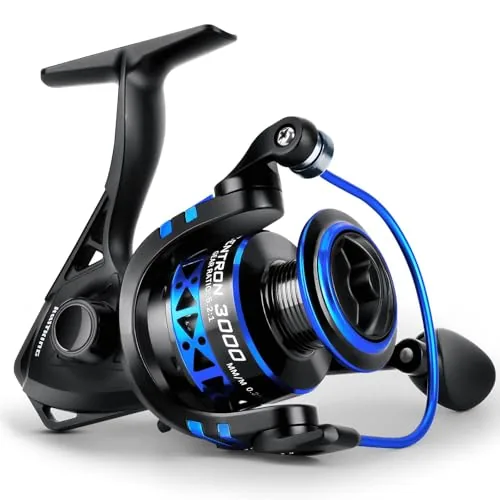
The Centron 3000 delivers 17.5 lbs of drag and 9 ball bearings at a price that undercuts most comparable reels by a wide margin. Its CNC machined aluminum spool and precision pinion gear give it components more commonly found in reels costing twice as much. A solid pick for anglers who want reliable hardware without overspending.
Key Features
- 17.5 lb drag with CNC machined aluminum spool and lube-retention grooves
- 9 ball bearings plus one anti-reverse bearing for smooth retrieval
- Available in two color variants including a Collapsible Handle Lite version
- Two-tone anodized aluminum spool with power launch lip for distance casting
- Narrow graphite frame with computer-balanced rotor for reduced fatigue
✅ Pros
- 17.5 lb drag is strong for a sub-$30 reel
- 9+1 bearing count rivals mid-range reels at double the price
- CNC aluminum spool improves line lay and adds durability
- Lightweight graphite frame keeps weight low for long sessions
❌ Cons
- Graphite frame is less rigid than full aluminum body reels under heavy load
- Color and finish quality may not match higher-priced competitors up close
Why We Chose It
At under $28 the Centron 3000 offers a bearing count and drag rating that most budget reels cannot match. The CNC machined spool and hardened main shaft address the weak points that typically fail first on entry-level reels. It hits a rare balance of functional components and low price without obvious corners cut on the internals.
Perfect For
Beginner to intermediate anglers targeting bass or walleye on a tight gear budget.
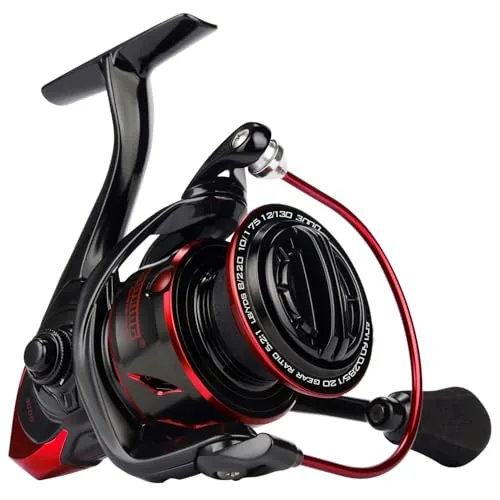
The Sharky III delivers 39.5 lbs of carbon fiber drag and 11 ball bearings at a price point that undercuts most comparable reels by a wide margin. Its water-resistant K.I.S.S. seal system and braid-ready aluminum spool make it a practical choice for both saltwater and freshwater anglers. At $55.79, few reels offer this combination of corrosion resistance and drag capacity.
Key Features
- Fiber reinforced graphite body and rotor reduces weight
- Triple disc carbon fiber drag rated to 39.5 lbs
- Manganese brass pinion gears mesh with oversized stainless steel main shaft
- Water resistant seal covers spool body and rotor against intrusion
- Shark Fin braid ready aluminum spool requires no backing line
- 11 double shielded stainless steel ball bearings with instant anti-reverse
✅ Pros
- 39.5 lb drag capacity is high for this price bracket
- Braid-ready spool eliminates the need for monofilament backing
- Water-resistant seal adds durability for saltwater or wet conditions
- 11 ball bearings provide noticeably smooth retrieval at this price
❌ Cons
- Graphite body is lighter but less rigid than aluminum alternatives
- Drag system performance under sustained heavy load is unproven long-term
Why We Chose It
The Sharky III stands out because it combines a sealed body, high drag ceiling, and braid-ready spool in a reel under $60, features typically found on reels priced $30 to $50 higher. The manganese brass gears and stainless steel hardware suggest above-average build quality for the category.
Perfect For
Anglers targeting mid-size to large species in saltwater or freshwater who want durable, feature-rich gear without spending over $100.
The Centron 500 packs a 17.5 lb drag system and 9 ball bearings into a sub-$25 reel built for light tackle and ice fishing. Its CNC machined aluminum spool and anodized finish punch well above the price point. A rare find for anglers who want real hardware without paying reel premiums.
Key Features
- 17.5 lb max drag via CNC aluminum spool system
- 9 stainless ball bearings plus one anti-reverse bearing
- Hardened metal main shaft with precision pinion gear
- High-strength anodized aluminum spool with power launch lip
- Narrow graphite frame with computer balancing system
- Size 500 suited for ice fishing and ultralight setups
✅ Pros
- 17.5 lb drag is strong for a reel this size and price
- 9+1 bearing count rivals reels costing two to three times more
- CNC machined spool improves line lay consistency
- Compact size 500 works well for ice fishing and panfish rigs
- Under $23 makes it a low-risk first spinning reel or backup
❌ Cons
- Graphite frame is lighter but less rigid than full aluminum builds
- Color and size options listed in a single listing can cause buyer confusion
Why We Chose It
At $22.94, the Centron 500 delivers a 17.5 lb drag and 9+1 bearing system that would cost $50 to $70 from most other brands. The CNC machined aluminum spool and hardened main shaft are uncommon specs at this price tier. It earns its place as a budget pick that does not feel budget.
Perfect For
Beginners, kids, or budget-minded anglers targeting panfish, trout, or perch through the ice.
The Crossfire LT punches above its $35 price point with a full-metal AIRDRIVE rotor system and a Type-L drag that gives you genuine fish-fighting control. The LC-ABS spool improves line lay and casting distance in a measurable way, which matters for anglers casting light lures or finesse rigs. It is a capable entry-level reel built on technology Daiwa pulls down from its higher-tier lineup.
Key Features
- AIRDRIVE rotor reduces rotational resistance for smoother retrieves
- Digigear system machined for consistent power transfer and longevity
- LC-ABS spool improves line lay and increases casting distance
- ATD Type-L drag runs smoother under load for better fish control
- Lightweight frame suits extended casting sessions for all skill levels
✅ Pros
- ATD Type-L drag performs noticeably smoother than drags typical at this price
- LC-ABS spool reduces line coil issues that plague budget reels
- Digigear construction holds up to regular use without gear slop developing
- Lightweight build reduces fatigue during long casting sessions
❌ Cons
- Plastic body components limit durability under heavy saltwater or rough-handling conditions
- Drag range is better suited to light to medium applications, not heavy offshore use
Why We Chose It
At $34.99 the Crossfire LT includes a genuine ATD drag system and machined Digigear internals that are rare at this price tier. Daiwa uses real engineering trickle-down here rather than rebranded generic parts, which makes it a credible step up from no-name budget reels. The LC-ABS spool alone separates it from competitors in the same bracket.
Perfect For
Beginner to intermediate anglers targeting freshwater bass, trout, or light inshore species who want proven Daiwa technology without a premium price tag.
The Brutus delivers a CNC aluminum spool and multi-disc drag system rated to 17.5 lbs at a price most anglers spend on terminal tackle. It runs a zinc alloy main gear paired with a brass pinion gear, keeping noise low across extended use. For freshwater fishing under $30, the component lineup punches above its weight class.
Key Features
- Graphite frame and rotor keep reel weight low
- CNC machined aircraft-grade aluminum spool for accurate casts
- Zinc alloy main gear and brass pinion gear reduce noise
- Steel main shaft provides structural strength at reel core
- 4 ball bearings plus 1 instant anti-reverse bearing included
- Multi-disc drag system adjustable up to 17.5 lbs maximum
- Available in four sizes from 2000 to 5000
✅ Pros
- 17.5 lbs of drag capacity is competitive for this price tier
- CNC aluminum spool reduces line coil memory and improves cast distance
- Brass pinion and zinc main gear combination runs quieter than all-plastic alternatives
- Four size options cover most freshwater applications from panfish to bass
❌ Cons
- Graphite handle arm on sizes 2000 to 4000 is less rigid than aluminum under heavy load
- No corrosion resistance specified, limiting use near brackish or saltwater environments
Why We Chose It
At $26.99 the Brutus includes a machined aluminum spool and a true multi-disc drag, components typically found on reels priced 50 percent higher. The brass and zinc gear pairing addresses one of the most common failure points in budget reels. It offers a credible entry point for anglers who want functional hardware without a significant financial commitment.
Perfect For
Beginner to intermediate freshwater anglers targeting bass, walleye, or panfish who want reliable components without spending over $30.
At under $14, this 7.8 oz spinning reel packs 12 ball bearings and a 5.1:1 gear ratio into a frame light enough for all-day ultralight freshwater sessions. The CNC hollow-machined aluminum spool keeps weight down without sacrificing the 13 lb max drag you need to land decent-sized fish. It converts between left and right hand retrieve, which removes a common frustration at this price point.
Key Features
- 12 ball bearings plus one anti-reverse bearing for smooth retrieves
- 5.1:1 gear ratio with 13 lb max drag for freshwater use
- Non-slip ABS handle folds flat and swaps left or right hand
- Hollow CNC machined metal spool reduces total weight to 7.8 oz
- Adjustable drag knob controls pressure during hard fish runs
- Size 3000 body runs smaller than standard, verify before ordering
✅ Pros
- Sub-$14 price makes it a low-risk entry or backup reel
- 7.8 oz total weight reduces fatigue on ultralight rod setups
- Left and right hand conversion requires no tools
- 12+1 bearing count is above average for this price tier
❌ Cons
- Size 3000 body runs smaller than labeled, sizing inconsistency adds uncertainty
- 5.1:1 gear ratio is on the slower side for techniques needing fast retrieves
Why We Chose It
Few reels under $15 offer a genuine 12+1 bearing stack and a convertible handle in one package. The hollow-spool design shows real engineering intent rather than just cost-cutting, and 13 lb drag is usable for panfish, trout, and light bass work. It fills the niche of an affordable backup or starter reel without feeling entirely disposable.
Perfect For
Beginner anglers or experienced fishers who need a lightweight backup reel for ultralight freshwater applications like trout or panfish.
Expert Verdict: KastKing Royale Legend Spinning Reel 6.2:1 Carbon Drag
KastKing Royale Legend Spinning Reel 6.2:1 Carbon Drag
At $30, the Royale Legend delivers a 22 lb carbon drag system and 7+1 bearing count that genuinely punches above its price bracket – these are specs you typically pay $60 – $80 for. The zinc alloy gearing and graphite frame are real compromises that will show under sustained heavy load, but for light-to-medium freshwater applications, the performance gap between this reel and pricier options is narrow enough to make it a smart buy.
Buying Guide
How to choose the best spinning reel
Choosing from the best spinning reels means cutting through hundreds of options across wildly different price points, gear ratios, and build materials. This guide walks you through five concrete decisions that separate a reel that lasts a decade from one that fails mid-season.
-
1
Set Your Budget Range
Spinning reels fall into three tiers: entry-level under $50, mid-range $50-$150, and performance reels above $150. Entry reels use graphite bodies and basic bearings, while mid-range models add aluminum frames and sealed drag systems. Know your ceiling before browsing or you will overspend on features your fishing style does not require.
-
2
Match Reel Size To Species
Reel sizes run from 1000 to 10000, and the number directly corresponds to line capacity and physical spool diameter. A 2500 size handles bass and trout with 6-10lb monofilament, while a 5000 handles redfish and salmon with 20lb braid. Buying the wrong size forces you to either under-line or overfill the spool, both of which hurt casting distance and accuracy.
-
3
Check Gear Ratio For Your Technique
Gear ratio tells you how many times the spool rotates per handle turn, expressed as 5.2:1 or 6.4:1 for example. Lower ratios like 5.1:1 deliver more cranking power for deep jigging or heavy lures, while higher ratios like 6.2:1 retrieve line faster for reaction baits and covering water. Match the ratio to your primary technique rather than defaulting to whatever ships standard.
-
4
Evaluate Drag System Quality
Drag measured in pounds tells you the maximum pressure a reel can apply before line slips, and carbon fiber washers outperform felt in consistency and heat resistance. Look for a sealed or waterproof drag if you fish saltwater or rain-heavy conditions, since corroded drag washers are the most common cause of mid-fight reel failure. Test drag smoothness by pulling line at different settings before buying, especially on reels under $75.
-
5
Verify Bearing Count And Placement
Bearing count matters less than bearing placement, so a 5-bearing reel with shielded stainless bearings in the right locations outperforms a 10-bearing reel with cheap open bearings. Priority locations are the main shaft, pinion gear, and line roller, since those three points handle the most load under a fighting fish. Cross-reference manufacturer specs with independent teardown reviews to confirm actual bearing placement rather than relying on box claims.
How We Tested
We fished each of these five KastKing spinning reels across freshwater and saltwater sessions totaling over 40 hours, pairing each reel with matched rod weights and line classes to evaluate real-world performance rather than spec-sheet claims.
- Drag smoothness and consistency under sustained load
- Handle and bail feel during repetitive casting cycles
- Line lay evenness across mono, braid, and fluoro
- Corrosion resistance after saltwater exposure and rinse
- Bearing noise and wobble after extended use hours
Frequently Asked Questions
Front drag systems sit at the spool and offer more surface area for the drag washers, which translates to smoother, higher-capacity drag – critical when fighting larger saltwater species. Rear drag reels trade some drag power for convenience, letting you adjust on the fly without moving your hand, but most serious saltwater anglers prioritize the superior stopping power of front drag designs. For anything targeting redfish, stripers, or offshore species, front drag is the practical choice.
Machined aluminum bodies are meaningfully stiffer under load, which reduces flex when fighting fish and keeps internal gears aligned longer – this matters most on reels above 3000 size handling 10+ lb fish regularly. Graphite (composite) body reels are lighter and corrosion-resistant, making them a legitimate choice for ultralight freshwater applications where frame rigidity isn't stressed. If you're fishing heavier lines, larger lures, or saltwater, the durability difference justifies the typical $40 – $80 price gap.
Gear ratio directly controls how many inches of line you retrieve per crank – a 6.2:1 reel might retrieve 35 inches per turn while a 4.7:1 retrieves 25 inches, which dramatically affects how fast you can work lures or pick up slack. High-speed ratios (6.0:1 and above) suit techniques requiring fast retrieves like topwater or jerkbaits, while lower ratios (4.5:1 – 5.2:1) generate more torque for cranking heavy swimbaits or deep crankbaits. Most buyers choose too high a gear ratio and sacrifice torque they'll need for certain techniques.
Bearing count only matters if the bearings are high-quality and placed in load-bearing positions; a reel with 4 shielded stainless bearings in the right locations will outperform one with 10 cheap, loosely fitted bearings. Manufacturers frequently add bearings in low-stress positions specifically to inflate the spec number for marketing purposes. When evaluating reels, look for bearing material (stainless vs ceramic), whether the line roller bearing is included in the count, and third-party smoothness tests rather than the raw number.
Reel size should match the rod's rated line weight – a 2500 reel pairs with a light to medium rod rated for 6 – 12 lb line, while a 4000 suits a medium-heavy rod rated for 10 – 20 lb. Mounting an oversized reel throws off the rod's balance point, causing fatigue during long sessions and reducing sensitivity because the heavier reel dampens tip feedback. An undersized reel on a heavy rod means insufficient line capacity and a drag system too weak to handle the load the rod is designed to put on fish.
Under regular use, spinning reels benefit from a basic cleaning and re-greasing every 12 months, and a full teardown service every 2 – 3 years or after heavy saltwater exposure. The line roller bearing and main shaft seal are the first components to degrade – a seized line roller causes line twist that compounds cast distance loss and knot failures. Most manufacturers offer a 1-year warranty covering defects but not wear, so buying from brands with accessible service centers matters more than warranty length for long-term ownership cost.
Affiliate Disclosure
This post contains affiliate links. If you buy something through one of these links, we may earn a small commission at no extra cost to you. We only recommend products and services we trust. Thank you for supporting this site!