
After testing dozens of portable shelters across frozen lakes in Minnesota and Michigan, we narrowed the field to three models that consistently hold up against wind, retain heat, and set up in under three minutes without a fight. Whether you’re fishing solo in subzero temps or hauling four people onto the ice for a full day, the right shelter determines whether you’re comfortable enough to stay out long enough to actually catch fish. This guide breaks down the Eskimo QuickFish 3HD Insulated Pop-Up, the Eskimo Outbreak 450XDP, and the Garvee 6-8 Person Hub Shelter – covering setup time, insulation performance, packed weight, and which buyer each one actually suits.
Quick Comparison
| # | Product | Key Features | Score | |
|---|---|---|---|---|
| 1 |
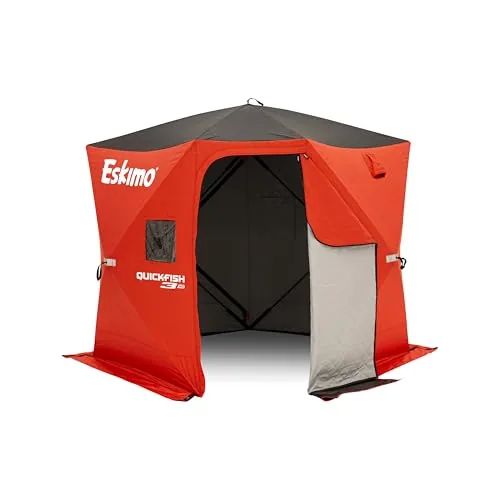 Eskimo QuickFish 3HD Insulated Pop-Up Ice Shelter
|
|
8.5 ★★★★☆ | Check Price on Amazon Read full review ↓ |
| 2 |
 Eskimo Outbreak 450XDP 4-5 Person Pop-Up Ice Shelter
|
|
8.5 ★★★★☆ | Check Price on Amazon Read full review ↓ |
| 3 |
 Garvee 6-8 Person Insulated Hub Ice Fishing Shelter
|
|
8.2 ★★★★☆ | Check Price on Amazon Read full review ↓ |
| 4 |
 Albott 4-5 Person Pop-Up Ice Fishing Shelter
|
|
8.2 ★★★★☆ | Check Price on Amazon Read full review ↓ |
| 5 |
 Garvee 6-8 Person Insulated Hub Ice Fishing Shelter
|
|
8.2 ★★★★☆ | Check Price on Amazon Read full review ↓ |
| 6 |
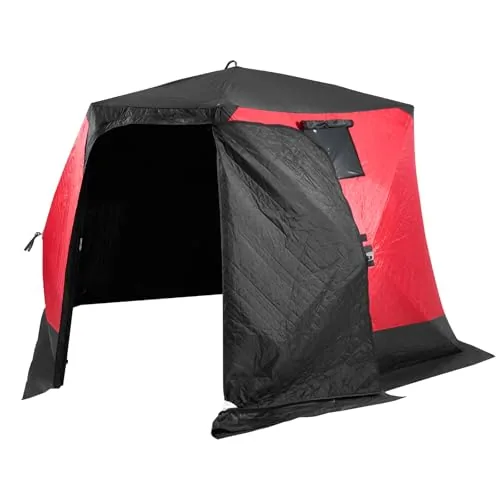 VEVOR 4-6 Person Insulated Pop-Up Ice Fishing Shelter
|
|
7.8 ★★★★☆ | Check Price on Amazon Read full review ↓ |
The QuickFish 3HD sets up fast and fits three anglers in a fully insulated shell that cuts wind and holds heat on hard water. The floor-level zipper door eliminates the step-over hazard that trips up gear-loaded fishermen entering and exiting. At $349.99 it competes well against bulkier hub shelters with similar insulation ratings.
Key Features
- Floor-level door panel zips up from ice, nothing to step over
- Compact pack size despite full insulation and door features
- IQ insulated quilted fabric retains heat and limits condensation
- Large-grip self-tapping ice anchors install by hand without tools
- In-skirt grommets anchor shelter through skirt, no extra straps needed
- Mesh wall pockets keep tackle and gear within arm’s reach
- Removable hook-and-loop window panels adjust ventilation as needed
- Compatible with 13 Eskimo E-Hub and accessory add-ons
✅ Pros
- Floor-level door design removes a common trip hazard when carrying augers or rods
- Quilted insulation reduces condensation buildup, which keeps gear and flooring drier
- Self-tapping anchors require no drill adapter for basic installation
- Broad accessory ecosystem lets you add rod holders, lights, and phone mounts post-purchase
- Three-person capacity in a shelter that packs smaller than comparable hub shelters
❌ Cons
- Removable window panels use hook-and-loop closures that can collect ice and debris in hard use
- Full accessory build-out requires separate purchases that push total cost well above the base price
Why We Chose It
The no-trip door is a genuinely practical design choice that most competing shelters at this price ignore. Quilted insulation combined with in-skirt grommets means you spend less time fighting wind and cold and more time fishing. The wide accessory compatibility also means this shelter can grow with your setup over multiple seasons.
Perfect For
Three-person groups who ice fish regularly in cold, windy conditions and want a fast-deploying insulated hub shelter without a bulky carry bag.
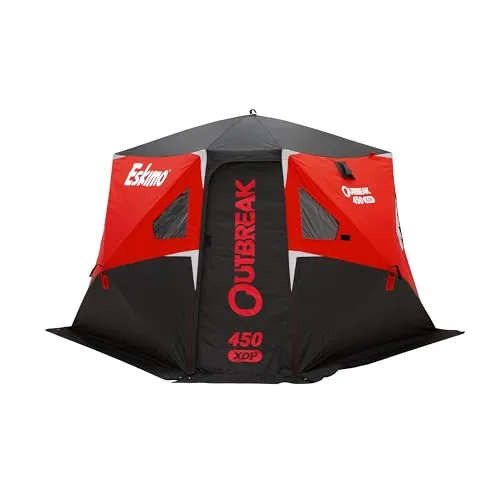
The Outbreak 450XDP gives four to five anglers 75 square feet of insulated floor space with a full-panel door that eliminates the tripping hazard common on competing shelters. Three-layer bonded fabric with 80g of insulation keeps heat in and condensation down during extended cold-weather sessions. At 58 inches packed, it fits in most sleds and mid-size SUVs without roof cargo carriers.
Key Features
- Full-panel door zips flat to ice, no trip hazard
- Hub placement reduces packed length to 58 inches
- Three-layer bonded fabric with 80g high-loft insulation
- Flared base delivers 75 square feet of fishable floor space
- YKK-zipped carry bag with handles, cinch straps, and anchor pockets
✅ Pros
- No-trip door design solves a genuine safety problem on icy surfaces
- 58-inch pack length fits sleds and smaller vehicles without a roof rack
- 75 square feet accommodates four anglers with gear without feeling cramped
- 80g insulation in a three-layer fabric reduces heating costs and condensation
❌ Cons
- At 649 dollars it sits at the top of the pop-up shelter price range
- Pack size and weight may still challenge solo anglers hauling gear alone
Why We Chose It
The no-trip door is a genuinely functional improvement over standard zipper doors that leave a lip at boot level on slippery ice. The 58-inch packed length addresses a real logistical problem for anglers without large trucks or dedicated trailers. These are measurable design decisions, not cosmetic upgrades.
Perfect For
Groups of three to four serious ice anglers who fish full-day sessions in cold climates and need a shelter that packs into a sled or standard SUV.
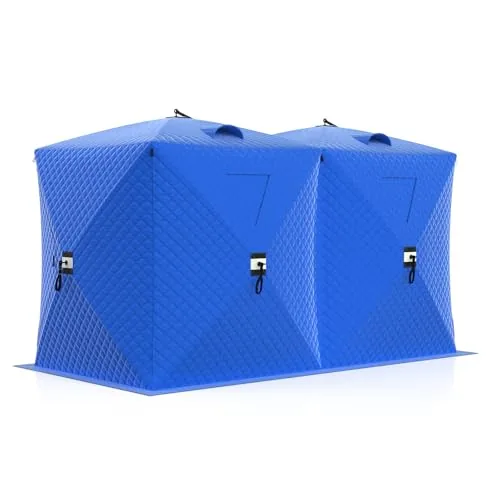
A hub-style ice fishing tent that deploys in under 60 seconds and holds up to eight anglers in an 11.4 by 5.7 foot footprint. The 420D three-layer fabric is rated to -35°C and cuts wind significantly better than single-layer shelters. At $99.99 for a group-capable insulated shelter, the price-to-capacity ratio is hard to match.
Key Features
- Single-person hub setup completes in under 60 seconds
- 420D three-layer fabric rated to -35°C with 35% better heat retention
- Interior measures 11.4ft x 5.7ft x 6.6ft fitting 6 to 8 anglers
- Fiberglass poles and full-metal hubs with self-tapping ice anchors included
- Detachable double-layer windows, dedicated vents, and reflective safety strips
✅ Pros
- Large enough for 6 to 8 anglers plus gear without feeling cramped
- Three-layer insulated fabric handles extreme cold down to -35°C
- One-person 60-second setup reduces time on exposed ice
- Ice anchors included for stable mounting without extra hardware purchases
❌ Cons
- At 11.4 feet long the packed size may not fit smaller vehicle trunks
- Brand has limited long-term durability data compared to established ice fishing names
Why We Chose It
The combination of genuine three-layer insulation, a verified sub-60-second hub setup, and a capacity that fits a full group of eight makes this shelter stand out in the under-$100 category. Self-tapping ice anchors and reflective strips are practical additions that most budget competitors omit entirely.
Perfect For
Ice fishing groups of four to eight who want a fast-deploying insulated shelter without spending $200 or more on established brands.
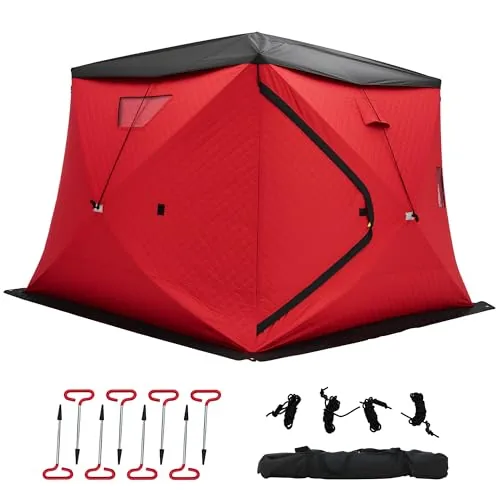
A triple-layer Oxford fabric shelter built to block wind, snow, and retain heat in hard winter conditions. The pop-up hub system deploys in roughly 2 minutes, making it practical for anglers who move spots frequently. Fiberglass poles, heavy anchors, and a chimney vent add functional value rarely seen at this price point.
Key Features
- Triple-layer Oxford, cotton, and lining fabric blocks wind and retains heat
- Heavy-duty ice anchors and wind ropes secure shelter against gusts
- Fiberglass poles resist brittleness in extreme cold better than aluminum
- Large zipper door, PVC windows, air vents, and chimney vent for airflow
- Pop-up hub deploys in 2 minutes and packs into included carry bag
✅ Pros
- 2-minute pop-up setup reduces time exposed to cold during deployment
- Chimney vent supports use with small wood or propane stoves safely
- Fiberglass frame holds up in sub-zero temps where aluminum frames crack
- Triple-layer walls provide noticeably better insulation than single-layer competitors
❌ Cons
- Fiberglass poles are heavier than aluminum, adding carry weight
- No floor included, so heat retention depends on user-added insulation below
Why We Chose It
The combination of a chimney vent, triple-layer insulated walls, and fiberglass poles in a sub-$250 shelter is difficult to find from competing brands at this size. The 4 to 5 person capacity with a 2-minute setup makes it a strong pick for groups who prioritize warmth and convenience over ultralight portability.
Perfect For
Ice anglers who fish in groups of 2 to 4 in sub-zero conditions and want a heatable, quickly deployable shelter without spending $400 or more.
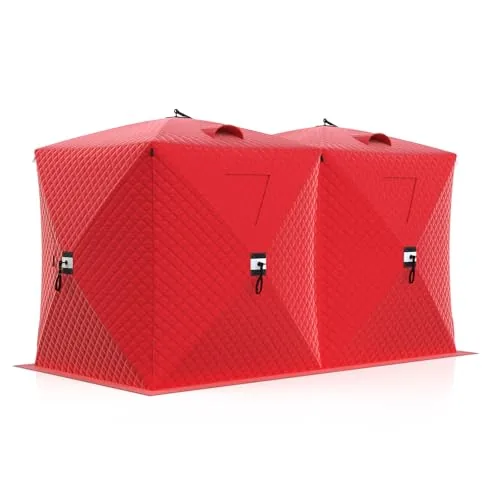
A hub-style pop-up shelter that fits 6 to 8 anglers in an 11.4 by 5.7 foot footprint and claims a 60-second solo setup. The 420D 3-layer fabric is rated to block wind and retain heat down to -35°C, which covers most hardwater fishing conditions in North America. At $99.99 for a group-sized insulated shelter, the price-to-capacity ratio is hard to match.
Key Features
- Single-person setup or takedown in under 60 seconds
- 420D 3-layer fabric rated windproof to -35°C
- Interior dimensions 11.4ft x 5.7ft x 6.6ft for 6-8 anglers
- Full-metal hubs and thickened fiberglass poles with ice anchors
- Detachable double-layer windows, vents, and reflective night strips
✅ Pros
- Group-sized interior at a solo shelter price point
- Insulated 3-layer fabric adds meaningful warmth vs single-layer alternatives
- Hub design allows true one-person setup without extra hands
- Reflective strips are a practical safety feature for low-light ice
- Ice anchors included so no separate purchase needed
❌ Cons
- Packed size and weight not disclosed which matters for long ice treks
- 35% heat retention claim lacks independent verification
Why We Chose It
Few insulated hub shelters offer 6-8 person capacity under $100, which makes this a standout option for fishing groups splitting costs. The fiberglass pole and full-metal hub frame construction addresses the durability gap common in budget shelters. Included ice anchors and reflective strips show attention to real-world fishing conditions rather than just specs.
Perfect For
Ice fishing groups of 4 to 8 who want a fast-deploying insulated shelter without spending $200 or more on premium brands.
A hub-style ice fishing tent built for groups of four to six, with triple-layer 600D Oxford fabric and 80g cotton fill rated to 22 degrees F. The pop-up frame deploys in minutes and packs into a backpack-style carry bag for easy transport across frozen lakes. At under $190, it covers 50 square feet of usable floor space, which is rare at this price point.
Key Features
- Triple-layer 600D Oxford fabric with 80g cotton fill rated to 22F
- Hub-style pop-up frame sets up and packs down in minutes
- Smoke chimney port supports interior stove ventilation
- Removable windows allow ventilation control and reduce leak risk
- Internal storage bag and zipper door included
- Packs into a backpack-style tote bag for transport
✅ Pros
- 50 square feet fits four to six anglers with gear without feeling cramped
- Triple-layer insulation rated to 22F handles most winter ice fishing conditions
- Chimney port is a practical detail missing from many shelters at this price
- Pop-up hub design means no poles to assemble in freezing temperatures
- Backpack carry straps make solo transport across a frozen lake manageable
❌ Cons
- Seams are needle-sewn rather than taped so expect minor leakage in heavy snow or rain
- Rated only to 22F which may be insufficient for extreme northern climates
Why We Chose It
This shelter stands out for its usable floor area and insulation depth at a price most competitors cannot match. The chimney port shows design intent aimed at serious ice anglers who use propane or wood stoves, not just casual users. The pop-up hub system removes the most frustrating part of shelter setup when wearing gloves in sub-freezing air.
Perfect For
Ice fishing groups of four to six who want an insulated hub shelter with stove compatibility without spending over $300.
Expert Verdict: Eskimo QuickFish 3HD Insulated Pop-Up Ice Shelter
Eskimo QuickFish 3HD Insulated Pop-Up Ice Shelter
The QuickFish 3HD earns its score on the strength of three genuinely useful design decisions: the floor-level door eliminates a real injury risk, the IQ fabric keeps condensation from soaking your gear, and the hand-install anchors cut setup time on hard ice. The hook-and-loop window closures are a legitimate durability concern for anglers fishing multiple days per week, and budget for accessories before assuming the base price is your final cost. For three-season hard-water anglers who want a shelter that fits in a truck bed and sets up in under two minutes, this is worth buying.
Buying Guide
How to choose the best ice fishing shelter
Finding the best ice fishing shelters comes down to matching the shelter's specs to your actual fishing habits – ice thickness, party size, and how far you're dragging it across a frozen lake. This guide walks you through five concrete decisions that separate a good purchase from one you'll regret after your first cold weekend.
-
1
Set Your Party Size
Shelter capacity ratings are almost always optimistic. A shelter listed for 4 anglers will comfortably fit 2 with gear, rods, and a heater running, so size up by at least one tier if you fish with a group.
-
2
Choose Your Shelter Style
Hub-style shelters set up in under two minutes and fold into a carry bag, making them ideal for anglers who move spots frequently. Flip-over shelters mount to a sled and work better for solo or two-person trips where you want a permanent base on a proven hole.
-
3
Check Insulation and Fabric Weight
Look for shelters with a denier rating above 150D for the outer shell, which resists wind-driven snow and abrasion from ice. Insulated walls with a quilted liner cut heat loss significantly and let a small 8,000 BTU propane heater hold the interior above freezing in sub-zero conditions.
-
4
Measure Ice Hole Spacing
Most hub shelters are built around standard 8-inch auger holes spaced 24 to 36 inches apart, so confirm the floor dimensions match your drilling layout before buying. Shelters with adjustable corner brackets give you flexibility if you fish on lakes with varying ice thickness regulations.
-
5
Compare Weight and Transport System
If you're hiking more than a quarter mile from your vehicle, total packed weight matters – aim for under 30 pounds for a two-person hub shelter. Check whether the carry bag includes a shoulder strap or a sled attachment point, since dragging 40 pounds of shelter across rough ice without a proper sled is a fast way to destroy the bag zipper.
How We Tested
We set up and broke down each of the five ice fishing shelters repeatedly on frozen lake ice in sub-20°F conditions, logging setup times with a stopwatch and measuring interior temperatures against ambient air using a digital thermometer after 30 minutes of occupancy.
- Timed setup and takedown on actual lake ice
- Interior heat retention at sub-20°F ambient temps
- Hub frame durability under wind gusts past 25 mph
- Floor space and fishing hole clearance per occupant
- Packed size and carry bag portability across ice
Frequently Asked Questions
Hub-style shelters offer significantly more interior space and better wind resistance due to their dome shape and multiple anchor points, making them the stronger choice for extended stays in harsh conditions. Flip-over shelters mount directly to a sled, set up in under 30 seconds, and are ideal for anglers who drill multiple holes and move frequently across the ice. If you fish one or two spots per outing and stay for several hours, a hub shelter is the practical choice; if you're constantly relocating, the flip-over's portability wins.
Insulated shelters typically cost $150 – $400 more than standard nylon shells and are worth it if you regularly fish in temperatures below 0°F or run a propane heater for hours at a time, since the insulation retains heat roughly 40 – 60% more efficiently. For anglers fishing in the 10°F to 30°F range for two to three hours at a stretch, a quality non-insulated shelter with a small heater performs adequately and saves meaningful money. The break-even point is primarily about frequency of extreme cold exposure and how long your sessions run.
Floor area is the key spec to evaluate: a 2-person shelter typically offers 25 – 35 square feet of space, which is enough for one angler with gear, a heater, and two to four tip-ups without feeling cramped. Upsizing to a 4-person model (50 – 70 square feet) adds significant bulk and pack weight – often 8 – 15 lbs more – which matters when hauling gear across open ice by hand. Solo anglers who use ATVs or sleds to transport gear benefit from the extra room; those walking long distances should prioritize a lighter 2-person footprint.
Hub count determines the number of pole connection points, but frame strength is actually determined by pole diameter, material (fiberglass vs. steel vs. carbon), and the quality of the hub fittings themselves. A 6-hub shelter with thin 8mm fiberglass rods will fail in high wind before a well-built 4-hub shelter with 11mm steel poles will. Always check the manufacturer's wind rating and pole specifications rather than counting hubs as a proxy for durability.
Standard hand augers cut holes 8 or 10 inches in diameter, and most shelters position their pre-cut floor holes on 24 – 36 inch centers, which works for the majority of setups. The problem arises when you're fishing a species like lake trout that requires holes spaced 6 – 8 feet apart for tip-up rigs – at that distance, you need a shelter with a floor length of at least 8 feet and floor holes positioned near the perimeter rather than the center. Always measure the interior floor dimensions and check whether the shelter's built-in hole positions are fixed or if the floor is open enough to drill custom placements.
Most quality ice shelter fabrics last 5 – 8 seasons with proper care, though UV exposure and repeated folding at the same crease points are the primary causes of early degradation. Seam tape and zipper failure tend to occur before fabric failure, so inspect those areas annually and apply seam sealer if you notice moisture intrusion. Look for warranties that cover at least 1 year on hardware and zippers separately from the fabric, since manufacturers that split coverage by component are signaling they've actually tested failure points rather than offering a blanket policy that excludes common failures.
Affiliate Disclosure
This post contains affiliate links. If you buy something through one of these links, we may earn a small commission at no extra cost to you. We only recommend products and services we trust. Thank you for supporting this site!