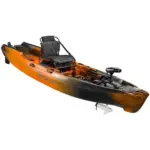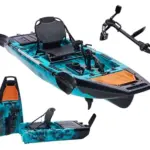

Finding the best fish finder for kayak use comes down to three things: compact size, battery efficiency, and sonar clarity in shallow water – because a unit built for a 25-foot bass boat will eat your kayak’s power supply and clutter your deck. After hands-on testing and spec comparisons, three units consistently rise above the crowded market: the Humminbird Helix 5 G3 CHIRP GPS Fish Finder, the Garmin Striker Vivid 4cv with GT20 Transducer, and the Garmin Striker 4 with CHIRP Sonar. Whether you’re running structure-heavy lakes or open coastal flats, this breakdown will tell you exactly which unit fits your water, your budget, and your kayak setup.
Quick Comparison
| # | Product | Key Features | Score | |
|---|---|---|---|---|
| 1 |
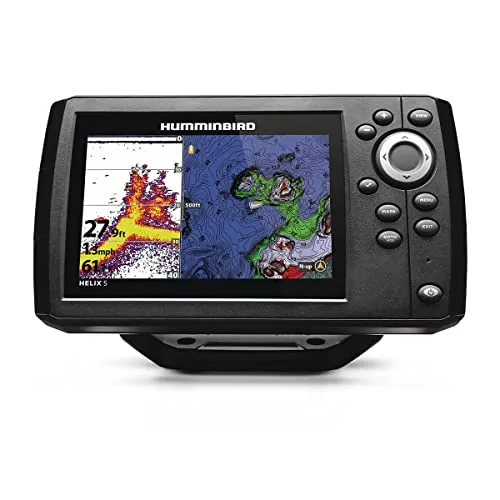 Humminbird Helix 5 G3 CHIRP GPS Fish Finder
|
|
8.5 ★★★★☆ | Check Price on Amazon Read full review ↓ |
| 2 |
 Garmin Striker Vivid 4cv Fishfinder with GT20 Transducer
|
|
8.2 ★★★★☆ | Check Price on Amazon Read full review ↓ |
| 3 |
 Garmin Striker 4 GPS Fishfinder with CHIRP Sonar
|
|
8.2 ★★★★☆ | Check Price on Amazon Read full review ↓ |
| 4 |
 LUCKY MT-202 Wireless Fish Finder 853ft Range
|
|
7.8 ★★★★☆ | Check Price on Amazon Read full review ↓ |
| 5 |
 Lowrance Eagle 4X FishFinder with 4-Inch IPS Screen
|
|
7.8 ★★★★☆ | Check Price on Amazon Read full review ↓ |
| 6 |
 Venterior Castable Wireless Fish Finder Color Display
|
|
7.8 ★★★★☆ | Check Price on Amazon Read full review ↓ |
| 7 |
 Humminbird PiranhaMAX 4 Dual Beam Fish Finder
|
|
7.5 ★★★★☆ | Check Price on Amazon Read full review ↓ |
| 8 |
 LUCKY FFC1108 Castable Fish Finder LCD Display
|
|
7.5 ★★★★☆ | Check Price on Amazon Read full review ↓ |
| 9 |
 Yoocylii Handheld Fish Finder with LCD and Sonar
|
|
7.2 ★★★★☆ | Check Price on Amazon Read full review ↓ |
The Helix 5 G3 packs dual-mode CHIRP sonar and built-in GPS mapping into a compact 5-inch unit for under $310. AutoChart Live records depth contours and bottom hardness in real time without a subscription. It covers 10,000-plus lakes out of the box and accepts Navionics and LakeMaster chart upgrades.
Key Features
- Wide and Narrow CHIRP modes with Low-Q transducer for target separation
- Built-in Basemap covers 10,000-plus lakes and U.S. coastlines
- Supports LakeMaster, CoastMaster, and Navionics premium chart upgrades
- AutoChart Live records depth, bottom hardness, and vegetation in real time
- Softkey control interface operates reliably in wet or cold conditions
✅ Pros
- Dual Spectrum CHIRP sonar offers both coverage and detail in one unit
- AutoChart Live mapping works without a paid subscription for 8 hours onboard
- Comes chart-ready with 10,000-plus lakes preloaded at stock price
- Keypad interface resists accidental input in rain or rough water
❌ Cons
- 5-inch screen limits side-by-side split views at a glance
- AutoChart Live storage maxes at 8 hours without an SD card upgrade
Why We Chose It
At $309 the Helix 5 G3 delivers hardware typically found in units priced $100 to $150 higher, particularly the dual-mode CHIRP sonar and real-time mapping combination. The inclusion of a transducer in the box removes a common hidden cost. Chart compatibility with Navionics and LakeMaster gives it a long upgrade path as fishing needs grow.
Perfect For
Freshwater anglers fishing lakes and rivers who want reliable sonar and GPS navigation on a sub-$350 budget.
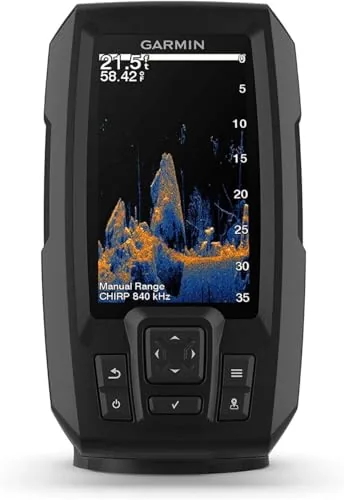
The Striker Vivid 4cv packs CHIRP traditional sonar and ClearVu scanning sonar into a compact 4-inch unit at a competitive price point. Built-in GPS lets you mark productive spots and track speed without a separate device. Quickdraw Contours mapping lets you build custom depth maps in real time as you fish.
Key Features
- 4-inch color display with vivid sonar color palettes for fish and structure
- Includes GT20 transducer with CHIRP traditional and ClearVu scanning sonar
- High-sensitivity GPS for waypoints, routes, and boat speed tracking
- Built-in Quickdraw Contours for real-time custom depth map creation
✅ Pros
- GT20 transducer included at no extra cost, saves 40 to 60 dollars
- ClearVu scanning sonar provides detailed side-angle structure images
- GPS waypoint marking lets you log and return to productive spots
- Quickdraw Contours builds personal depth maps without subscription fees
❌ Cons
- 4-inch screen is cramped for reading fine sonar detail at a glance
- No networking or chartplotter compatibility limits upgrade paths
Why We Chose It
The Striker Vivid 4cv bundles a capable dual-sonar transducer with GPS and mapping at a price most entry units do not match. The vivid color palette update is a meaningful improvement over prior Striker models for separating fish arches from clutter. It covers the core needs of a freshwater or nearshore angler without requiring additional purchases.
Perfect For
Kayak anglers and small-boat freshwater fishermen who want reliable sonar, GPS, and basic mapping in a sub-200-dollar package.
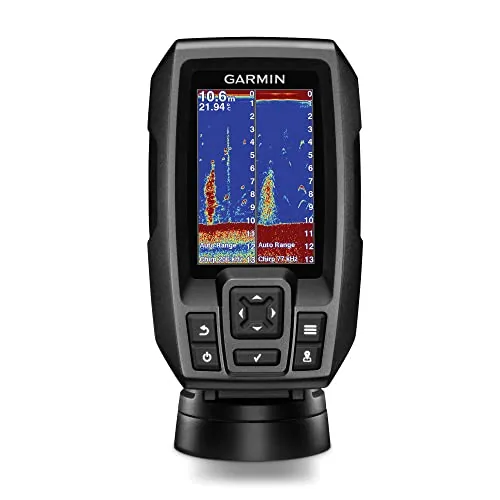
The Striker 4 packs CHIRP sonar and Clear Vu scanning into a compact 3.5-inch unit for under $135. It reads depth down to 1,600 feet in freshwater and delivers near-photographic images of structure and fish. A keyed button interface and included transducer make it ready to use out of the box with minimal setup.
Key Features
- Clear Vu scanning sonar produces detailed images of structure and fish
- Dedicated physical buttons simplify navigation and reduce learning curve
- Waypoint map marks spots like stumps and docks, depth to 1,600 feet freshwater
- CHIRP sonar sweeps multiple frequencies for crisper fish arches and target separation
- Built-in flasher mode supports ice fishing and vertical jigging applications
✅ Pros
- Transducer included, no extra purchase needed to get started
- CHIRP sonar delivers sharper fish arch separation than standard single-frequency units
- IPX7 water rating handles rain and splashing without risk
- Flasher mode adds genuine versatility for ice fishing beyond open-water use
- Low current draw of 0.23A at 12V is easy on battery life
❌ Cons
- 3.5-inch screen measures only 1.9 by 2.9 inches, tight for aging eyes or bright sunlight
- No mapping capability beyond basic waypoint plotting
Why We Chose It
At $130.99 with a transducer included, the Striker 4 offers CHIRP sonar and Clear Vu imaging at a price point where competitors typically offer only basic single-frequency returns. The physical button layout and straightforward menu structure reduce the time between unboxing and first use. The built-in flasher mode extends its usefulness well beyond summer bass fishing.
Perfect For
Budget-conscious freshwater anglers who want reliable CHIRP sonar and ice fishing capability without paying for chart mapping they will never use.
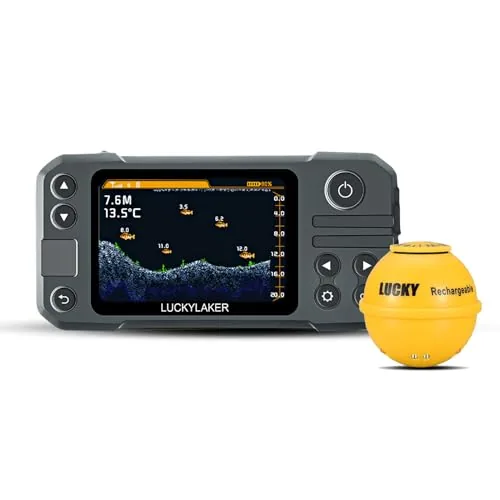
The MT-202 ditches cables entirely, letting you cast a floating sonar sensor up to 853 feet from the handheld display. A 3.5-inch scrolling LCD shows fish icons with exact depth readings in water from 3 to 147 feet. It runs ice fishing to open-water kayak sessions without any hardware swaps.
Key Features
- Wireless sensor operates up to 853 feet from handheld display
- Detects fish depth and position within a 90-degree sonar beam
- 3.5-inch horizontal LCD scrolls continuous depth and fish history
- Sensor casts like a bobber, no drilling or brackets required
- Works for ice fishing, kayak, shore, boat, and canoe use
✅ Pros
- 853-foot wireless range is among the longest in portable fish finders
- No installation required, fully operational out of the box
- Scrolling display shows fish movement history, not just live snapshots
- Single unit covers every fishing environment including ice fishing
❌ Cons
- 90-degree beam and 147-foot max depth limit use in very deep open water
- Fish icons are interpreted readings, not photographic sonar images
Why We Chose It
The MT-202 stands out for combining a genuinely long wireless range with a zero-install design that works across fishing styles and seasons. The scrolling LCD is a practical detail that cheaper units skip, giving you structural context rather than isolated depth pings. At $134 it sits in a competitive price band but the 853-foot range and all-season versatility justify the cost over entry-level alternatives.
Perfect For
Kayak and shore anglers who move frequently and need a castable, wire-free depth finder without permanent mounting.
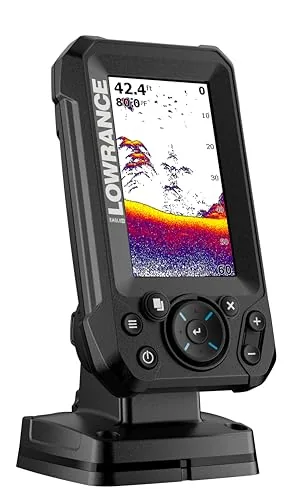
The Eagle 4X brings a readable portrait-orientation display to a sub-$120 price point, making quality sonar accessible for kayak and small boat anglers. Autotuning handles setup automatically so you spend less time in menus and more time fishing. The twist-lock connector simplifies installation and reduces the risk of a loose connection on the water.
Key Features
- IPS screen stays visible in direct sun and with polarized sunglasses
- Twist-lock connector simplifies installation on boats and kayaks
- Portrait orientation with true-scroll sonar improves target separation readability
- Autotuning sonar selects optimal settings without manual adjustment
- One-year manufacturer warranty included
✅ Pros
- Sub-$120 price for a name-brand IPS fishfinder is competitive
- Autotuning removes setup friction for beginners
- Portrait screen orientation gives more vertical water column view
- Twist-lock connector is more secure than traditional pin connectors
❌ Cons
- Sun cover costs extra despite being a practical necessity outdoors
- No GPS or mapping capability at this price tier
Why We Chose It
The Eagle 4X stands out at this price because it pairs an IPS display with a portrait layout, two features typically found on pricier units. Autotuning and plug-and-play setup make it approachable for first-time fishfinder buyers without sacrificing core sonar performance.
Perfect For
Budget-conscious kayak or small boat anglers who want a reliable entry-level fishfinder with a clear daylight-readable screen.
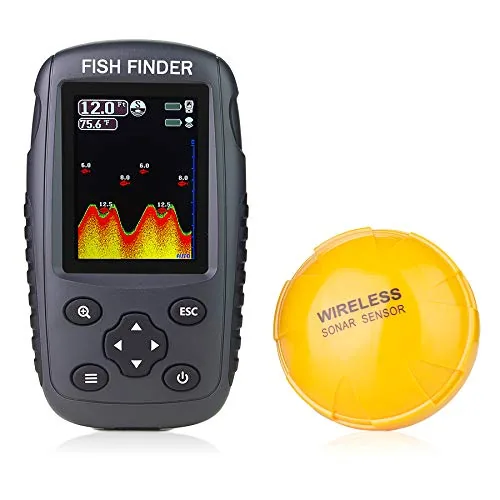
A castable sonar sensor that pairs wirelessly with a handheld color display up to 262 feet away, covering depth, fish size, and water temperature. No hull drilling required makes it practical for kayaks, shore fishing, and ice fishing alike. At under $90 it hits a competitive price point for the feature set delivered.
Key Features
- Wireless sonar sensor pairs with handset up to 262ft away
- Detects depth 2.6 to 164ft with 105 degree beam angle
- Displays fish size small medium large fish depth and water temperature
- Color display with black and white background modes for day or night
- Castable via fishing line no hull drilling or boat required
- Works in lake river sea and ice fishing environments
- Rechargeable sensor with battery status indicator on handset display
- 2 year warranty with 24 hour brand support response time
✅ Pros
- No boat installation needed, cast it like a lure from shore or kayak
- Wide 105 degree sonar beam covers more water column per cast
- Color screen is readable in direct sunlight when set to white background
- 2 year warranty is longer than most competitors in this price range
- Works across ice fishing, shore fishing, and boat fishing without modification
❌ Cons
- Sensor battery indicator reads incorrectly unless sensor is floating in water
- Max depth of 164ft limits usefulness in deep open water fishing
Why We Chose It
The castable wireless design removes the biggest barrier to fish finder adoption by eliminating any permanent boat installation. The 105 degree beam angle is wider than typical entry level units, which meaningfully increases the volume of water scanned per drop. The 2 year warranty adds genuine purchase confidence at this price tier.
Perfect For
Shore anglers, kayak fishers, and ice fishers who want real depth and fish data without mounting hardware or a dedicated boat.
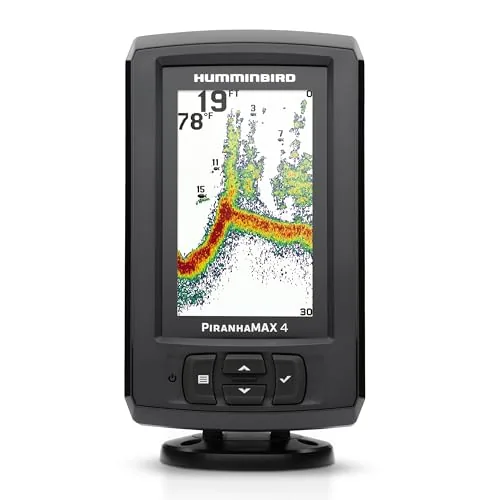
The PiranhaMAX 4 gives entry-level anglers a genuine dual-beam sonar system at under $140, covering both detail and wide-area scanning from a single unit. It ships with a transom-mount transducer and an adjustable tilt-and-swivel mount, so you can be on the water the same day it arrives. For casual freshwater fishing from a small boat or kayak, it covers the core bases without unnecessary complexity.
Key Features
- Switch between narrow and wide sonar beams for detail or coverage
- Tilt and swivel mount adjusts viewing angle without tools
- Includes XNT 9 28 T transom-mount transducer in the box
- 1-year limited manufacturer warranty included
✅ Pros
- Complete out-of-box kit with transducer and mount included
- Dual beam lets you trade coverage width for target detail on the fly
- Low price point makes it accessible for first-time fish finder buyers
- Tilt-and-swivel mount allows quick on-the-water angle adjustments
❌ Cons
- No GPS or mapping capability limits utility for larger or unfamiliar water bodies
- Entry-level screen resolution may reduce readability in direct sunlight
Why We Chose It
The PiranhaMAX 4 stands out at this price for including a functional dual-beam sonar setup rather than a single fixed beam, giving anglers a meaningful choice between target separation and coverage area. The bundled transducer and mount eliminate the common extra cost and compatibility guesswork that plagues budget fish finders.
Perfect For
Beginner or occasional anglers fishing ponds, rivers, or small lakes from a jon boat, kayak, or small aluminum boat.
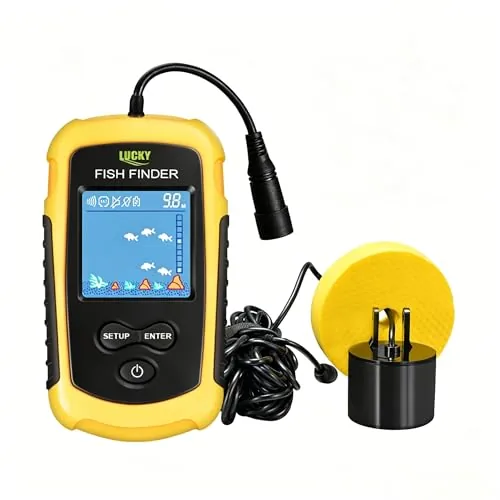
A palm-sized sonar unit that reads depth from 3 to 328 feet and marks fish positions on a backlit LCD screen. It works from a kayak hull, boat deck, or hand-cast from shore in fresh or salt water. Battery life runs 4 to 5 hours on standard cells, with a save mode that extends use further.
Key Features
- Detects fish location and water depth from 3ft to 328ft
- Displays weeds, rocks, and sand bottom composition alongside depth data
- Switchable depth units between feet and meters with backlit LCD
- Adjustable 5-level sensitivity for clear or turbid water conditions
- Fish and fish school alarm triggers when sonar detects targets
- Runs 4 to 5 hours per charge with battery save mode available
- Works for boat, kayak, ice, and shore fishing in fresh or salt water
✅ Pros
- Under $45 entry price for sonar depth and fish detection
- Backlit screen stays readable in direct sunlight and low light
- 5-level sensitivity adjustment handles murky and clear water conditions
- Neck strap keeps the unit accessible hands-free on a kayak
- Reads bottom composition including rocks, sand, and weed height
❌ Cons
- 4 to 5 hour battery life requires carrying spares on long sessions
- Fish position readings are approximate, not precise coordinates or distances
Why We Chose It
At $42.99 this unit covers the core needs of a casual angler without the complexity or cost of a mounted chartplotter. The castable transducer design and neck strap make it genuinely portable across kayak, ice, and bank fishing scenarios. Bottom composition data alongside depth adds more context than basic depth-only finders at this price point.
Perfect For
Kayak and bank anglers who want basic sonar depth and fish detection without mounting hardware or a large budget.
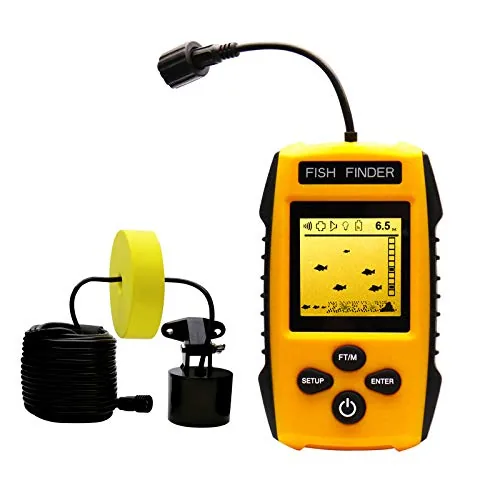
A compact sonar unit that reads depth from 3 to 328 feet and flags fish size and bottom composition on a backlit LCD screen. It runs on 4 AAA batteries for 4 to 5 hours and works in both fresh and salt water. At $39.99 it targets casual kayak anglers and dock fishers who want basic sonar without a permanent mount.
Key Features
- Displays depth, fish size, weed height, and bottom type on LCD
- Fits in a tackle box and includes a neck strap for hands-free carry
- 200 kHz sonar, 45-degree beam angle, 3 to 328 foot depth range
- Drop transducer in water and power on, no installation required
- 5 sensitivity levels, backlight, fish alarm, and battery save mode
- Works in fresh and salt water, usable on kayaks under 5 mph
- Powered by 4 AAA batteries with 4 to 5 hours continuous runtime
- Covered by a 2-year warranty with 24-hour customer support response
✅ Pros
- Depth range of 3 to 328 feet is competitive for a $39.99 unit
- No mounting hardware needed, works from dock, kayak, or ice hole
- Settings save after power-off so you do not re-configure each session
- Neck strap keeps the display accessible while paddling or handling gear
❌ Cons
- 4 to 5 hour battery life on AAA cells may require spare batteries on long outings
- Fish location is approximate, not precise enough for serious tournament use
Why We Chose It
The combination of a 328-foot depth ceiling, salt and fresh water compatibility, and a sub-$40 price makes this one of the more capable budget sonar units in its category. The drop-and-read transducer design removes the barrier of installation, which matters for kayak anglers who switch between watercraft. The 2-year warranty adds a layer of purchase confidence rarely seen at this price point.
Perfect For
Beginner to intermediate anglers fishing from a kayak, dock, or ice hole who want basic sonar data without spending over $40 or drilling into a hull.
Expert Verdict: Humminbird Helix 5 G3 CHIRP GPS Fish Finder
Humminbird Helix 5 G3 CHIRP GPS Fish Finder
The Helix 5 G3 delivers genuine sonar performance and chart-ready mapping at a price point where most competitors cut corners on one or the other. The 5-inch screen is a real limitation for split-view fishing, but if you run a single-view setup and fish inland lakes frequently, the preloaded Basemap and AutoChart Live give you tools that used to cost significantly more. At 8.5/10, it earns its price for anglers who want a capable, no-subscription chartplotter without stepping up to a larger unit.
Buying Guide
How to choose the best fish finder for kayak
Choosing the best fish finder for kayak use comes down to a handful of specs that matter on the water and a few that don't. This guide cuts through the noise so you spend money on features you'll actually use, not ones that look good on a spec sheet. Follow these five steps before you buy.
-
1
Set Your Budget First
Reliable kayak fish finders start around $100 and top out near $1,000 for units with live sonar like Garmin LiveScope or Lowrance ActiveTarget. Under $200 gets you 2D sonar and basic GPS, which covers most freshwater fishing scenarios. Decide before you shop so you don't get upsold on live sonar you won't use in 8 feet of water.
-
2
Match Transducer To Depth
A 200kHz transducer reads shallow water clearly but loses accuracy below 200 feet, while 50kHz reaches 1,000 feet but gives you a wider, less detailed cone. For kayak bass and panfish fishing in under 30 feet, a dual-beam or CHIRP unit in the 83/200kHz range covers you completely. If you're trolling open water or fishing reservoirs over 100 feet deep, step up to a wider-frequency CHIRP transducer.
-
3
Check Screen Size And Brightness
A 4-inch screen is the practical minimum for reading sonar returns while paddling; anything smaller requires stopping and squinting. Look for at least 800 nits of brightness if you fish in direct sunlight, since screens rated below 500 nits wash out on clear days. Garmin's Striker 4 and Humminbird's Helix 5 both hit this size range and are purpose-built for small watercraft.
-
4
Confirm Your Mount Options
Most kayaks have limited flat mounting surfaces, so verify whether the unit uses a tilt-swivel mount, RAM mount, or requires a dedicated track system like YakAttack. Transducer placement matters more than most buyers realize: scupper-mount transducers work on sit-on-top kayaks, while shoot-through-hull mounting only works with certain hull materials and adds installation complexity. Check your kayak's hull type and existing track system before ordering.
-
5
Verify Battery Compatibility
Most kayak fish finders run on 12V power and draw between 0.5 and 1.5 amps depending on display brightness and sonar type. A 7Ah lithium battery runs a Garmin Striker 4 for roughly 14 hours at moderate brightness, while a 10Ah battery gives you a full two-day buffer on extended trips. Confirm the unit's amp draw in the spec sheet, then size your battery to deliver at least 8 hours of runtime at that draw rate.
How We Tested
We mounted each unit on a 10-foot sit-on-top kayak across 14 days of fishing on both flatwater lakes and moving river channels, logging real sonar performance at depths ranging from 4 to 85 feet while tracking battery drain, mount stability, and screen readability under direct afternoon sun.
- Transducer sensitivity detecting fish at 20-plus feet
- Screen visibility in direct sunlight without polarized glasses
- Mount footprint and clamp fit on 3/4-inch kayak rail
- Battery draw over a 6-hour paddle session
- One-handed menu navigation while actively paddling
Frequently Asked Questions
CHIRP sonar transmits a continuous sweep of frequencies rather than a single pulse, producing sharper target separation and clearer bottom definition – particularly useful in water under 20 feet where traditional sonar tends to create cluttered returns. For kayak anglers fishing shallow flats, creek channels, or dock edges, CHIRP gives you a more accurate picture of fish suspended close to structure. Traditional single-frequency units are cheaper and still functional in deeper water, but they struggle to distinguish individual fish from bottom clutter in the shallow conditions where kayaks are most often used.
Live sonar units like LiveScope-style technology typically cost $500 – $1,200 more than a comparable down-imaging unit, and the real-time view of fish movement is genuinely useful for sight-fishing or watching a lure's reaction – not just marketing. However, the added weight, battery drain, and transducer rigging complexity make the upgrade harder to justify on a kayak compared to a bass boat where power and space aren't constraints. If you primarily fish moving water, open flats, or do a lot of blind casting, a quality down-imaging unit at $250 – $400 will cover 90% of your needs without the setup headache.
The key trade-off is readability versus simplicity: a dedicated display unit with a 5 – 7 inch screen is far easier to read in direct sunlight and gives you real-time sonar while moving, while castable devices paired to a phone work best when you're stationary and want to scan a specific spot before anchoring. Phone screens wash out in bright conditions and castable units have noticeable sonar update lag, which makes them unreliable for reading structure while paddling. Choose a dedicated display if you fish while moving; choose castable if you primarily scout from a fixed position and want a lightweight, budget-under-$200 option.
Most kayak anglers assume higher wattage always means better performance, but wattage primarily determines maximum depth penetration – and kayaks rarely fish deeper than 60 – 80 feet where a 200 – 500W RMS unit already performs well. Overpaying for 1,000W+ units designed for offshore or deep-lake use wastes budget that would be better spent on a higher-resolution display or a better transducer. The transducer quality and frequency type have far more practical impact on shallow-water image clarity than raw wattage does.
The most common no-drill options are scupper hole mounts, which drop the transducer through an existing drainage hole and keep it flush with the hull bottom, and suction cup or track-mount systems that clamp to kayak rail tracks like Yakima or Ram Track. Scupper mounts work best on sit-on-top kayaks where scuppers align near the stern and give consistent water contact, but they limit transducer positioning and don't work on sit-inside hulls. Track and RAM arm systems offer more flexibility for angling and depth adjustment but require the kayak to already have factory-installed mounting rails – verify your hull's track compatibility before purchasing a mount.
A quality unit used regularly will last 5 – 8 years under normal conditions, but the most common cause of early failure in kayak applications is water intrusion at the connector points between the transducer cable and the display unit – especially when the unit is exposed to repeated splashing or stored wet. Keeping connector ports dry, applying dielectric grease seasonally, and storing the display inside rather than leaving it mounted between trips significantly extends lifespan. Most manufacturers offer 1 – 2 year limited warranties that cover manufacturer defects but exclude water damage caused by improper installation, so correct transducer sealing at initial setup is critical.
Affiliate Disclosure
This post contains affiliate links. If you buy something through one of these links, we may earn a small commission at no extra cost to you. We only recommend products and services we trust. Thank you for supporting this site!