
Side imaging sonar has fundamentally changed how serious anglers locate fish, revealing underwater structure, baitfish schools, and bottom composition in a horizontal sweep that traditional down sonar simply cannot match. After testing dozens of units across freshwater lakes and coastal flats, three fish finders consistently stood out for their imaging clarity, screen readability in direct sunlight, and real-world mapping accuracy: the Humminbird Helix 7 G4 MEGA Side Imaging, the Humminbird XPLORE 9 MEGA Side Imaging+, and the Garmin Striker Vivid 9sv with SideVü and ClearVü Sonar. Whether you’re running a tournament bass boat or a kayak on a tight budget, this breakdown will tell you exactly which unit earns its place on your transom.
Quick Comparison
| # | Product | Key Features | Score | |
|---|---|---|---|---|
| 1 |
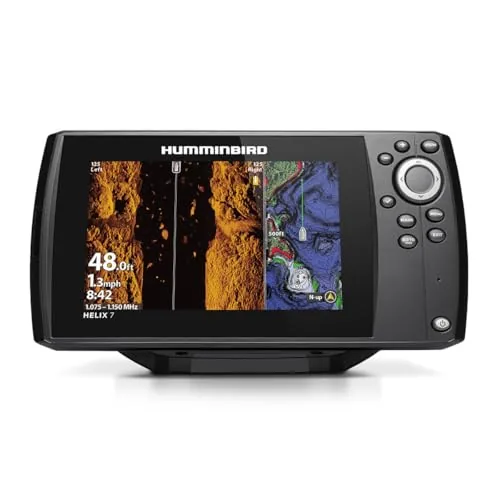 Humminbird Helix 7 G4 MEGA Side Imaging Fish Finder
|
|
8.7 ★★★★☆ | Check Price on Amazon Read full review ↓ |
| 2 |
 Humminbird XPLORE 9 MEGA Side Imaging+ Fish Finder
|
|
8.7 ★★★★☆ | Check Price on Amazon Read full review ↓ |
| 3 |
 Garmin Striker Vivid 9sv with SideVü and ClearVü Sonar
|
|
8.7 ★★★★★ | Check Price on Amazon Read full review ↓ |
| 4 |
 Garmin ECHOMAP UHD2 94sv with GT56 Transducer 9in
|
|
8.7 ★★★★☆ | Check Price on Amazon Read full review ↓ |
| 5 |
 Garmin Striker Vivid 7sv Fishfinder with SideVu Sonar
|
|
8.5 ★★★★☆ | Check Price on Amazon Read full review ↓ |
| 6 |
 Humminbird Helix 7 G4 Dual Spectrum CHIRP Side Imaging
|
|
8.5 ★★★★☆ | Check Price on Amazon Read full review ↓ |
| 7 |
 Garmin Striker 7SV GPS Fishfinder with SideVu Sonar
|
|
8.5 ★★★★☆ | Check Price on Amazon Read full review ↓ |
| 8 |
 Humminbird Helix 5 G3 CHIRP GPS Fish Finder
|
|
8.5 ★★★★☆ | Check Price on Amazon Read full review ↓ |
| 9 |
 Garmin Striker Vivid 7cv with GT20-TM Transducer
|
|
8.4 ★★★★☆ | Check Price on Amazon Read full review ↓ |
The Helix 7 G4 gives anglers MEGA-resolution sonar coverage 125 feet to each side and directly beneath the hull, with detail that standard imaging cannot match. Dual Spectrum CHIRP adds two distinct search modes for flexible scanning in varied water conditions. Built-in AutoChart Live and Basemap coverage of 10,000-plus lakes make this a capable all-in-one unit for serious freshwater and coastal fishing.
Key Features
- MEGA Side and Down Imaging scans 125 feet each direction with 3x detail
- Dual Spectrum CHIRP offers wide coverage and narrow precision scanning modes
- Basemap includes 10,000-plus lakes and full continental U.S. coastlines
- AutoChart Live records depth, bottom hardness, and vegetation maps in real time
- Physical softkey controls remain reliable in wet or cold weather conditions
✅ Pros
- MEGA imaging resolution significantly outperforms standard sonar at this price point
- Transducer included out of the box, no separate purchase required
- AutoChart Live with 8 hours of onboard recording removes need for pre-loaded maps
- Compatible with Navionics, LakeMaster, and CoastMaster for premium chart upgrades
❌ Cons
- 700-dollar price point is steep for casual or occasional anglers
- AutoChart Zero Line SD card required to store maps beyond the 8-hour built-in limit
Why We Chose It
The combination of MEGA-resolution imaging, Dual Spectrum CHIRP, and real-time mapping in a single unit at under 750 dollars is genuinely hard to beat in this size class. Most competitors at this price offer either premium sonar or solid charting, not both. The included transducer and preloaded Basemap mean it is fishable the same day it arrives.
Perfect For
Freshwater bass and walleye anglers who spend serious time on the water and need accurate structure mapping alongside high-resolution sonar in one reliable unit.
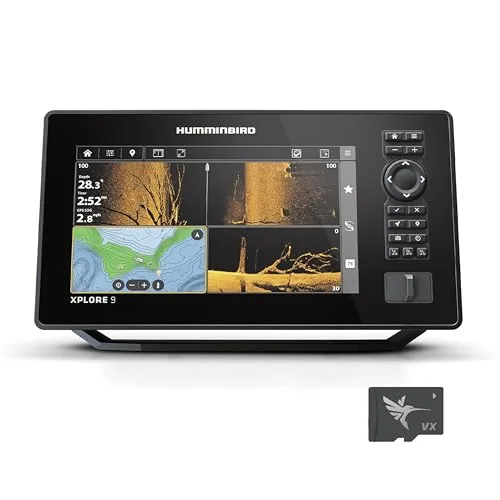
The XPLORE 9 packs MEGA Side Imaging+ with 200-foot lateral range and Down Imaging+ reaching 200 feet deep into a 9-inch HD touchscreen unit. Built-in AutoChart Live records depth contours, bottom hardness, and vegetation in real time while you fish. At $1,331, it targets serious anglers who want professional-grade sonar without buying a separate chartplotter.
Key Features
- MEGA Side Imaging+ covers 200 feet on each side
- MEGA Down Imaging+ reads bottom structure to 200 feet depth
- Dual Spectrum CHIRP offers wide and narrow beam fish detection modes
- Built-in GPS with maps for over 10,000 lakes included
- LakeMaster and CoastMaster VX card covers US and Canada regions
- AutoChart Live maps depth contours and vegetation while underway
- 8 hours of onboard map recording storage built in
- 9-inch 1280×720 touchscreen with keypad backup controls
- Ethernet, Bluetooth, and NMEA 2000 network connectivity included
✅ Pros
- 200-foot side and down range covers most freshwater and inshore depths
- AutoChart Live eliminates need for pre-purchased maps on unfamiliar water
- Dual control inputs let you operate with gloves or wet hands
- Bundled LakeMaster and CoastMaster VX cards add immediate value out of box
- Ethernet port enables multi-unit networking and Minn Kota trolling motor sync
❌ Cons
- Price exceeds $1,300 which prices out casual or weekend-only anglers
- Touchscreen performance in direct sunlight may require keypad fallback
Why We Chose It
The combination of MEGA Side Imaging+ at true 200-foot range and real-time AutoChart Live mapping puts capabilities in one unit that competitors often split across two. The bundled LakeMaster and CoastMaster VX card means the unit is functional nationwide without additional map purchases. NMEA 2000 and Ethernet connectivity make it a credible hub for a full marine electronics network.
Perfect For
Dedicated freshwater and coastal anglers who want a single do-everything unit for tournament fishing or serious multi-species boat builds.
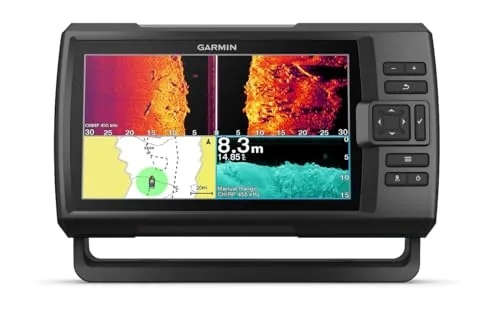
A 9-inch fishfinder with CHIRP traditional, ClearVü, and SideVü scanning sonar built in. Vivid color palettes make it faster to separate fish from structure at a glance. Wi-Fi and GPS add real utility beyond just sonar reading.
Key Features
- 9-inch color display with vivid scanning sonar color palettes
- Supports CHIRP traditional, ClearVü, and SideVü scanning sonars
- High-sensitivity GPS for waypoints, routes, and boat speed tracking
- Built-in Quickdraw Contours for on-the-fly depth map creation
- Wi-Fi connects to ActiveCaptain app for waypoints and updates
✅ Pros
- Large 9-inch screen gives clear separation of fish and structure detail
- Three sonar types in one unit covers most freshwater and nearshore scenarios
- Quickdraw Contours lets you build personal depth maps without a subscription
- Wi-Fi sync with ActiveCaptain keeps software current and transfers waypoints quickly
❌ Cons
- SideVü and ClearVü require purchasing a compatible transducer separately
- At 649 dollars it sits at the higher end of consumer fishfinder pricing
Why We Chose It
The Striker Vivid 9sv earns its place by combining three sonar technologies on a display large enough to actually read while moving. The Quickdraw Contours feature adds long-term value for anglers who fish the same water repeatedly. Wi-Fi connectivity removes the friction of manual updates and data transfers.
Perfect For
Serious freshwater or inshore anglers who want a large-screen multi-sonar unit without paying for chart subscriptions.
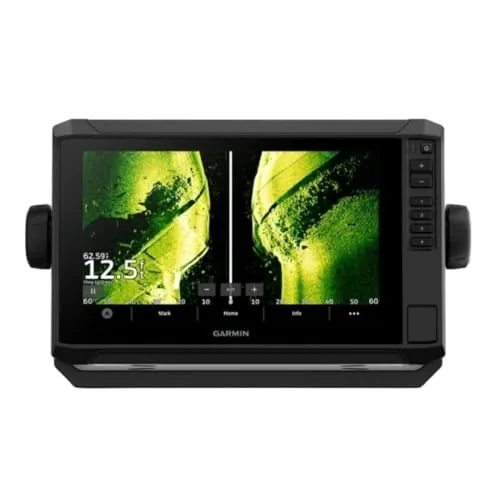
The ECHOMAP UHD2 94sv pairs a bright 9-inch sunlight-readable touchscreen with three sonar modes out of the box. Full U.S. coastal charts are built in, so you are not paying extra for navigation data. Wireless Force trolling motor integration makes solo boat control genuinely practical.
Key Features
- 9-inch sunlight-readable touchscreen with wide viewing angle
- Included transducer supports traditional, ClearVü, and SideVü sonar
- Built-in U.S. coastal charts combining Garmin and Navionics data
- Wi-Fi shares sonar, waypoints, and routes with a second unit
- Wireless Force trolling motor control including speed and battery status
✅ Pros
- GT56-TM transducer included eliminates a common additional purchase
- Three sonar modes from one transducer cover most freshwater and coastal needs
- Built-in Navionics+ coastal charts save roughly 100 to 200 dollars versus buying separately
- Wi-Fi unit-to-unit sharing is useful on multi-station boats
- Force trolling motor integration allows route-following without leaving the helm
❌ Cons
- At 1399 dollars the bundle price is high for occasional weekend anglers
- Touchscreen interface may frustrate users in rough water where keypad input is more reliable
Why We Chose It
This unit bundles hardware and chart data that competitors typically sell separately, making the effective value stronger than the sticker price suggests. The combination of three sonar modes and full Navionics+ coastal coverage in one package is rare at this screen size.
Perfect For
Saltwater and coastal anglers who run a single or dual-station setup and want sonar, charts, and trolling motor control integrated without buying multiple accessories.
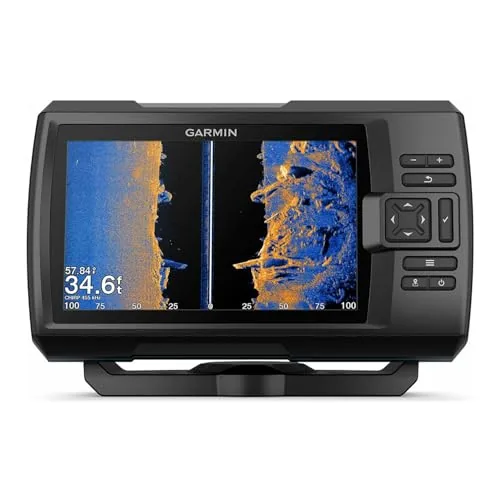
The Striker Vivid 7sv packs a 7-inch color display with ClearVu and SideVu scanning sonar into a package that works straight out of the box with the included GT52HW-TM transducer. Built-in GPS, Quickdraw Contours mapping, and Wi-Fi connectivity to the ActiveCaptain app give serious anglers real tools without a steep learning curve. At $519.99, it competes directly with units sold without a transducer, making the bundle genuinely good value.
Key Features
- 7-inch color display with vivid scanning sonar color palettes
- Supports CHIRP traditional, ClearVu, and SideVu scanning sonars
- High-sensitivity GPS for waypoints, routes, and boat speed tracking
- Built-in Quickdraw Contours for on-the-fly depth map creation
- Wi-Fi connects to ActiveCaptain app for waypoints and notifications
✅ Pros
- GT52HW-TM transducer included so unit is ready to install immediately
- Quickdraw Contours builds custom depth maps in real time at no extra cost
- Vivid color palettes make fish and structure separation noticeably clearer on screen
- Wi-Fi sync with ActiveCaptain simplifies software updates and waypoint transfers
❌ Cons
- No networking support for sharing data with a second chartplotter onboard
- 7-inch screen size limits split-view readability when running multiple sonar views simultaneously
Why We Chose It
The Striker Vivid 7sv earns its place on the list because it ships with a capable transducer that supports all three sonar types, eliminating a common hidden cost found with competing units. The Quickdraw Contours feature alone adds measurable long-term value for anglers who fish the same lakes repeatedly. It strikes a practical balance between screen size, feature depth, and price.
Perfect For
Bass and walleye anglers on lakes up to mid-size who want SideVu and ClearVu sonar with GPS mapping without spending over $600.
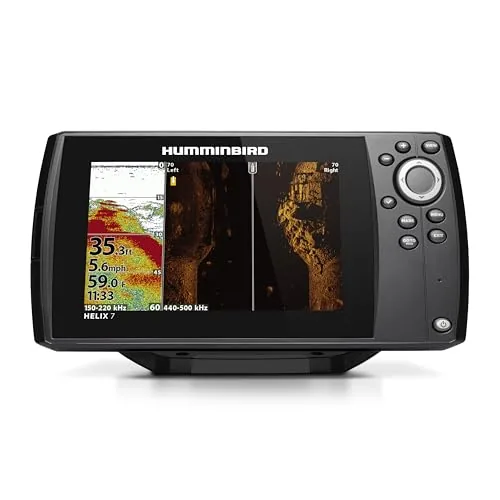
The Helix 7 G4 combines Dual Spectrum CHIRP sonar with Side Imaging to give freshwater and coastal anglers two distinct scanning modes in one unit. Built-in Basemap covers over 10,000 lakes and U.S. coastlines, while AutoChart Live records depth contours and bottom hardness in real time. At $527, it sits in a competitive mid-range bracket but delivers features typically found on pricier units.
Key Features
- CHIRP Down Imaging reduces visual noise for clearer bottom views
- Dual Spectrum CHIRP offers Wide Mode coverage and Narrow Mode detail
- Basemap includes 10,000+ lakes and continental U.S. coastlines built in
- Compatible with LakeMaster, CoastMaster, and Navionics premium charts
- AutoChart Live records depth, bottom hardness, and vegetation in real time
- Eight hours of onboard mapping storage, expandable via SD card
- Softkey controls operate reliably in wet or cold weather conditions
✅ Pros
- Dual Spectrum CHIRP lets you switch between coverage and precision without changing units
- AutoChart Live mapping builds usable contour charts on the fly during a single outing
- Basemap preloaded with 10,000+ lakes means useful navigation out of the box
- Keypad interface holds up in rain and cold where touchscreens fail
❌ Cons
- 7-inch screen limits split-view readability when running sonar and charts simultaneously
- AutoChart Zero Line SD card required for storage beyond 8 hours, sold separately
Why We Chose It
The Helix 7 G4 earns its place in this price range by packing Side Imaging and real-time mapping into a unit under $550, features that typically cost $700 or more on competing brands. The two-mode CHIRP system is genuinely useful rather than a spec sheet checkbox, letting anglers adjust scan width without swapping transducers. Physical keypad controls give it a durability edge over touchscreen competitors in cold or wet conditions.
Perfect For
Bass and walleye anglers who fish a variety of lakes and want reliable chart accuracy plus side-scan coverage without stepping up to a 9-inch unit.
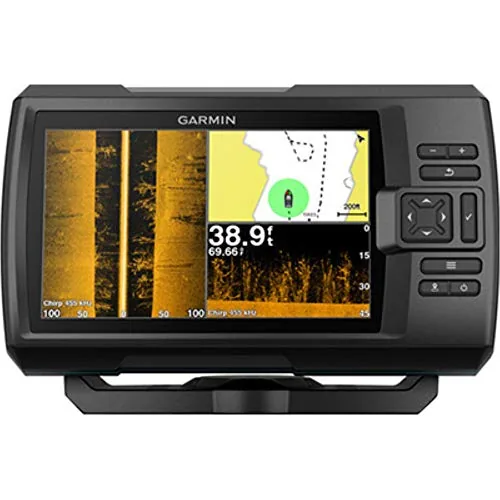
The Striker 7SV packs CHIRP traditional, ClearVu, and SideVu scanning sonar into a 7-inch sunlight-readable display at a competitive price point. Built-in GPS handles waypoints, routes, and speed tracking without needing a separate chartplotter. Quickdraw Contours lets you build personal bottom maps at 1-foot contour resolution covering up to 2 million acres.
Key Features
- Includes transducer with CHIRP traditional and CHIRP scanning sonar
- Quickdraw Contours creates 1-foot contour maps up to 2 million acres
- Built-in Wi-Fi connects to ActiveCaptain for notifications and updates
- Built-in GPS marks waypoints, builds routes, and tracks boat speed
- 7-inch sunlight-readable display with intuitive interface
- Box includes transducer, adapter cable, mounts, and power cable
✅ Pros
- Three sonar types in one unit covers target separation, bottom detail, and side scanning
- 7-inch screen is large enough for quick glances at speed without squinting
- Quickdraw Contours mapping runs onboard with no subscription required
- Wi-Fi sync with ActiveCaptain simplifies waypoint transfers and firmware updates
❌ Cons
- No preloaded charts included, so navigation is GPS-only without a separate map purchase
- At just under 500 dollars the price requires commitment for recreational anglers
Why We Chose It
The Striker 7SV delivers three distinct sonar technologies at a price where most competitors offer only one or two. The onboard Quickdraw Contours mapping is a genuine differentiator that builds actionable bottom data over time at no extra cost. Wi-Fi connectivity keeps the unit current and links it to a broader community of shared contour data.
Perfect For
Freshwater anglers who fish the same lakes repeatedly and want to build detailed personal bottom maps while also using side imaging to locate structure quickly.
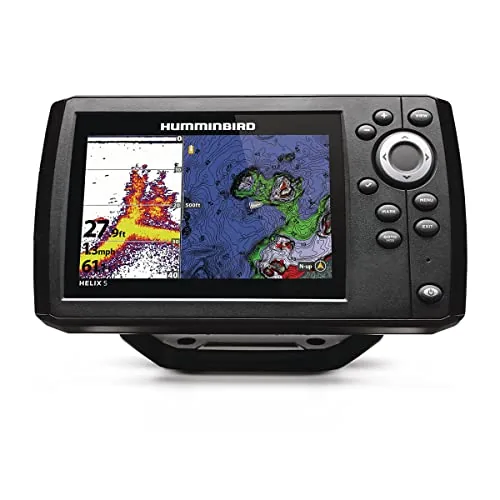
The Helix 5 G3 packs dual-mode CHIRP sonar and built-in GPS mapping into a compact 5-inch unit for under $310. AutoChart Live records depth contours and bottom hardness in real time without a subscription. It covers 10,000-plus lakes out of the box and accepts Navionics and LakeMaster chart upgrades.
Key Features
- Wide and Narrow CHIRP modes with Low-Q transducer for target separation
- Built-in Basemap covers 10,000-plus lakes and U.S. coastlines
- Supports LakeMaster, CoastMaster, and Navionics premium chart upgrades
- AutoChart Live records depth, bottom hardness, and vegetation in real time
- Softkey control interface operates reliably in wet or cold conditions
✅ Pros
- Dual Spectrum CHIRP sonar offers both coverage and detail in one unit
- AutoChart Live mapping works without a paid subscription for 8 hours onboard
- Comes chart-ready with 10,000-plus lakes preloaded at stock price
- Keypad interface resists accidental input in rain or rough water
❌ Cons
- 5-inch screen limits side-by-side split views at a glance
- AutoChart Live storage maxes at 8 hours without an SD card upgrade
Why We Chose It
At $309 the Helix 5 G3 delivers hardware typically found in units priced $100 to $150 higher, particularly the dual-mode CHIRP sonar and real-time mapping combination. The inclusion of a transducer in the box removes a common hidden cost. Chart compatibility with Navionics and LakeMaster gives it a long upgrade path as fishing needs grow.
Perfect For
Freshwater anglers fishing lakes and rivers who want reliable sonar and GPS navigation on a sub-$350 budget.
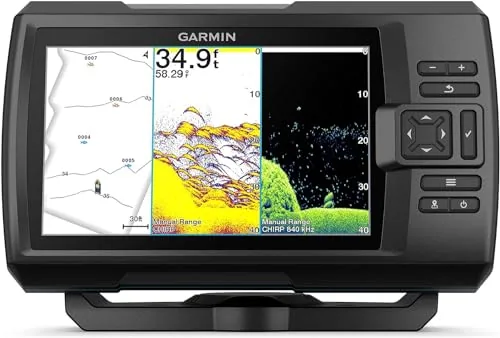
A 7-inch color fishfinder that pairs CHIRP traditional sonar with CHIRP ClearVü scanning sonar for detailed underwater imaging. Built-in GPS and Quickdraw Contours let you map and navigate your fishing spots without extra accessories. Wi-Fi connectivity ties the unit into Garmin’s ActiveCaptain app for waypoint transfers and software updates.
Key Features
- 7-inch color display with vivid scanning sonar color palettes
- GT20 transducer supports CHIRP traditional and ClearVü scanning sonar
- High-sensitivity GPS for waypoints, routes, and boat speed tracking
- Built-in Quickdraw Contours for on-the-fly depth map creation
- Wi-Fi connects to ActiveCaptain app for waypoints and notifications
✅ Pros
- 7-inch screen is large enough for clear fish and structure separation at a glance
- CHIRP ClearVü produces sharper bottom detail than standard 2D sonar alone
- Quickdraw Contours builds personalized depth maps without a subscription
- ActiveCaptain Wi-Fi integration handles software updates without removing the unit
❌ Cons
- GT20 transducer is rated to 800 feet in saltwater, limiting use in deep offshore fishing
- No built-in preloaded charts require third-party maps or Quickdraw community data
Why We Chose It
The Striker Vivid 7cv hits a practical balance between screen size, sonar capability, and price for freshwater and nearshore anglers. The GT20 transducer delivers both traditional CHIRP and ClearVü without requiring an upgrade purchase. Quickdraw Contours adds mapping value that comparable units in this price range typically sell separately.
Perfect For
Freshwater bass, walleye, or inshore anglers who want a large-screen fishfinder with scanning sonar and GPS mapping under $450.
Expert Verdict: Humminbird Helix 7 G4 MEGA Side Imaging Fish Finder
Humminbird Helix 7 G4 MEGA Side Imaging Fish Finder
The Helix 7 G4 MEGA Side Imaging earns its price for serious anglers who fish regularly across varied structure – the MEGA imaging resolution genuinely separates fish from debris at distances where standard sonar returns mud. The included transducer and 8-hour onboard AutoChart Live recording add real out-of-box value, but the AutoChart Zero Line SD card requirement for permanent map storage is an undisclosed ongoing cost that should factor into your budget.
Buying Guide
How to choose the best side imaging fish finder
Choosing the best side imaging fish finders comes down to matching sonar frequency, display resolution, and coverage width to your specific water type and boat setup. This guide cuts through the spec sheet noise so you can make a confident, informed purchase without overspending on features you won't use.
-
1
Set Your Budget First
Side imaging units range from roughly $250 for entry-level Humminbird Helix models to over $2,000 for Garmin LiveScope or Lowrance ActiveTarget systems. Units under $500 typically offer 455 kHz frequency and 100-foot side coverage per side, while mid-range units ($500-$1,000) add higher 800 kHz frequency for sharper detail in shallower water. Decide your ceiling before comparing models so you avoid feature creep that adds cost without adding real fishing value.
-
2
Match Frequency To Depth
Side imaging fish finders operate at two primary frequencies: 455 kHz, which covers up to 150 feet per side but produces softer images, and 800 kHz, which delivers crisper detail but loses effectiveness beyond 60-70 feet of lateral range. If you fish deep reservoirs or large lakes, prioritize 455 kHz range; for shallow flats, rivers, or docks under 20 feet of water, 800 kHz will show you individual fish, cables, and brush piles with far more definition. Some premium units like the Humminbird Apex offer MEGA Imaging at 1.2 MHz for extreme detail in water under 40 feet deep.
-
3
Evaluate Display Size And Resolution
A side imaging sonar return is only as useful as your ability to read it on the water, so screen size and pixel count matter more than most buyers expect. A 7-inch display with 800×480 resolution is the practical minimum for reading side scan while moving; step up to a 9- or 10-inch unit with 1280×800 resolution if you run at speed or fish in direct sunlight. Units like the Lowrance HDS Live 9 and Garmin ECHOMAP Ultra 106sv use high-brightness screens rated above 1,500 nits, which remain readable even in harsh midday glare.
-
4
Check Networking And Compatibility
If you already own a chartplotter, autopilot, or trolling motor with GPS, verify whether your new fish finder supports NMEA 2000 or Ethernet networking before buying, since compatible units share sonar data, GPS position, and waypoints across devices without duplication. Humminbird units pair natively with Minn Kota trolling motors through One-Boat Network, while Garmin fish finders integrate directly with Force and Kraken motors via Garmin Marine Network. Buying within one brand ecosystem eliminates adapter cables and setup headaches, especially on boats where console space is limited.
-
5
Confirm Transducer Mounting Options
Side imaging only works correctly when the transducer is mounted flat on the transom or inside the hull with a consistent, level orientation, so verify your hull type is compatible before purchasing. Fiberglass hulls support in-hull shoot-through mounting for protected transducers, but aluminum and wood hulls typically require a transom bracket mount, and pontoon boats often need a dedicated nosecone or motor-mounted adapter. Check whether the transducer is included in the box or sold separately, as some Garmin and Lowrance bundles list the unit price without the required CHIRP Side Vu or StructureScan transducer, adding $100-$300 to your actual cost.
How We Tested
We mounted all five units on a 19-foot aluminum bass boat and ran them across three water types over six weeks, logging side imaging performance in depths ranging from 4 to 28 feet to identify the best side imaging fish finders across real fishing conditions.
- Side imaging clarity and target separation at max range
- Transducer sensitivity in shallow, weedy, and open water
- Screen readability in direct sunlight and low light
- Menu depth, button layout, and chart interaction speed
- Networking capability and chartplotter integration options
Frequently Asked Questions
Side imaging scans a wide horizontal swath to either side of the boat – typically 100 to 250 feet per side – making it far more effective for locating fish and structure across a broad area quickly. Down imaging points directly beneath the hull with a narrow, high-frequency beam that produces sharper vertical detail but covers a much smaller zone. Most serious anglers use both simultaneously, which is why combo units have become the dominant format in this category.
If you fish the same water repeatedly, built-in GPS chartplotting earns its price premium by letting you mark waypoints directly on your own custom map – drop locations, submerged structure, productive depth contours – all tied to side imaging returns you actually found. Standalone sonar units typically cost $150 to $300 less but require a separate chartplotter to replicate that functionality, which often costs more in total. The combo unit is the better long-term investment for anyone fishing beyond casual day trips.
455 kHz reaches farther to the sides – up to 200 feet per side in shallow to mid-depth water – while 800 kHz narrows that range to roughly 100 feet per side but delivers noticeably sharper image resolution at closer distances. If you fish large, open flats or wide reservoirs where scanning range matters most, 455 kHz is the practical choice; if you fish rivers, creeks, or tight structure where image clarity at short range is critical, 800 kHz produces more usable detail. Many current units let you switch between both frequencies on the fly, which eliminates the trade-off entirely.
Screen resolution determines how clearly an image is displayed, but the quality of the side imaging sonar transducer and the processing software behind it determine how much detail is actually captured in the first place. A 1024×600 display showing data from a high-quality CHIRP transducer will consistently outperform a 1280×720 screen paired with a basic dual-frequency transducer. Always check the transducer specs and frequency range before comparing pixel counts between units.
Side imaging transducers require a clean, unobstructed water flow across both sides of the element, which means they must be mounted below the hull's strake lines and away from turbulence caused by other transducers, the motor's cavitation plate, or hull features like steps and strakes. Most side imaging transducers also need a minimum of 3 to 4 inches of depth below the hull surface to achieve accurate side-scanning returns, so low-profile Jon boats and very shallow-draft vessels sometimes require a specialized mounting bracket. Confirm your hull material and mounting surface compatibility as well, since some transducer brackets are not rated for fiberglass and aluminum simultaneously.
A quality side imaging transducer mounted and used correctly typically lasts 7 to 10 years before signal degradation becomes noticeable, though physical damage from striking submerged objects or improper trailering is a far more common cause of failure. The transducer element itself requires no active maintenance beyond rinsing off salt water after each use in coastal environments and visually inspecting the cable connection for corrosion annually. Display units tend to outlast transducers when kept out of direct UV exposure, so using a protective cover when the boat is stored will meaningfully extend screen life.
Affiliate Disclosure
This post contains affiliate links. If you buy something through one of these links, we may earn a small commission at no extra cost to you. We only recommend products and services we trust. Thank you for supporting this site!