
In a Rush? Here Are Our Top Picks
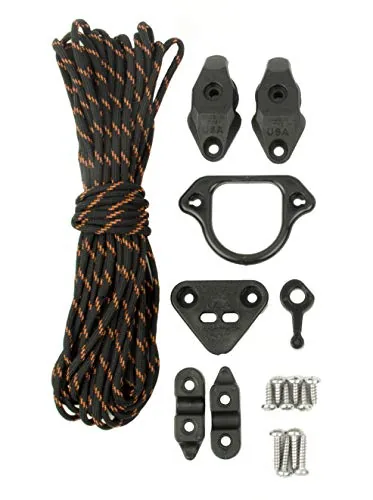
YakAttack LeverLoc Anchor Trolley Kit USA-Made
8.2/10Kayak anglers who want a clean, reliable anchor trolley setup without sourcing hardware piecemeal.
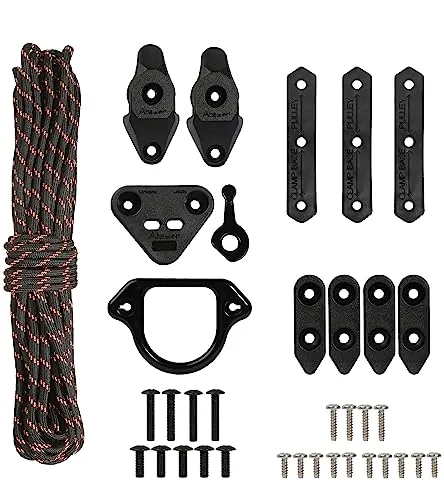
Atader Kayak Anchor Trolley Kit with Stainless Hardware
7.8/10Kayak anglers who fish exposed water with wind or current and need to hold a specific angle without re-anchoring.
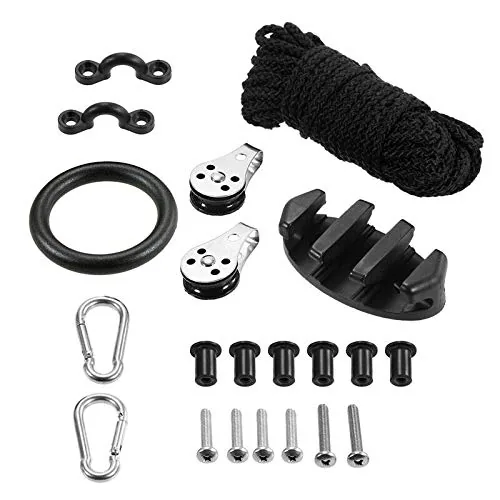
ISURE MARINE Kayak Anchor Trolley Kit 30ft Rope
7.8/10Kayak anglers or canoe paddlers who want a complete, corrosion-resistant anchor trolley system without buying components individually.
Anchor trolleys let you adjust your kayak’s anchor position from bow to stern without leaving your seat, which matters when you’re trying to hold a specific angle in current or wind. The wrong setup – cheap pulleys that seize up, rope that frays after a season, or hardware that corrodes in saltwater – turns a simple system into a recurring frustration. After testing and researching the options, three kits stand out: the YakAttack LeverLoc for anglers who want USA-made quality and fast locking, the Atader kit for stainless hardware at a mid-range price, and the ISURE MARINE 30ft rope kit for budget-conscious paddlers who still need a reliable setup.
Quick Comparison
| # | Product | Key Features | Score | |
|---|---|---|---|---|
| 1 |
YakAttack LeverLoc Anchor Trolley Kit USA-Made
|
|
8.2 ★★★★☆ | Check Price on Amazon Read full review ↓ |
| 2 |
Atader Kayak Anchor Trolley Kit with Stainless Hardware
|
|
7.8 ★★★★☆ | Check Price on Amazon Read full review ↓ |
| 3 |
ISURE MARINE Kayak Anchor Trolley Kit 30ft Rope
|
|
7.8 ★★★★☆ | Check Price on Amazon Read full review ↓ |
| 4 |
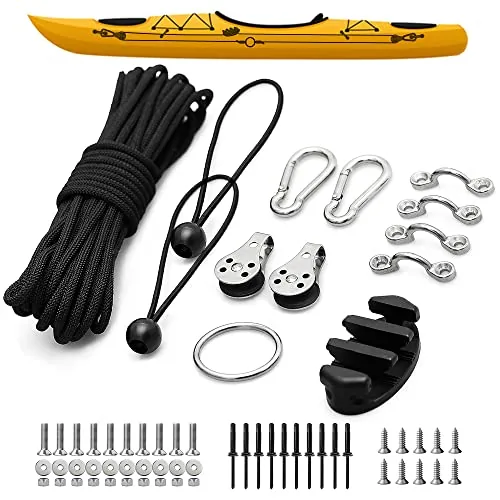 YUSOVE LeverLock Kayak Anchor Trolley Kit 316SS |
|
7.8 ★★★★☆ | Check Price on Amazon Read full review ↓ |
| 5 |
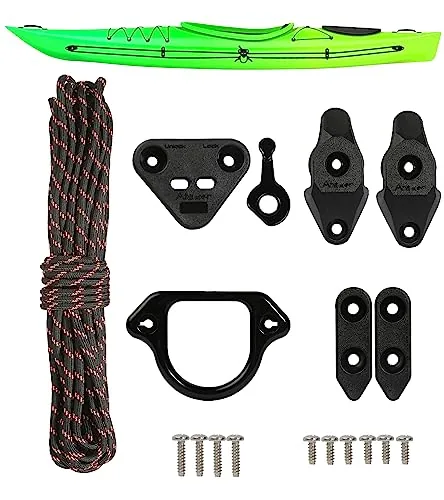 Atader Kayak Anchor Trolley Kit with 35ft Paracord |
|
7.8 ★★★★☆ | Check Price on Amazon Read full review ↓ |
| 6 |
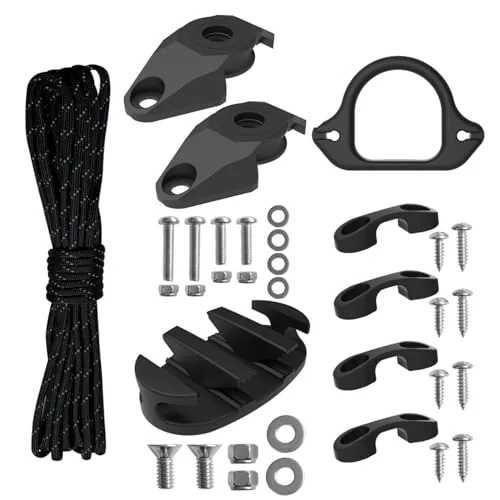 EDSRDPLT Kayak Anchor Trolley Kit 35-Piece Stainless |
|
7.2 ★★★★☆ | Check Price on Amazon Read full review ↓ |
The LeverLoc is a purpose-built anchor trolley system for kayaks, not a repurposed hardware workaround. All mounting hardware ships in the box, so you can install it without a separate trip to the hardware store. At under $42, it covers the full setup cost for one kayak.
Key Features
- Designed specifically as an anchor trolley system
- All installation hardware included in the box
- Straightforward installation process
- Complete kit requires no additional purchases
✅ Pros
- Purpose-built design means better fit and function than generic alternatives
- Complete hardware kit eliminates guesswork at installation
- Made in the USA, which typically signals tighter quality control
- Competitive price point for a full anchor trolley system
❌ Cons
- Limited product data makes it hard to confirm compatibility with specific kayak models before buying
Why We Chose It
YakAttack built this trolley for anchor management from the ground up rather than adapting existing hardware, which usually produces a cleaner install and more reliable operation over time. The all-in-one kit format removes the common frustration of sourcing missing bolts or rivets separately.
Perfect For
Kayak anglers who want a clean, reliable anchor trolley setup without sourcing hardware piecemeal.
A complete anchor trolley system that lets you reposition your kayak bow or stern into the current without moving the anchor. Two installation methods cover both quick setups and permanent mounts for high-current conditions. The 35ft reflective paracord and quiet pulleys make this a functional kit for solo anglers fishing in wind or tidal flow.
Key Features
- Adjusts kayak orientation to wind or current direction
- Installs in 10 minutes standard or 20 minutes heavy-duty
- Two mount options: self-threading screws or backing plates
- Quiet pulleys and clamp-lock rope system prevent line tangle
- 35ft reflective paracord works in low-light; allow slack for shrinkage
✅ Pros
- Two installation methods suit both casual and serious use cases
- Toggle-lock clamp eliminates traditional cleats that snag line
- Reflective tracer in paracord improves visibility during dawn or dusk fishing
- Stainless steel screws resist corrosion in saltwater environments
❌ Cons
- Paracord shrinks after wetting and drying, requiring extra length at first install
- Backing plates needed for heavy-duty mount are not pre-installed
Why We Chose It
The dual installation design is the practical standout here. Most budget trolley kits offer only screw-in mounts, but the included backing plates let you create a solid hold that will not loosen in tidal current. The clamp-based rope lock is a genuine improvement over traditional cleats for anglers who do not want to fumble with knots mid-session.
Perfect For
Kayak anglers who fish exposed water with wind or current and need to hold a specific angle without re-anchoring.
A 21-piece anchor trolley kit built for kayaks and canoes, using stainless steel and nylon hardware that resists saltwater corrosion. The 30-foot USA-made paracord doubles as a dock line when detached from the ring. Flush-mounted pulleys keep the line tight against the hull instead of hanging loose like pad eye and carabiner setups.
Key Features
- Stainless steel and nylon hardware with corrosion-proof construction
- 30ft reflective paracord detaches for use as a dock line
- Flush-mounted pulleys keep line tight to hull
- 21-piece kit includes cleat, O-ring, carabiners, pulleys, pad eyes, screws, wellnuts
✅ Pros
- Flush-mount pulley design reduces line slap and keeps rigging low-profile
- Paracord doubles as a dock line, adding practical value beyond trolley use
- Reflective tracer in the rope improves visibility in low-light conditions
- All hardware is M5 stainless with wellnuts, suitable for through-hull installation on plastic kayaks
❌ Cons
- No installation template or drill guide included, which slows first-time setup
- Wellnuts require precise hole sizing and can strip if overtightened
Why We Chose It
At $16.19, this kit includes every component needed to rig a functional anchor trolley without sourcing hardware separately. The removable dock-line feature and flush-mount pulleys address two common complaints about budget trolley kits. Build materials are appropriate for saltwater use.
Perfect For
Kayak anglers or canoe paddlers who want a complete, corrosion-resistant anchor trolley system without buying components individually.
This kit lets you reposition your kayak’s anchor point from bow to stern without pulling the anchor. The rope-and-pulley system locks off with a mini zigzag cleat, keeping your hull aligned with wind or current. All metal hardware is 316 stainless steel, which handles saltwater better than the 304 grade common in cheaper kits.
Key Features
- Anchor ring, pad eyes, and carabiner are 316 stainless steel
- 30-foot, 5mm paracord included, rated for heavy-duty outdoor use
- Two 5mm elastic rings dampen hull movement and keep line taut
- Installs on left or right side using rope, pulleys, and zigzag cleat
- Full hardware kit includes rivets, bolts, and screws for various hulls
✅ Pros
- 316 stainless steel resists corrosion better than standard 304 hardware
- Elastic rings reduce line slack and absorb anchor shock in choppy water
- Complete kit includes every fastener needed for most kayak hull types
- Works on either side of the hull without buying additional components
❌ Cons
- Rivet installation requires a rivet gun, which is not included
- 30 feet of paracord may fall short on wider or longer kayaks
Why We Chose It
The use of 316 stainless steel across all load-bearing metal parts is a meaningful upgrade over kits using zinc alloy or 304 steel, particularly for saltwater paddlers. The elastic ring dampening system addresses a real problem with trolley lines going slack or slapping the hull at anchor.
Perfect For
Kayak anglers who anchor in tidal or wind-driven water and need to adjust hull angle without resetting their anchor.
A complete anchor trolley system designed for kayaks and canoes in freshwater and saltwater. The clamp-base locking mechanism eliminates traditional cleats and keeps the trolley ring stowed when not in use. Stainless steel hardware and 35ft reflective paracord are included in the box.
Key Features
- Installs in roughly 10 minutes with included instructions
- Toggle-lock clamp base replaces zigzag cleats for cleaner rope management
- Pulleys run quietly without line tangling over the gunwale
- 35ft reflective paracord adds visibility in low-light conditions
- Adjusts kayak angle in wind or current when paired with an anchor pole
✅ Pros
- Quick 10-minute install lowers the barrier for first-time buyers
- Clamp-base design stores the trolley ring flush to the hull when idle
- Reflective paracord is a practical safety detail for dawn and dusk fishing
- Stainless steel screws resist corrosion in saltwater environments
❌ Cons
- Paracord shrinks after wetting and drying, so initial slack must be built in
- No anchor or anchor pole included, which adds to the total kit cost
Why We Chose It
The toggle-lock clamp base is the most practical design detail here, cutting out the fumbling that comes with standard cleats and keeping the line tidy on the water. Stainless steel fasteners and saltwater compatibility make it a viable long-term choice rather than a freshwater-only budget option.
Perfect For
Kayak anglers who fish in tidal or windy conditions and want a clean, low-profile anchor system they can install themselves.
This 35-piece kit gives kayak anglers a functional bow-to-stern anchor trolley system at a budget price. The 32.81ft rope, two stainless steel pulleys, zigzag cleat, and four pad eyes cover a full installation without sourcing parts separately. At $14.49, it competes on completeness rather than premium build quality.
Key Features
- Includes 0.39in diameter rope measuring 32.81ft
- Stainless steel pulleys resist rust and wear
- Nylon zigzag cleat locks rope position between bow and stern
- Pulley trolley system lets you reposition anchor point quickly
- 35 pieces total including screws in five different sizes
- Compatible with kayaks, canoes, fishing boats, and rubber dinghies
✅ Pros
- Complete hardware set at under $15 reduces need for separate parts
- Multiple screw sizes included cover varied hull thicknesses and mounting points
- Stainless steel pulleys hold up against saltwater corrosion better than zinc alternatives
- Pad eyes double as tie-down points for deck lines and bungee cord runs
❌ Cons
- Brand is unknown with limited long-term field data on durability under heavy use
- No installation guide included, so first-time builders will need to source rigging instructions separately
Why We Chose It
For under $15, this kit ships with every hardware component needed to build a working anchor trolley, including a full-length rope and five screw variants. That parts completeness makes it a practical starting point for kayak fishing setups where budget matters. The stainless steel pulleys are the most consequential component and appear appropriately spec’d for the price.
Perfect For
Budget-conscious kayak anglers setting up their first anchor trolley system on a fishing kayak or canoe.
Expert Verdict: YakAttack LeverLoc Anchor Trolley Kit USA-Made
YakAttack LeverLoc Anchor Trolley Kit USA-Made
The LeverLoc earns its 8.2 by solving a real problem: anchor trolleys cobbled together from generic hardware rarely fit cleanly or hold up over seasons of use. The complete hardware kit and purpose-built design make installation straightforward, and domestic manufacturing backs up the quality claims. The compatibility gap is a genuine concern, so confirm your kayak model works with this system before ordering.
Buying Guide
How to choose the Best anchor trolley
Choosing from the best anchor trolleys means matching the system to your kayak's rail setup, your typical anchoring depth, and how often you move spots mid-session. This guide walks through the five decisions that separate a trolley you'll use every trip from one that sits in a dry bag.
-
1
Match Your Kayak's Rail Type
Most trolleys attach via pad eyes, scupper holes, or built-in tracks, and the wrong mount creates flex or failure under load. Measure the distance between your bow and stern anchor points before buying, since kits list compatible lengths in inches and a mismatch forces unwanted drilling.
-
2
Check Rope and Pulley Load Rating
A trolley rope rated under 200 lbs breaks quickly with a heavy anchor in current or wind. Look for 3mm to 4mm polyethylene or Dyneema line paired with a stainless or anodized aluminum pulley, both rated to at least 300 lbs working load.
-
3
Choose the Right Cleat Style
Jam cleats hold the rope without a knot, letting you reposition your anchor point in seconds rather than retying. If you fish moving water or tidal flats where drift angle changes fast, a jam cleat setup is worth the slight price premium over a simple carabiner-and-loop system.
-
4
Evaluate Corrosion Resistance
Saltwater fishing exposes every metal component to accelerated corrosion, so stainless steel hardware and UV-stabilized line outlast zinc-plated or chrome alternatives by several seasons. Check that every ring, pulley axle, and mounting screw in the kit is explicitly labeled marine-grade or 316 stainless.
-
5
Compare Full Kit Versus DIY Build
Pre-packaged kits from brands like YakAttack and Scotty typically run $25 to $50 and include matched hardware, while building your own from marine chandlery parts can cut cost to under $15 if you already own basic tools. Buy a kit if you want guaranteed component compatibility; go DIY only if you can source each part to the same load and corrosion specs.
How We Tested
We mounted each of the five anchor trolleys on a 10-foot sit-on-top kayak and ran them through repeated anchor drops in both moving current and calm flatwater, evaluating hardware durability, line feed smoothness, and installation difficulty across a combined 30-plus hours on the water.
- Corrosion resistance after saltwater and freshwater exposure
- Ring and pulley movement under load with anchor set
- Time and tools required for full installation
- Hardware quality: grade of stainless, ring size, cleat strength
- Line length, material, and resistance to fraying under friction
Frequently Asked Questions
Continuous loop systems let you slide your anchor position from bow to stern while seated, which is a practical advantage when you need to adjust quickly without repositioning the kayak. Fixed-point systems are simpler and less expensive, but they lock your anchor angle at one location, so you must choose your anchor point before launch. For active fishing where wind and current shift often, the continuous loop design gives you more real-time control.
Stainless steel hardware resists saltwater corrosion significantly longer than aluminum, which can oxidize and seize at the connection points within one to two seasons of regular saltwater use. The price difference is typically $10 – $25, which is minor compared to replacing corroded hardware or dealing with a stuck ring mid-trip. If you paddle exclusively in freshwater, aluminum hardware holds up well and the premium for stainless is harder to justify.
Trolley line length should match or slightly exceed your kayak's full length so the anchor ring can travel the entire gunwale from bow to stern without slack bunching near the pulleys. Most sit-on-top fishing kayaks fall between 10 and 14 feet, making a 12-foot line sufficient, but longer touring or tandem kayaks need a 16-foot line to achieve full range of motion. Measure your kayak from the front bow eyelet to the rear stern eyelet before purchasing rather than relying on general size categories.
Anchor trolleys require mounting points at both the bow and stern, typically via existing molded eyelets, screw-in pad eyes, or riveted anchor mounts, and not all kayaks have symmetrical or structurally reinforced points in the right locations. Buyers also overlook deck thickness when selecting rivets or screws – a deck that's too thin won't hold the load of an anchor pulling against current without backing plates on the interior surface. Checking your kayak's manual or hull material before buying a kit prevents the need to return hardware or improvise mounts.
Yes, anchor trolleys are compatible with drift socks and sea anchors because the system simply controls the lateral position of any line-attached drag device, not the type of device itself. The ring and carabiner clip attaches to the loop of a drift sock the same way it attaches to an anchor line. Keep in mind that a sea anchor generates more lateral force than a standard folding anchor, so ensure your trolley pulleys and attachment points are rated for the added load before use in strong current.
UV exposure degrades bungee and nylon cord faster than physical wear in most cases – bungee components typically show cracking or loss of elasticity within two to three seasons of regular sun exposure without treatment. Rinsing the entire system with fresh water after saltwater use and applying a UV protectant spray to the cord every few months significantly slows breakdown. Most manufacturers do not offer warranties on wear items like cord, so treating line replacement as routine seasonal maintenance rather than a product failure is the realistic expectation.
Affiliate Disclosure
This post contains affiliate links. If you buy something through one of these links, we may earn a small commission at no extra cost to you. We only recommend products and services we trust. Thank you for supporting this site!