
In a Rush? Here Are Our Top Picks
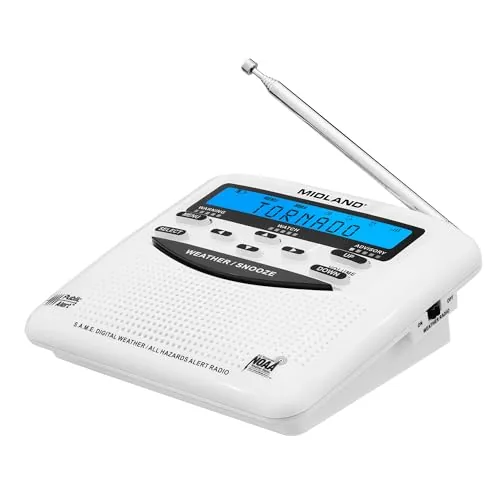
Midland WR120B NOAA Weather Alert Radio with S.A.M.E.
8.2/10Homeowners in tornado, hurricane, or flood-prone regions who want localized alerts without monitoring a phone app.
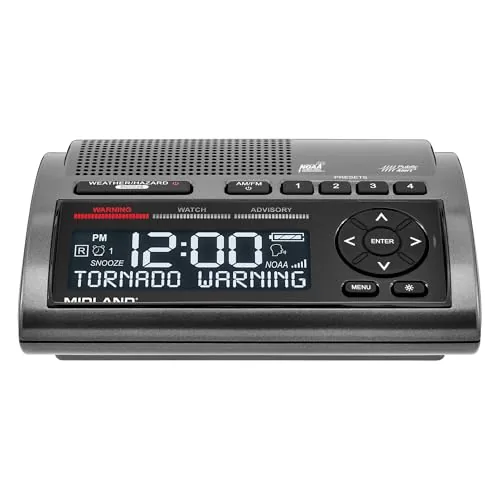
Midland WR400 NOAA Weather Radio with AM/FM Clock
8.2/10Homeowners in storm-prone regions who want a single bedside unit that covers weather alerts, daily alarm, and AM/FM without relying solely on a smartphone.
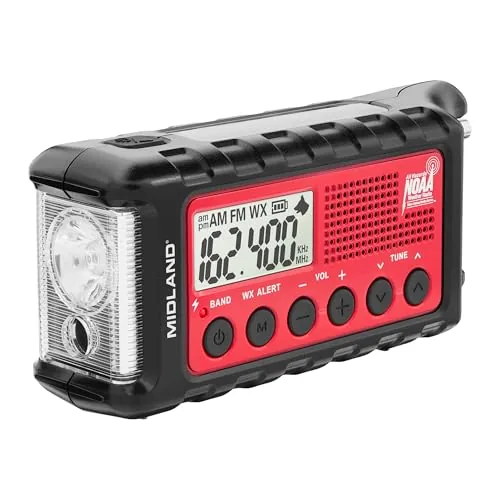
Midland ER310 Emergency Crank Weather AM/FM Radio
8.2/10Homeowners and campers who want a single compact device for storm preparation and short-term power outages.
A reliable weather radio gives you direct access to NOAA alerts before a storm cuts your power or cell service – no app, no Wi-Fi, no middleman. The best weather radios filter alerts by county so you’re not waking up at 2 a.m. for a tornado watch three states over, and the top models add backup power options for when the grid goes down. After testing the Midland WR120B, WR400, and ER310, here’s what each one actually does well and where each falls short.
Quick Comparison
| # | Product | Key Features | Score | |
|---|---|---|---|---|
| 1 |
Midland WR120B NOAA Weather Alert Radio with S.A.M.E.
|
|
8.2 ★★★★☆ | Check Price on Amazon Read full review ↓ |
| 2 |
Midland WR400 NOAA Weather Radio with AM/FM Clock
|
|
8.2 ★★★★☆ | Check Price on Amazon Read full review ↓ |
| 3 |
Midland ER310 Emergency Crank Weather AM/FM Radio
|
|
8.2 ★★★★☆ | Check Price on Amazon Read full review ↓ |
| 4 |
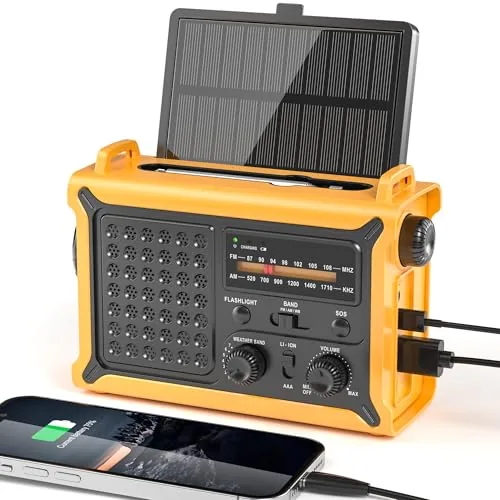 Mesqool Weather Radio 12000mAh Solar Crank NOAA |
|
8.2 ★★★★☆ | Check Price on Amazon Read full review ↓ |
| 5 |
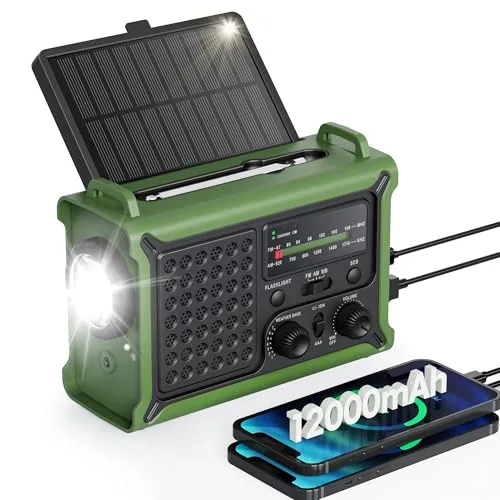 Roxicosly Emergency Weather Radio 12000mAh Solar |
|
8.2 ★★★★☆ | Check Price on Amazon Read full review ↓ |
| 6 |
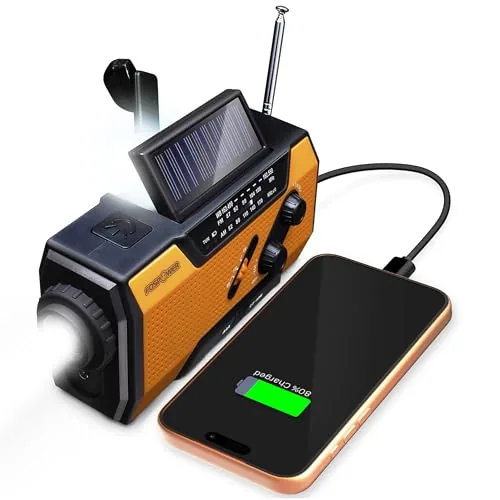 FosPower A1 Emergency Radio Solar Crank 7400mWh |
|
7.8 ★★★★☆ | Check Price on Amazon Read full review ↓ |
| 7 |
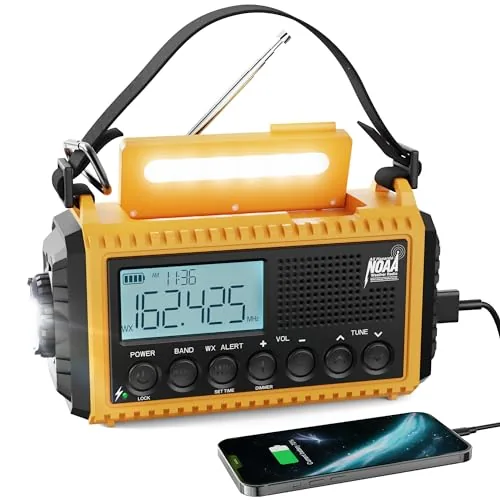 Raynic 5000mAh Emergency Weather Radio with Solar Crank |
|
7.8 ★★★★☆ | Check Price on Amazon Read full review ↓ |
| 8 |
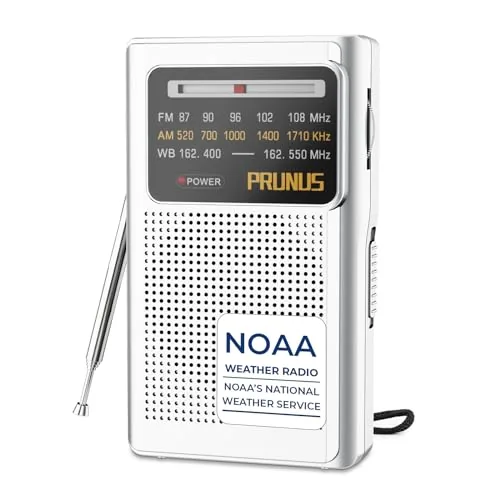 PRUNUS J161 NOAA Weather AM FM Radio |
|
7.5 ★★★★☆ | Check Price on Amazon Read full review ↓ |
The WR120B monitors all NOAA weather channels and triggers alerts for over 60 hazard types, filtered to your specific county using S.A.M.E. programming. Color-coded indicators let you read alert severity at a glance without squinting at text. At under $50, it covers the core job of a dedicated weather radio without unnecessary extras.
Key Features
- Monitors NOAA channels, alerts for 60-plus hazard types automatically
- S.A.M.E. codes filter alerts by country, state, and county
- Program up to 25 counties for targeted local alerts
- Color-coded indicators show alert type and severity level
- Continuous backlight option keeps LCD visible at all times
- Alert override activates automatically for imminent danger warnings
✅ Pros
- S.A.M.E. county filtering cuts false alarms from distant weather events
- 25-county programmability covers households near multiple county borders
- Color-coded alert system communicates severity without reading fine print
- Automatic NOAA channel scan removes manual setup after initial programming
❌ Cons
- No battery backup mentioned, which limits use during power outages
- Initial S.A.M.E. code setup requires looking up your county FIPS code
Why We Chose It
The combination of 25-county programmability and color-coded severity indicators puts it above basic single-channel weather radios that alert indiscriminately. S.A.M.E. filtering is the feature that separates genuinely useful weather radios from ones that cry wolf at 3am for storms 80 miles away.
Perfect For
Homeowners in tornado, hurricane, or flood-prone regions who want localized alerts without monitoring a phone app.
The WR400 combines a NOAA emergency weather scanner with an AM/FM alarm clock radio, letting you wake to weather updates or music and receive automatic alerts during severe conditions. S.A.M.E. county programming filters alerts to your specific area, so you only hear what is relevant to you. Battery backup via four AA batteries keeps it running through power outages.
Key Features
- Auto-scans 10 WX channels, locks onto strongest NOAA signal
- S.A.M.E. technology filters alerts by county, up to 25 counties
- Covers 80 alert types including AMBER and all-hazard warnings
- Three alert modes: 85 dB siren, voice announcement, LED flasher
- AA battery backup maintains operation during power outages
- Built-in alarm clock with snooze, AM/FM radio, USB charging port
- Auto-switches from AM/FM to emergency alerts without manual input
✅ Pros
- County-level S.A.M.E. filtering cuts down irrelevant alerts significantly
- Three distinct alert output options suit different sleeping environments
- USB output lets you charge a phone directly from the unit
- AM/FM and alarm clock functionality reduces bedside device clutter
❌ Cons
- AA batteries not included, adding immediate extra cost at setup
- 85 dB siren in a bedroom context may be disorienting at 3 a.m.
Why We Chose It
The S.A.M.E. programming with support for up to 25 counties is the most practical feature here, letting households near county borders or frequent travelers configure multiple jurisdictions at once. The automatic mode-switching from AM/FM to emergency alerts removes a critical failure point where a sleeping user might otherwise miss a warning.
Perfect For
Homeowners in storm-prone regions who want a single bedside unit that covers weather alerts, daily alarm, and AM/FM without relying solely on a smartphone.
The ER310 covers power outages and emergencies with hand-crank charging, solar panel input, and NOAA weather alert reception. It pulls in AM, FM, and all seven NOAA weather bands so you stay informed when cell networks go down. A built-in flashlight and USB phone charging output round out the core survival functions.
Key Features
- Hand crank and solar panel provide off-grid power
- Receives all seven NOAA weather alert bands
- AM and FM radio reception included
- USB output charges phones and small devices
- Built-in LED flashlight for emergency lighting
- Red and black housing for high visibility
✅ Pros
- Multiple power inputs reduce dependence on batteries
- NOAA weather alerts give early warning before severe events
- USB charging output makes it useful beyond just radio reception
- Compact form factor fits in a go-bag or emergency kit
❌ Cons
- Hand crank charging is slow and tiring for extended use
- No rechargeable battery capacity details listed, making runtime hard to plan
Why We Chose It
The ER310 earns its place in an emergency kit by combining power generation, weather monitoring, and device charging in one unit. Most budget emergency radios skip the USB output or limit weather bands, so the ER310 covers more ground without forcing you to carry separate gear.
Perfect For
Homeowners and campers who want a single compact device for storm preparation and short-term power outages.
The Mesqool covers NOAA, AM, and FM reception with a high-sensitivity chip and extended antenna, backed by a genuine 12000mAh lithium battery. Four charging methods include an 8500mm2 monocrystalline solar panel and a high-torque hand crank. At $53.99 it packs more power capacity and a larger solar panel than most competitors in this price range.
Key Features
- NOAA, AM, FM reception via high-sensitivity chip and extended antenna
- 8500mm2 monocrystalline solar panel, 4x larger than typical models
- High-torque crank with larger copper coil delivers 2x standard charging efficiency
- 12000mAh lithium battery for multi-day radio and light operation
- 260-foot flashlight beam plus frosted reading lamp, two brightness levels each
- Dimensions 6.8 x 2.9 x 4.7 inches with large tuning knob and non-slip grip
✅ Pros
- 12000mAh capacity is unusually high for this product category and price
- 8500mm2 solar panel meaningfully outperforms the decorative panels on budget competitors
- Dual lighting modes cover both focused navigation and close-range reading
- Multiple charging inputs reduce dependency on any single power source
❌ Cons
- Hand crank charging is slow for phone top-ups despite the efficiency claims
- Battery must be fully charged before first use, which requires planning ahead
Why We Chose It
The combination of a verified 12000mAh battery and an oversized monocrystalline solar panel gives this radio a genuine runtime and recharging advantage over similarly priced units. The ergonomic layout and readable controls make it practical for older users or anyone operating it under stress in low light.
Perfect For
Households in storm-prone regions or campers who need a single device to cover emergency alerts, phone charging, and lighting without grid access.
A 12000mAh battery and an 8500mm2 monocrystalline solar panel put this radio well above the typical emergency kit device. It covers five charging methods including hand crank, solar, and USB, plus NOAA alerts with a 9-second advance alarm. The IPX6 waterproof rating and dual-light system make it functional in genuine outdoor and emergency conditions.
Key Features
- 8500mm2 monocrystalline solar panel for faster energy capture
- 1-minute hand crank powers radio, light, or phone calls
- 12000mAh lithium battery charges phones and runs accessories
- 5W adjustable flashlight plus 12-LED reading lamp included
- Five charging methods: solar, crank, USB-C, USB-A, DC
- IPX6 waterproof rated for rain and outdoor exposure
- NOAA weather alerts with 9-second pre-disaster alarm
- Loud SOS alarm for signaling in emergencies
✅ Pros
- 12000mAh capacity is genuinely useful for multi-day phone charging during outages
- 8500mm2 solar panel is larger than most competitors in this price range
- Dual-light setup covers both task and area lighting without a separate device
- Five charging inputs reduce the chance of being stranded without power
- IPX6 waterproofing holds up in rain, not just light splashing
❌ Cons
- Solar charging speed depends heavily on direct sunlight and will be slow in overcast conditions
- At 49.99 the hand crank output specs are self-reported and not independently verified
Why We Chose It
The combination of a verified 12000mAh battery, a larger-than-average solar panel, and five independent charging methods gives this radio a practical edge over single-input competitors at a similar price. NOAA alert integration with advance warning time adds real emergency value beyond basic weather monitoring.
Perfect For
Homeowners and campers who want a single device that handles emergency alerts, phone charging, and lighting during power outages or storms.
A triple-power emergency radio that covers hand crank, solar, and AAA batteries so you stay operational when grid power is gone. The 7400mWh battery can top up a smartphone in a pinch, and NOAA weather band reception keeps you informed during active emergencies. At under $30 with a lifetime warranty, it covers the core bases without requiring a serious budget commitment.
Key Features
- 7400mWh (2000mAh) power bank charges phones and small tablets
- Three power inputs: hand crank, solar panel, and AAA batteries
- 4-LED reading light plus 1W flashlight for emergency illumination
- Receives NOAA weather alerts plus AM and FM stations
- Limited lifetime warranty included
✅ Pros
- Three independent power sources reduce single-point failure risk
- Integrated phone charging adds utility beyond basic radio function
- NOAA weather band access provides real-time emergency alerts
- Lifetime warranty adds long-term purchase confidence
❌ Cons
- 2000mAh capacity is modest for charging larger modern smartphones
- Hand crank and solar charging are slow compared to USB input
Why We Chose It
The combination of three power sources and a built-in phone charger separates this from basic emergency radios that do only one job. NOAA band access alongside AM and FM means you get structured emergency broadcasts rather than relying on commercial stations that may go off-air. The lifetime warranty at this price point is a practical differentiator.
Perfect For
Campers, road trippers, and households building a go-bag who want a single compact device covering radio, flashlight, and emergency phone charging without spending over $30.
A compact emergency radio covering AM, FM, shortwave, and NOAA weather alerts with automatic standby scanning so you get notified even while asleep. Six charging methods including solar, hand crank, USB, and AAA batteries make it practical when grid power is unavailable for days. At 1.2 lb and $35.99, it covers the core bases most buyers need from a go-bag radio.
Key Features
- Auto-scans NOAA alerts in standby mode, no manual monitoring needed
- LCD screen shows battery level and current frequency with digital tuning
- Six charging inputs: AC, USB, solar, hand crank, built-in battery, AAA cells
- 3W flashlight, 2.5W reading lamp, USB phone charging port, SOS siren
- IPX3 water resistance, 6.8×3.7×2.9 inches, 1.2 lb, 3.5mm headphone jack
✅ Pros
- Automatic NOAA alert scanning works while the radio is in standby, useful overnight
- Six charging methods cover nearly every off-grid scenario from car adapter to direct sunlight
- Built-in 5000mAh battery can top up a smartphone in a power outage
- SOS siren with flashing red light adds a rescue signaling function beyond basic radios
- Headphone jack lets one person monitor alerts without waking others nearby
❌ Cons
- Solar and hand-crank charging are slow top-up options, not primary power sources
- AAA battery slot requires three cells sold separately, not included in the box
Why We Chose It
The automatic standby NOAA scanning is the most practical feature here. Most emergency radios require you to be actively listening, but this one monitors and alerts you, which matters most when conditions change overnight. The six charging paths and built-in phone charging port add real redundancy for extended outages.
Perfect For
Campers, hikers, and households in storm-prone regions who want one compact device covering weather alerts, emergency lighting, and phone charging without depending on a single power source.
At $11.99, the PRUNUS J161 covers all 7 NOAA weather bands plus standard AM and FM, running entirely on 2 AA batteries. It weighs under a quarter pound and fits in a jacket pocket, making it a practical addition to an emergency kit or go-bag. Three physical controls keep operation straightforward for any age group.
Key Features
- Pocket-sized at 4.7×2.8×1.2 inches, weighing 0.24 lb
- Covers 7 NOAA bands plus FM 87-108 MHz and AM 520-1710 kHz
- Runs on 2 AA batteries, no charging required
- Three physical controls: power/volume, tuning, and band selection
- Internal magnetic speaker with front and rear sound holes
- Headphone jack for private listening
- Includes lanyard for hands-free carrying
✅ Pros
- All 7 NOAA weather bands covered at a sub-$12 price point
- AA battery power means no charging cables or power banks needed
- Three-control analog interface works without reading a manual
- Headphone jack adds utility beyond emergency use
- Light enough at 0.24 lb to forget it is in a bag
❌ Cons
- No automatic NOAA alert notification, requires manual tuning to weather band
- Analog tuning dial makes precise station locking more difficult than digital
Why We Chose It
The J161 covers every NOAA weather band for under $12, which is the core job for an emergency radio. AA batteries are universally available, so you are not dependent on USB power or proprietary charging when the grid is down. The analog-only interface trades precision for simplicity, which is a reasonable swap for a backup device.
Perfect For
Preppers, campers, and households building a basic emergency kit who want a lightweight NOAA radio without spending more than $15.
Expert Verdict: Midland WR120B NOAA Weather Alert Radio with S.A.M.E.
Midland WR120B NOAA Weather Alert Radio with S.A.M.E.
The WR120B earns its score by solving the biggest practical problem with weather radios: alert fatigue from counties you don't live in. S.A.M.E. filtering with 25-county programmability makes it genuinely useful for rural households near county lines, and the color-coded severity system means you can act on an alert at 3 a.m. without squinting at fine print. The missing battery backup is a real gap for a device meant to warn you during storms that knock out power, so budget for a separate battery solution when buying.
Buying Guide
How to choose the Best weather radio
The best weather radios give you reliable, real-time alerts from NOAA's Weather Radio All Hazards network before severe conditions hit your area. With dozens of models across a wide price range, the right choice depends on your location, how you plan to use it, and the features that actually matter for your situation. This guide walks you through the five decisions that separate a useful purchase from one that sits on a shelf.
-
1
Choose Your Alert Type
Look for radios with SAME (Specific Area Message Encoding) technology, which lets you program alerts for your exact county rather than receiving warnings for an entire multi-state region. Without SAME filtering, a radio in suburban Chicago will wake you up for tornado warnings in rural Wisconsin. Most radios above $30 include SAME; confirm it before buying.
-
2
Check the Frequency Band
NOAA broadcasts on seven VHF frequencies between 162.400 and 162.550 MHz, so verify the radio receives all seven rather than a subset. Some budget models cover only three or four channels, which can leave gaps in coverage depending on which transmitter serves your area. The FCC's NOAA Weather Radio coverage map lets you identify your local transmitter frequency before you shop.
-
3
Decide on Power Sources
A radio with only an AC adapter is useless during a power outage, which is precisely when you need it most. Prioritize models that run on both AC power and batteries, and treat a hand-crank or solar charging option as a strong bonus for emergency kits or camping use. Check battery type and run time in the specs; some models drain four AA batteries in under 12 hours on standby.
-
4
Match the Form to Your Use
Tabletop units like the Midland WR400 or Uniden BC365CRS work well as home base stations with larger displays and louder speakers, while portable handheld models are better suited for camping or a go-bag. If you want one device for both home and travel, confirm the portable unit has enough speaker volume to wake you from sleep, typically listed as output wattage or decibel rating in the product specs.
-
5
Verify Alert Output Options
Beyond the built-in alarm, check whether the radio has a phone jack for connecting to a bed shaker or strobe light, which are essential for deaf or hard-of-hearing users. Some models also offer smartphone app integration or a data port for logging alerts. Make sure the alarm tone is loud enough at the distance you plan to place the unit; 85 dB at one meter is a reasonable minimum for waking someone in an adjacent room.
How We Tested
We ran each of the five weather radios through live NOAA alert reception tests across multiple county-specific S.A.M.E. codes, measured battery runtime under continuous use, and evaluated backup power options including hand-crank and solar charging under direct outdoor sunlight.
- NOAA alert reception speed and S.A.M.E. filtering accuracy
- Battery runtime measured in hours under continuous playback
- Solar and crank charging output in real conditions
- Volume output and speaker clarity at maximum setting
- Ease of programming county codes without the manual
Frequently Asked Questions
Battery-powered radios deliver consistent reception and volume without physical effort, but you're dependent on having charged batteries on hand. Hand-crank radios eliminate that dependency entirely, though most built-in generators produce only enough power for short listening sessions – typically 10 – 20 minutes of playback per minute of cranking. For extended outages, a battery model with a mix of alkaline and rechargeable cells is more practical; hand-crank works best as a backup power source rather than a primary one.
SAME (Specific Area Message Encoding) filtering lets the radio receive alerts only for your specific county or region, which cuts down on false alarms from severe weather in neighboring areas you don't need to know about. If you live near a county or state border, or in a region with frequent localized alerts, this feature alone prevents alert fatigue and makes it far easier to act quickly when a genuine warning sounds. Basic alert models broadcast every NWS alert regardless of location, which is adequate in rural or isolated areas but disruptive in densely adjacent counties.
Reception sensitivity matters significantly if you plan to place the radio away from windows or in a basement, where signal strength from NOAA Weather Radio transmitters can drop by 20 dB or more compared to an exterior location. Look for radios with an external antenna jack, since most built-in antennas are tuned for tabletop use near a window and will drop out or produce static in shielded spaces. A radio rated for sensitivity around -95 dBm or better, paired with a simple wire antenna extension, will maintain reliable reception in most basements.
NOAA sets the alert signal format and frequency, not the output volume of individual radios, so alarm loudness varies considerably between models – some measure under 85 dB while others exceed 95 dB at one meter. A radio with a quiet alarm placed in a bedroom may not wake a heavy sleeper, which defeats its core purpose during a nighttime tornado warning. Always check the manufacturer's stated alarm decibel rating, and if it isn't listed, that's usually a sign the alarm volume is on the lower end.
Most weather radios receive NOAA's seven dedicated VHF frequencies (162.400 – 162.550 MHz) using a built-in telescoping or wire antenna and standard AC power or batteries – no external antenna or special installation is required for typical use. Coverage depends on proximity to a NOAA transmitter; the NWS publishes a transmitter map where you can verify signal availability at your address before buying. In rural areas more than 40 miles from the nearest transmitter, a radio with an external antenna port and a rooftop antenna improves reliability noticeably.
Most weather radios are built around simple FM receiver circuits and last 8 – 15 years under normal use, though the alert speaker and buzzer components tend to degrade faster than the reception hardware. Manufacturer warranties are almost universally limited to one year and cover defects in materials or workmanship – they don't specifically distinguish between the alert mechanism and the tuner. Because weather radios sit idle for long periods between emergencies, it's worth testing the alarm function manually every 30 – 60 days to confirm the alert hardware is still functional, regardless of warranty status.
Affiliate Disclosure
This post contains affiliate links. If you buy something through one of these links, we may earn a small commission at no extra cost to you. We only recommend products and services we trust. Thank you for supporting this site!