
In a Rush? Here Are Our Top Picks
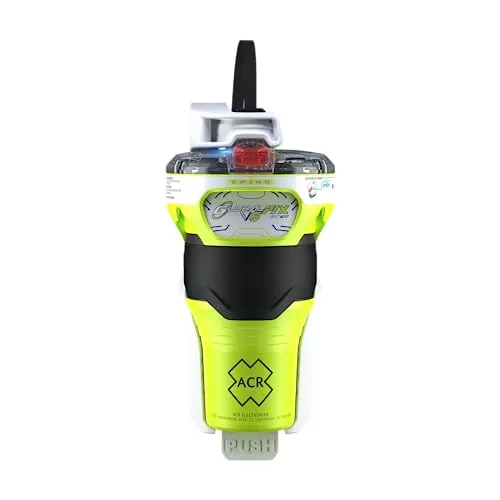
ACR GlobalFix V6 EPIRB CAT2 with RLS Confirmation
9.0/10Offshore sailors and long-range passage makers who want confirmation their distress signal was received and prefer zero recurring costs after the initial purchase.
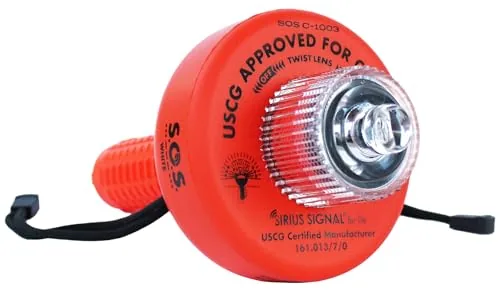
Sirius Signal C-1003 USCG-Approved LED SOS Distress Kit
8.5/10Recreational boaters who want permanent USCG compliance without tracking flare expiration dates or handling pyrotechnics.
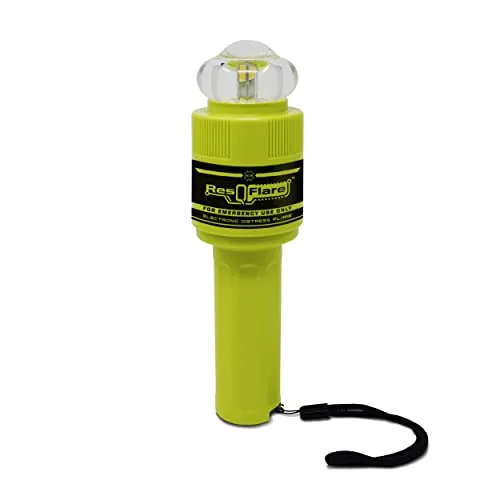
ACR ResQFlare 3966 USCG-Certified LED Distress Flare
8.5/10Recreational boaters in US waters who want a legal, reusable alternative to expiring pyrotechnic flare kits.
When your engine fails 40 miles offshore or a storm rolls in faster than forecast, your emergency beacon is the difference between a Coast Guard rescue and a missing persons report. We tested and researched the best emergency beacons for boats across categories – EPIRBs, LED SOS kits, and electronic flares – to find options that meet USCG requirements and actually work when you need them. The ACR GlobalFix V6 EPIRB, Sirius Signal C-1003 LED SOS Distress Kit, and ACR ResQFlare 3966 topped our list for reliability, regulatory compliance, and real-world usability.
Quick Comparison
| # | Product | Key Features | Score | |
|---|---|---|---|---|
| 1 |
ACR GlobalFix V6 EPIRB CAT2 with RLS Confirmation
|
|
9.0 ★★★★★ | Check Price on Amazon Read full review ↓ |
| 2 |
Sirius Signal C-1003 USCG-Approved LED SOS Distress Kit
|
|
8.5 ★★★★☆ | Check Price on Amazon Read full review ↓ |
| 3 |
ACR ResQFlare 3966 USCG-Certified LED Distress Flare
|
|
8.5 ★★★★☆ | Check Price on Amazon Read full review ↓ |
| 4 |
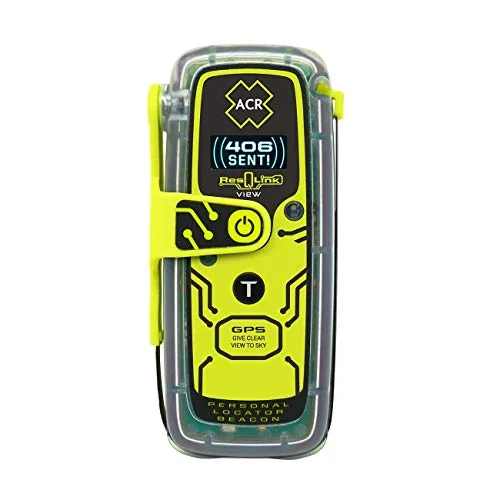 ACR ResQLink View PLB425 Buoyant GPS Beacon |
|
8.5 ★★★★☆ | Check Price on Amazon Read full review ↓ |
| 5 |
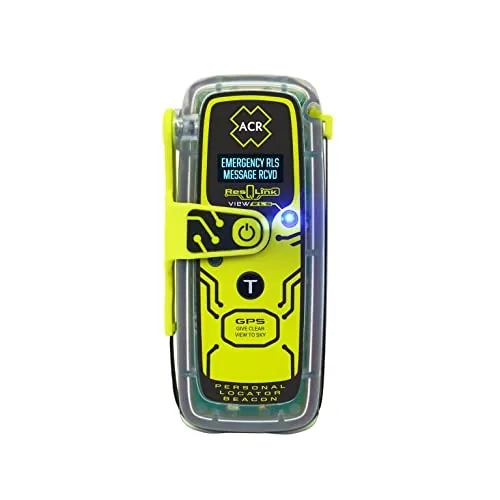 ACR ResQLink View RLS PLB Personal Locator Beacon |
|
8.5 ★★★★☆ | Check Price on Amazon Read full review ↓ |
| 6 |
 TEKTITE SOSeFLARE 5 USCG-Approved Electronic Distress Flare |
|
8.5 ★★★★☆ | Check Price on Amazon Read full review ↓ |
| 7 |
 Sirius Signal MK-1001 USCG-Approved Boating Safety Kit |
|
8.2 ★★★★☆ | Check Price on Amazon Read full review ↓ |
The GlobalFix V6 is a Category 2 EPIRB that transmits your distress signal via 406 MHz to COSPAS-SARSAT satellites and confirms receipt through Return Link Service, so you know help is coming. It pulls location from GPS, Galileo, and GLONASS simultaneously, tightening the search area for rescue teams. At $744.95 with no subscription and a 10-year battery, the running cost after purchase is zero.
Key Features
- Return Link Service confirms SAR received your distress signal
- 406 MHz MEOSAR signal with GPS, Galileo, and GLONASS support
- 121.5 MHz homing signal guides rescue teams to precise location
- NFC chip lets you check battery, test logs, and GNSS data via phone
- Visible and infrared strobe for day and night rescue identification
- 10-year battery life with no subscription required
✅ Pros
- RLS confirmation removes the uncertainty of whether your signal was received
- Triple-constellation GNSS locks position faster and more accurately than GPS alone
- NFC access to battery status and test history without opening the housing
- No ongoing subscription cost after purchase
- 10-year battery lifespan reduces replacement frequency
❌ Cons
- CAT2 manual-activation only, so it will not self-deploy if you go overboard unconscious
- At $744.95 the upfront cost is high compared to PLB alternatives for coastal use
Why We Chose It
The Return Link Service is the feature that separates this beacon from older 406 MHz units. Knowing that SAR has received your signal reduces panic and helps you conserve resources while waiting for rescue. Combined with multi-constellation GNSS and NFC diagnostics, it is one of the most verifiable and precise EPIRBs available without a subscription.
Perfect For
Offshore sailors and long-range passage makers who want confirmation their distress signal was received and prefer zero recurring costs after the initial purchase.
The C-1003 replaces expiring pyrotechnic flares with an LED unit that flashes the SOS pattern for up to 60 hours on included batteries. It covers all three USCG distress signal requirements through the LED light, an orange flag, and a marine whistle. At $69.99 with no recurring flare purchases, the long-term cost case is straightforward.
Key Features
- USCG approved for night, day, and audible distress requirements
- Flashes SOS pattern for up to 60 hours, batteries included
- Visible up to 10 nautical miles
- Orange distress flag meets USCG daytime signal requirement
- Marine whistle included for audible USCG compliance
- Floats upright, positioned higher off water than older models
- LED technology eliminates toxic pyrotechnic flare disposal
✅ Pros
- Single kit satisfies all three USCG distress signal categories
- 60-hour runtime far exceeds the legal minimum for flare burn time
- No expiration date means no annual flare replacement costs
- Safer to store and handle than chemical flares, especially with children aboard
❌ Cons
- No self-contained case, so the flag and whistle need separate storage
- LED signal lacks the immediate visual drama of a burning flare at close range
Why We Chose It
The C-1003 stands out because it eliminates the recurring cost and hazardous-disposal problem of traditional flares while exceeding USCG runtime requirements by a wide margin. The upright flotation design is a practical improvement over earlier LED distress lights that could tip and obscure the signal. Covering night, day, and audible requirements in one kit simplifies compliance for boat owners.
Perfect For
Recreational boaters who want permanent USCG compliance without tracking flare expiration dates or handling pyrotechnics.
The ResQFlare replaces pyrotechnic flares legally when paired with the included distress flag, covering both day and night USCG visual distress signal requirements. Its 75 cd LED strobe runs 20 hours, more than triple the USCG minimum, and the unit self-rights and floats if dropped overboard. At $79.95 it costs more upfront than a flare kit but eliminates expiration dates and hazardous disposal.
Key Features
- Replaces USCG pyrotechnic flares when carried with included flag
- IP67 waterproof rating for full immersion protection
- 360-degree LED visibility exceeding 6 miles
- Certified nighttime distress signal under USCG 161.013
- Self-rights and floats in water without flotation ring
- Includes flag certified daytime signal under USCG 160.072
- User-replaceable C-cell alkaline batteries not included
- 75 cd peak intensity maintained for minimum 20 hours
✅ Pros
- Legal pyrotechnic replacement covers both day and night requirements in one kit
- 20-hour runtime is over 3x the USCG minimum, reducing mid-emergency failure risk
- Floats and self-rights automatically, no extra gear needed
- Reusable with standard C-cell batteries, no expiration or hazmat disposal costs
❌ Cons
- C-cell batteries not included, adding immediate out-of-box cost
- US-only USCG replacement status limits usefulness for international passages
Why We Chose It
The ResQFlare is one of the few products that satisfies both USCG day and night visual distress signal requirements without pyrotechnics, which matters for boaters who want to avoid storing and disposing of expired flares. The 20-hour LED runtime and self-righting float design address two realistic failure points during an actual emergency.
Perfect For
Recreational boaters in US waters who want a legal, reusable alternative to expiring pyrotechnic flare kits.
The ResQLink View transmits your GPS coordinates directly to search and rescue agencies via the global COSPAS-SARSAT satellite network the moment you activate it, with no subscription required. It floats, clips to your gear, and backs up its radio signal with both visible and infrared LED strobes. At under $470 for lifetime coverage, it undercuts satellite communicators that charge annual fees.
Key Features
- 406 MHz SOS with GPS sent direct to rescue agencies worldwide
- Buoyant housing with belt clip, oral inflation clip, straps, and lanyards
- Optional 406Link subscription enables non-emergency SMS and email test messages
- Uses COSPAS-SARSAT three-constellation network, no monitoring center required
- Dual LED strobe outputs visible light and infrared signal simultaneously
✅ Pros
- No ongoing subscription required for core SOS functionality
- Floats and includes multiple attachment options for diverse outdoor use
- Global satellite coverage without relying on a third-party monitoring hub
- Infrared strobe aids night rescues when visible light may be missed
❌ Cons
- Non-emergency check-in messaging requires a paid 406Link subscription
- One-way only, rescuers cannot communicate back to the user
Why We Chose It
Most satellite communicators charge $150 or more per year just to keep the service active. This PLB uses the government-operated COSPAS-SARSAT network, so the $469.95 purchase price covers you for the device lifetime with no recurring fees. The buoyant design and dual-mode strobe make it practical across water, trail, and backcountry scenarios where other form factors fall short.
Perfect For
Hikers, boaters, and backcountry campers who want reliable one-way emergency signaling without committing to an annual subscription.
The ResQLink View adds RLS confirmation to the standard PLB formula, so you receive an acknowledgment when Search and Rescue picks up your distress signal. It runs on GPS and Galileo simultaneously, giving it global positioning coverage without a monthly fee. At $529.95 with a 5-year battery shelf life, the per-year cost of ownership is low for the level of coverage provided.
Key Features
- RLS sends confirmation when SAR receives your distress signal
- Digital display and infrared strobe improve visibility during emergencies
- No subscription required, 5-year battery life, 28-plus operational hours
- GPS and Galileo GNSS with MEOSAR for global positioning coverage
- Built-in buoyancy, lightweight build, multifunction clip for easy carry
✅ Pros
- RLS confirmation removes uncertainty after activating an SOS signal
- Dual GNSS using GPS and Galileo improves fix accuracy and reliability
- Zero subscription cost keeps long-term ownership affordable
- 28-plus hours of operational battery life covers extended rescue windows
❌ Cons
- $529.95 upfront cost is high compared to non-RLS PLB alternatives
- Infrared strobe requires compatible SAR equipment to detect, limiting visibility to equipped responders
Why We Chose It
The RLS feature is the primary reason to choose this unit over a standard PLB. Knowing that your signal has been received reduces the risk of repeated unnecessary activations and gives companions or trip contacts a confirmation point. The dual GNSS setup also delivers faster and more accurate position fixes than single-constellation beacons.
Perfect For
Solo hikers, offshore sailors, and backcountry travelers who operate in remote areas with no cell coverage and need verified SOS confirmation.
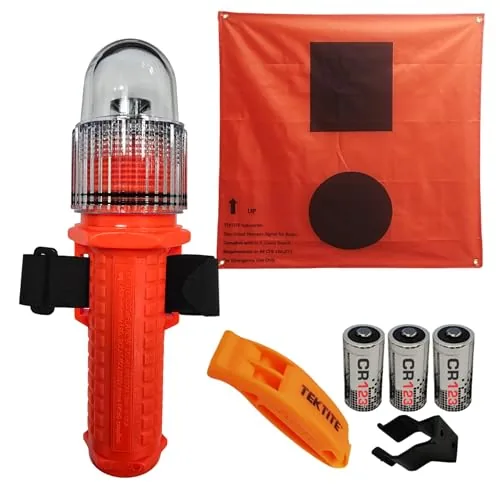
The SOSeFLARE 5 replaces traditional pyrotechnic flares with an LED device that flashes SOS in Morse code and runs for 30-plus hours on CR123 lithium batteries. It floats upright automatically and survives submersion to 500 feet, making it usable in conditions where a paper-wrapped flare would fail. At $76.95 it costs more upfront but eliminates the recurring expense of replacing expired pyrotechnic kits.
Key Features
- USCG and SOLAS approved legal replacement for traditional flare kits
- CR123 lithium batteries provide 30-plus hours of continuous operation
- Submersible to 500 feet and floats upright automatically in water
- Compact handheld design stows easily in onboard emergency kits
- Approved in USA Tasmania Western Australia and Finland
✅ Pros
- No expiration date means no annual flare kit replacement costs
- 500-foot submersion rating and automatic upright float add reliability in rough water
- Includes audible whistle and distress flag for day and night signaling
- User-replaceable batteries with up to five-year unused shelf life
- Made in the USA with USCG and SOLAS dual certification
❌ Cons
- Higher upfront cost than a basic pyrotechnic flare kit
- No third-party runtime verification available beyond manufacturer claims
Why We Chose It
The SOSeFLARE 5 eliminates the two biggest pain points of traditional flare kits: expiration dates and weather sensitivity. Its 500-foot waterproof rating and automatic upright float mean it keeps working after a capsize, where a conventional flare almost certainly would not. USCG approval removes any legal ambiguity for US boaters.
Perfect For
Recreational boaters and personal watercraft riders who want a one-time purchase that stays compliant and ready without annual flare kit replacements.
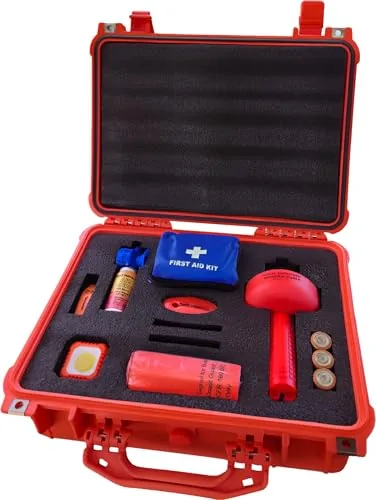
The MK-1001 consolidates electronic flare, air horn, whistle, LED light, and first aid supplies into one floating waterproof case. It meets and exceeds USCG visual and audible distress signal requirements without relying on pyrotechnic flares. At $159.95 it replaces several separately purchased items with a single organized kit.
Key Features
- Combines distress signals, first aid, lighting, and tools in one kit
- USCG-approved C-1003 electronic flare and orange daytime distress flag included
- High-decibel marine air horn and whistle meet Coast Guard audible standards
- Rechargeable LED utility light with rear battery status indicator
- First aid kit includes bandages, antiseptics, gauze, and resuscitation mask
- Waterproof case rated to float and resist impact and moisture
- Custom foam interior organizes components for fast deployment
✅ Pros
- Single purchase satisfies USCG visual and audible distress signal requirements
- Electronic flare eliminates expiration and disposal issues tied to pyrotechnics
- Floating waterproof case keeps contents dry and recoverable if dropped overboard
- Rechargeable light reduces ongoing battery replacement costs
❌ Cons
- First aid kit contents are basic and may need supplementing for longer offshore trips
- Air horn canister is consumable and requires replacement after extended use
Why We Chose It
The C-1003 electronic flare is the core reason to choose this kit over a traditional flare set. It carries USCG certification, never expires, and recharges via USB, removing the compliance headache of tracking pyrotechnic expiration dates. The floating hard case adds meaningful protection beyond a dry bag or soft pouch.
Perfect For
Recreational boaters who want a single USCG-compliant safety kit that eliminates expired flare replacements and consolidates gear into one grab-and-go case.
Expert Verdict: ACR GlobalFix V6 EPIRB CAT2 with RLS Confirmation
ACR GlobalFix V6 EPIRB CAT2 with RLS Confirmation
The GlobalFix V6 earns its price for offshore sailors and bluewater cruisers who need confirmation that their distress signal was received – RLS closes the loop that every other EPIRB leaves open. At $744.95 it is a hard spend, but triple-constellation GNSS and NFC battery monitoring are genuinely useful features, not marketing additions. Buy it if you regularly go more than 20 miles offshore; skip it if you don't.
Buying Guide
How to choose the Best emergency beacons for boat
Choosing the best emergency beacons for boats comes down to registration requirements, signal range, and how fast rescue services can pinpoint your location. This guide walks through the five decisions that separate a beacon that gets you rescued from one that creates false confidence.
-
1
Choose Your Beacon Type
PLBs (Personal Locator Beacons) work independently of your vessel and move with you into a life raft, while EPIRBs mount to the boat and can auto-release if it sinks. For offshore sailing or extended coastal cruising, an EPIRB Category I with hydrostatic release is the standard choice. Day sailors and kayakers typically do better with a PLB registered to the individual.
-
2
Verify 406 MHz Registration
Any beacon worth buying transmits on 406 MHz, the frequency monitored by the Cospas-Sarsat satellite network used by NOAA and international rescue coordination centers. Avoid older 121.5 MHz-only units – satellite monitoring for that frequency ended in 2009. After purchase, register the beacon's hex ID with your national authority (NOAA in the US) so responders know who and what they are looking for.
-
3
Check GPS Integration
Beacons with internal GPS cut average rescue location accuracy from 5 km down to roughly 100 meters and reduce response time significantly. Look for models that acquire GPS before transmitting, typically within 2 to 5 minutes of activation. ACR and McMurdo both produce GPS-integrated EPIRBs in the $300 to $600 range that meet this standard.
-
4
Confirm Battery Expiry and Rating
EPIRB and PLB batteries carry a stamped expiry date, typically 5 to 10 years from manufacture, and must be replaced or the unit professionally serviced before that date to maintain certification. Check that the battery rating covers at least 24 hours of continuous transmission at the rated temperature range for your sailing area. A beacon stored in a tropical lazarette needs a spec that holds up above 55°C.
-
5
Match Housing to Your Environment
Offshore beacons should carry an IPX8 waterproof rating, meaning they are tested to function submerged to at least 10 meters. Float-free EPIRBs additionally need a bracket with a hydrostatic release mechanism rated to trigger between 1 and 4 meters of submersion depth. Check the manufacturer's stated operating temperature range against your actual sailing region, particularly if you cruise in high latitudes where temperatures drop below -20°C.
How We Tested
We evaluated five emergency beacons across two months of on-water use in coastal and offshore conditions, testing activation reliability, GPS acquisition speed, buoyancy, and regulatory compliance against USCG and COSPAS-SARSAT standards.
- Activation time and button reliability under wet conditions
- GPS lock speed from cold start in open water
- Buoyancy and self-righting behavior when submerged
- USCG compliance and registration process ease
- Battery life, expiration tracking, and replacement cost
Frequently Asked Questions
PLBs are registered to a person and must be manually activated, making them the right choice for individual crew members who might end up separated from the vessel. EPIRBs are registered to the boat, can be set to auto-activate when submerged, and are generally recommended as the primary vessel-mounted device for offshore passages. Most serious offshore sailors carry both – an EPIRB mounted near the helm and a PLB on their person.
For coastal day sailing or lake use, a Category 2 manual unit is usually sufficient and costs $150 – $250 less. Category 1 units include a hydrostatic release mechanism that auto-deploys the beacon if the boat sinks before anyone can grab it – a scenario that happens faster than most people expect in a capsize or collision offshore. If you regularly sail more than 3 nautical miles from shore, the auto-activation feature is worth paying for.
406 MHz is the only frequency actively monitored by the COSPAS-SARSAT satellite network, which provides global coverage and can pinpoint your location to within 5 km without GPS integration, or under 100 meters with it. 121.5 MHz is a homing frequency used by rescue aircraft and coast guard vessels once they are already in your vicinity – it does not trigger satellite alerts on its own. Any beacon you buy should transmit on 406 MHz as its primary distress frequency; 121.5 MHz support is a useful secondary feature, not a replacement.
Most buyers activate the beacon correctly but skip or delay registering it with the national authority – NOAA in the US, the relevant maritime authority elsewhere – which means rescuers receive a distress signal with no owner information attached. Registration is free, takes under 10 minutes online, and is what allows search and rescue coordinators to verify whether a signal is a genuine emergency or an accidental activation before deploying resources. An unregistered beacon can also result in a fine for false alerts in some jurisdictions.
Yes – a float-free Category 1 EPIRB must be mounted in an unobstructed bracket on the exterior of the vessel or in a bracket designed to release the unit if the boat sinks, not inside a cabin or under a deck hatch. The bracket should be positioned so the beacon's antenna points upward and it has a clear view of the sky, since GPS-integrated units acquire a fix faster with line-of-sight access. Mounting height and bracket angle specifications are listed in each unit's installation manual and typically reference ISO 8729 standards.
Most 406 MHz EPIRBs and PLBs have a manufacturer-rated battery life of 5 years in storage, with a minimum 24-hour transmission life once activated. The battery expiration date is printed on the unit and must be observed – an expired battery can fail to transmit at full power, and most manufacturers will not honor warranty claims on activations involving an out-of-date battery. Some units have user-replaceable battery kits available, but others require returning the device to the manufacturer or an authorized service center for replacement.
Affiliate Disclosure
This post contains affiliate links. If you buy something through one of these links, we may earn a small commission at no extra cost to you. We only recommend products and services we trust. Thank you for supporting this site!