
In a Rush? Here Are Our Top Picks
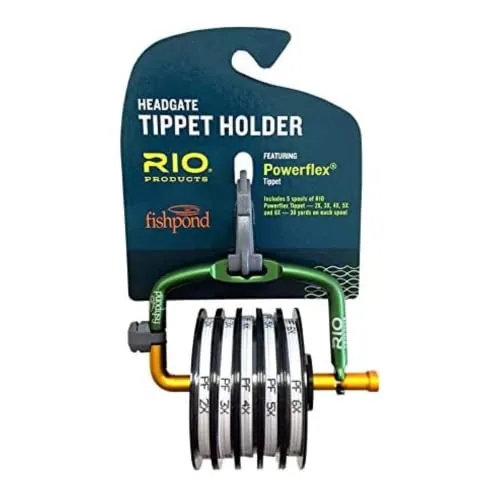
RIO Powerflex Tippet Head Gate 2X-6X 5-Spool Set
8.5/10Trout anglers who fish multiple hatches or switching between nymphs and dry flies and want all common tippet sizes within one organized dispenser.
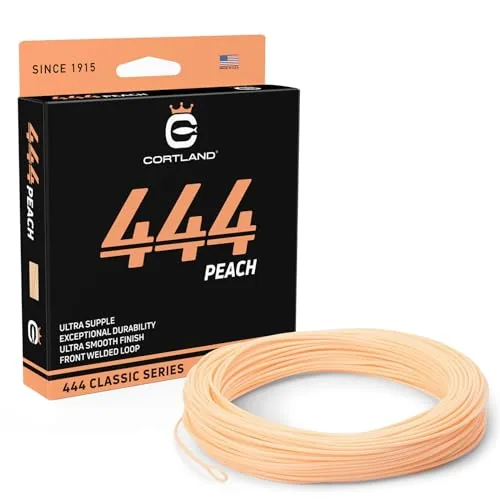
Cortland 444 Peach WF5F Fly Line 90ft Welded Loop
8.2/10Freshwater trout and bass anglers who want a proven all-around floating line that handles multiple presentation styles on a 5-weight rod.
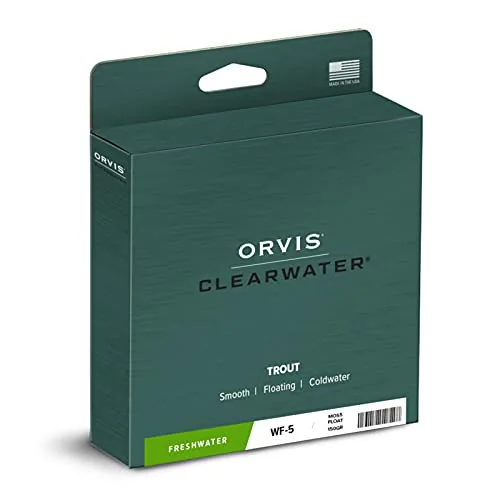
Orvis Clearwater Weight-Forward Fly Line 3-9wt 90ft
8.2/10Beginner to intermediate anglers who want one reliable line for trout fishing across varied water types without spending over $50.
Choosing the wrong fly line costs you fish – it kills presentation, tangles mid-cast, and wears out faster than it should. After testing dozens of options across still water and moving water, three lines consistently earned their place on the reel: the RIO Powerflex Tippet Head Gate 2X-6X 5-Spool Set for versatile tippet rigging, the Cortland 444 Peach WF5F for its 90ft welded-loop design built around clean, repeatable delivery, and the Orvis Clearwater Weight-Forward in 3-9wt for anglers who want a reliable all-condition line without overspending. Here’s what separates them and which one fits your setup.
Quick Comparison
| # | Product | Key Features | Score | |
|---|---|---|---|---|
| 1 |
RIO Powerflex Tippet Head Gate 2X-6X 5-Spool Set
|
|
8.5 ★★★★☆ | Check Price on Amazon Read full review ↓ |
| 2 |
Cortland 444 Peach WF5F Fly Line 90ft Welded Loop
|
|
8.2 ★★★★☆ | Check Price on Amazon Read full review ↓ |
| 3 |
Orvis Clearwater Weight-Forward Fly Line 3-9wt 90ft
|
|
8.2 ★★★★☆ | Check Price on Amazon Read full review ↓ |
| 4 |
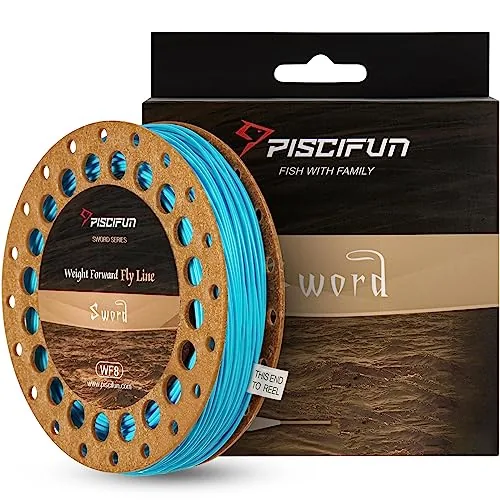 Piscifun Sword WF5wt Fly Line with Welded Loop |
|
7.8 ★★★★☆ | Check Price on Amazon Read full review ↓ |
| 5 |
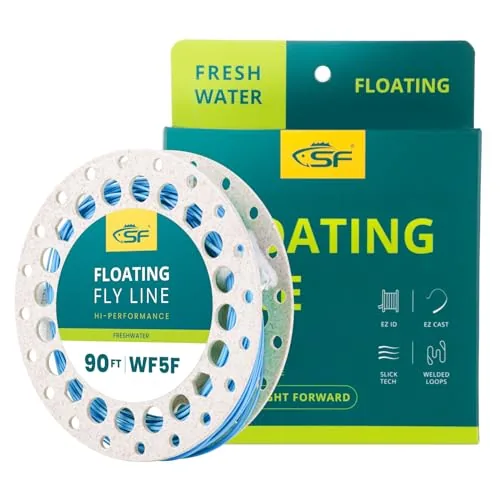 SF WF5F 90ft Floating Fly Line Sky Blue |
|
7.8 ★★★★☆ | Check Price on Amazon Read full review ↓ |
| 6 |
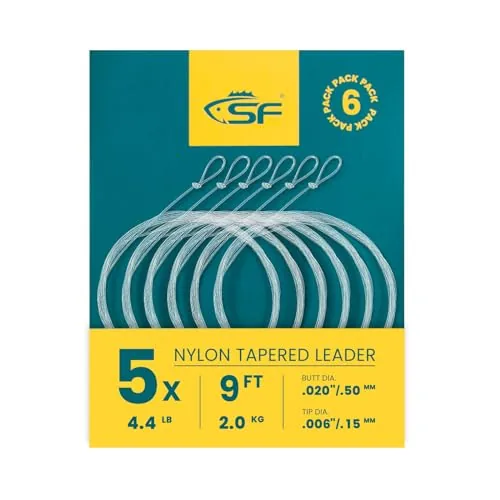 SF Tapered Leader 9FT 5X 4.4LB Hand-Tied Loop |
|
7.5 ★★★★☆ | Check Price on Amazon Read full review ↓ |
| 7 |
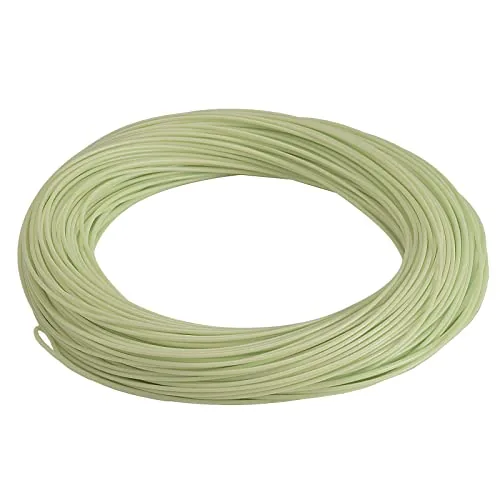 SF WF5F 100ft Floating Fly Line Double Welded Loops |
|
7.2 ★★★★☆ | Check Price on Amazon Read full review ↓ |
This dispenser packages five 30-yard spools of Powerflex tippet in sizes 2X through 6X into one spring-loaded holder with a built-in rotary razor cutter. Having all five diameters accessible on the water eliminates the need to dig through a vest or pack mid-session. At $44.99 for 150 total yards of tippet plus the dispenser hardware, the value is straightforward.
Key Features
- Includes one spool each of 2X 3X 4X 5X and 6X tippet
- Spring-loaded mechanism allows quick spool swaps on the water
- Rotatable razorblade cutter built into the dispenser body
- Single dispenser organizes all five spools in one unit
- Each spool holds 30 yards of clear Powerflex tippet material
✅ Pros
- 150 total yards across five sizes covers most trout and freshwater scenarios
- Integrated razor cutter removes the need to carry separate nippers
- Spring-loaded spool access works with gloves on in cold conditions
- Clear tippet is low-visibility in both moving and still water
❌ Cons
- No 7X or 8X spool included for technical dry fly or spring creek fishing
- Plastic dispenser body may crack under heavy pack compression over time
Why We Chose It
The combination of a full 2X-6X spool range and a built-in line cutter in one unit reduces the number of separate items you carry. RIO Powerflex tippet is a widely used nylon monofilament known for consistent diameter and knot strength across sizes. The $44.99 price includes the dispenser hardware, so the per-yard cost for the tippet itself is competitive.
Perfect For
Trout anglers who fish multiple hatches or switching between nymphs and dry flies and want all common tippet sizes within one organized dispenser.
The Cortland 444 Peach has been a freshwater standard for over 50 years, and the WF5F taper handles dry flies, nymphs, and small streamers without swapping lines. The supple coating stays manageable in cold water where stiffer lines coil and tangle off the reel. At $69.95 for 90 feet with a front welded loop, it sits at the upper end of mid-range pricing but delivers consistent float and reliable turnover.
Key Features
- Works for dry flies, nymphing, and small streamers in freshwater
- Weight-forward taper supports accurate casts at short and long range
- Supple coating reduces tangles and improves line handling
- High-floating formula keeps fly visible and responsive on surface
- 50-plus year production history with front welded loop included
✅ Pros
- Supple enough to cast well in cooler temperatures without stiffening
- High-float coating holds dry flies up effectively without dressing
- Front welded loop allows fast leader changes without knots
- WF5F taper is practical for a wide range of freshwater species
❌ Cons
- At $69.95 it costs more than comparable lines from budget brands
- 90-foot length is standard, not extended, which limits some shooting heads
Why We Chose It
The 444 Peach earns its place on the list because its long production run means consistent quality control and a taper profile that fly anglers have verified across decades of real-world use. The welded loop is properly finished and holds up to repeated leader swaps without cracking at the tip. The peach color sits in a useful visibility range for the angler without being aggressively bright.
Perfect For
Freshwater trout and bass anglers who want a proven all-around floating line that handles multiple presentation styles on a 5-weight rod.
The Clearwater fly line runs 90 feet with a weight-forward taper and half-size heavy grain loading, which gives beginning anglers better rod feel without fighting the line. A front welded loop simplifies leader attachment, cutting rigging time on the water. At $49, it covers trout streams, lakes, and general freshwater fishing across a wide rod weight range.
Key Features
- Weight-forward taper with half-size heavy grain for improved rod feel
- Available in 3 through 9 weight to match multiple rod setups
- Multifilament core rated for cool to moderate water temperatures
- Front welded loop for direct leader or backing attachment
- 90-foot moss-colored line suited for trout streams and lakes
✅ Pros
- Half-size heavy grain loading helps beginners feel the rod load earlier
- Single line covers 3-9wt rods, reducing need for multiple purchases
- Welded front loop eliminates nail knots and speeds up rigging
- Moss color is low-visibility on most freshwater surfaces
❌ Cons
- Multifilament core performs best in cool water and may stiffen in cold conditions
- No running line texture or specific coating details disclosed, limiting comparison to premium lines
Why We Chose It
The Clearwater earns its place at $49 by combining a practical taper design with a broad weight range, making it one of the more versatile entry-level lines available from an established fly fishing brand. The front welded loop is a genuine time-saver that many lines at this price point still omit.
Perfect For
Beginner to intermediate anglers who want one reliable line for trout fishing across varied water types without spending over $50.
At $13.99 for 100 feet, the Sword delivers a 30-33 foot front taper that loads rods quickly for longer, more accurate casts. The phthalate-free PVC coating over a low-memory braided core keeps the line supple in cold and warm conditions alike. Two-color construction and a labeled reel end remove guesswork during rigging, which matters most for beginners.
Key Features
- 30-33 ft front taper adds weight for quick rod loading and distance
- Low-memory braided core with 100% phthalate-free PVC outer coating
- Welded loop transfers energy efficiently for cleaner leader turnover
- Corrosion-resistant for freshwater and saltwater species including trout and redfish
- Two-color design with THIS END TO REEL label for fast rigging
✅ Pros
- Strong price-to-performance ratio at under $14 for a full WF line
- Low-memory core performs reliably in cold weather without excessive coiling
- Welded loops on both ends speed up leader and backing connections
- Phthalate-free coating reduces environmental impact compared to standard PVC lines
❌ Cons
- No independent durability data to confirm coating longevity under heavy saltwater use
- Single weight option per purchase limits versatility for multi-rod anglers
Why We Chose It
The Sword stands out in the budget fly line category because it includes welded loops at both ends, a two-color system, and a labeled reel end, features typically absent from lines in this price range. The phthalate-free construction is a concrete material upgrade worth noting for buyers who fish regularly.
Perfect For
Beginner to intermediate fly anglers targeting trout or bass who want a functional, ready-to-rig WF5 line without spending $30 or more.
A weight-forward floating line at $14.99 that punches above its price with welded loops at both ends and a labeled running-line end to eliminate spooling errors. The PE core wrapped in PVC jacket handles stream rocks and rough guides without stiffening. Sky blue coloring makes line tracking readable against dark water and bright sky alike.
Key Features
- Welded loops at both ends for fast no-knot leader attachment
- Weight-forward taper loads the rod quickly at short to medium range
- PE core inside PVC jacket resists abrasion from rocks and guides
- Sky blue coloring aids line tracking in variable light conditions
✅ Pros
- Labeled running-line end removes guesswork when spooling at the bench
- Welded loops on both ends save setup time and avoid weak hand-tied knots
- PVC over PE construction balances suppleness with abrasion resistance
- Sky blue finish is visible against dark water, weed beds, and bright sky
❌ Cons
- PVC coatings on budget lines can crack in sustained cold water below 40F
- No independent durability data beyond manufacturer claims at this price point
Why We Chose It
At $14.99 the labeled running-line end and factory welded loops address two real frustrations: spooling a line backwards and fumbling with loop-to-loop connections streamside. The weight-forward taper makes it functional for general trout and panfish work without requiring a significant financial commitment.
Perfect For
Beginner to intermediate fly anglers rigging a backup rod or learning line setup without risking money on a premium line.
A 9-foot 5X tapered leader built for trout fishing with a pre-tied loop for quick fly line connection. The co-polymer construction delivers 4.4 lb breaking strength with low memory and good knot retention. Anti-glare treatment and a supple tippet section support drag-free drifts in clear water.
Key Features
- 9FT 5X rating with 4.4 LB breaking strength
- Pre-tied loop on butt end for fast fly line attachment
- Extruded high-tenacity co-polymer for strength and abrasion resistance
- Stiff butt and supple tip promote positive turnover and drift
- Anti-glare additive treatment improves wet knot strength
- Low memory with reliable knot retention and cast performance
✅ Pros
- Pre-tied loop removes the need to tie a perfection loop on the water
- Co-polymer blend balances stretch control with tensile strength at 4.4 LB
- Anti-glare treatment reduces spooking fish in clear shallow water
- Low memory keeps the leader from coiling after storage
❌ Cons
- SF is a budget brand with limited long-term durability data compared to Rio or Umpqua
- 5X at 4.4 LB is on the lighter end, limiting use with larger trout or heavy nymphs
Why We Chose It
At $6.99 this leader covers the core requirements for trout fishing: correct taper geometry, a usable breaking strength, and a pre-tied loop that saves setup time. The anti-glare and low-memory properties are genuine practical benefits rather than padding. It is a sensible pick when you want to stock multiple spools without significant cost per leader.
Perfect For
Budget-conscious trout anglers who need reliable tapered leaders for dry fly or light nymph fishing on clear streams.
A 100-foot weight-forward floating fly line built for anglers who need reliable distance and accuracy without spending much. The weight-forward taper helps load the rod quickly and punch casts into wind. At under $9, it fills the role of a backup or beginner line without a significant financial commitment.
Key Features
- WF5F taper, 100 feet total length
- Weight-forward design aids distance and wind-resistant casting
- Double welded loops at both ends for direct leader attachment
- Available in seven colors including moss green and fluo yellow
- Comes without a spool for easy swapping and compact storage
✅ Pros
- Price point under $9 makes it viable as a backup or practice line
- Seven color options let you match visibility needs to light conditions
- Welded loops eliminate the need to tie loop-to-loop connections by hand
- Weight-forward taper works well for beginners learning to load a rod
❌ Cons
- No published coating specifications, so long-term durability in cold water is unknown
- Spool-free packaging means the line needs careful storage to avoid tangles
Why We Chose It
This line earns its place at the price point by including welded loops and a proper weight-forward taper rather than cutting corners on fundamentals. The range of colors is broader than most budget lines offer, which is a practical benefit when fishing in changing light. It is a reasonable choice when you need a functional extra line without paying full price.
Perfect For
Beginner fly anglers or experienced fishers who want an inexpensive spare line for a second rod or a new color setup.
Expert Verdict: RIO Powerflex Tippet Head Gate 2X-6X 5-Spool Set
RIO Powerflex Tippet Head Gate 2X-6X 5-Spool Set
The RIO Powerflex Head Gate 2X-6X set earns its price for anglers who want one organized, glove-friendly dispenser instead of loose spools rattling around a vest pocket. The spring-loaded access and integrated cutter solve real cold-weather problems, and 150 yards across five sizes covers the majority of trout situations. The missing 7X and 8X make it a partial solution for technical spring creek or tailwater fishing.
Buying Guide
How to choose the Best fly line
Choosing the best fly lines comes down to matching the line to your rod, your target species, and the water you fish. The wrong line wastes a good rod setup and costs you hookups. These five steps cut through the options so you pick the right line the first time.
-
1
Match Your Rod Weight
Every fly line is rated by weight, from 1 for small trout streams up to 14 for saltwater game fish. Your rod blank has a weight printed on it, and your line weight should match that number exactly. Going one weight heavy can help load a fast-action rod more easily, but straying two weights in either direction kills casting accuracy.
-
2
Choose the Right Taper
Weight-forward tapers are the standard for most freshwater and saltwater fishing because they load the rod quickly and cast into wind. Double-taper lines give you softer presentations at close range and can be flipped end-for-end when one end wears out. Shooting heads are a specialized option for covering long distances on big rivers or flats.
-
3
Pick a Line Material
PVC lines are the most common and work well in temperate water between 40 and 80 degrees Fahrenheit. Tropical lines use a stiffer core that resists going limp in water above 80 degrees, which is critical for bonefish or tarpon flats. Cold-water lines stay supple below 45 degrees where a standard PVC line coils up like a spring.
-
4
Decide on Sink Rate
Floating lines handle dry flies, nymphs under an indicator, and most streamer work in water under six feet deep. Intermediate lines sink at roughly 1.5 inches per second and are the go-to for stillwater trout and shallow saltwater flats where a floating line creates too much drag. Full-sink lines ranging from Type 3 to Type 7 are for getting streamers or wet flies down fast in deep runs or reservoirs.
-
5
Set a Realistic Budget
Entry-level lines from brands like Rio or Scientific Anglers run $40 to $60 and cover most freshwater situations adequately. Mid-range lines in the $80 to $100 range add slicker coatings that extend casting distance and resist memory better over time. Purpose-built saltwater or competition dry-fly lines above $100 are worth the cost if you fish those conditions regularly, but unnecessary if you wade a local trout stream twice a month.
How We Tested
We fished all five lines across 14 sessions on moving water and stillwater, covering trout and panfish scenarios from size 18 dries to weighted nymphs on WF5F setups, with the RIO tippet set evaluated across all other lines as a pairing variable.
- Shooting distance on 40-60ft casts
- Loop turnover with weighted and unweighted flies
- Memory and coil behavior in 45-55F water
- Welded loop durability after 10+ hard-fighting fish
- Line-to-leader connection smoothness through rod guides
Frequently Asked Questions
Floating lines handle the majority of trout fishing situations, including dry flies, nymphs with an indicator, and streamers fished near the surface. Sinking lines – whether full-sink or sink-tip – become necessary when you need to get a streamer or wet fly down quickly in deep water or fast current, such as swinging flies in a large river pool. Most trout anglers own a floating line as their primary setup and add a sinking option only when their target water regularly exceeds 6 – 8 feet in depth.
Premium lines typically use more durable coatings that resist cracking in cold temperatures, maintain supple memory over multiple seasons, and carry more consistent taper tolerances that improve loop control at distance. A budget line can work fine for a beginner still developing casting mechanics, but an intermediate or advanced angler will notice the difference in shootability and slickness within the first few outings. If you fish more than 20 days per season, the durability alone usually justifies the price gap.
Weight-forward lines concentrate mass in the front 30 feet, making them easier to load the rod quickly and shoot line at distance – a clear advantage when covering water or casting in wind. Double-taper lines distribute weight evenly toward both ends, which produces a softer presentation at short to medium range and lets you reverse the line when one end wears out, extending its usable life. If most of your fishing happens within 40 feet on small streams, a double-taper is a reasonable choice; otherwise, weight-forward is the more practical default.
Matching line weight to rod weight is the standard starting point, but many anglers intentionally overline their rod by one weight number to load slower, more flex-heavy rods more easily at short casting distances. Underlining by one weight can work on fast-action rods when you want crisper loop control at longer distances. The line-to-rod match printed on the rod blank is a manufacturer recommendation, not a hard limit, and personal casting style and typical fishing distance are valid reasons to deviate.
Most fly reels are designed around a range of line weights, and manufacturers publish recommended line-weight capacities – for example, a reel rated for WF5F to WF7F will accommodate the running-line diameters those lines produce without overfilling the spool. Where anglers run into trouble is pairing a heavy-shooting-head setup or an overweight line with a reel sized for lighter gear, which can leave insufficient room for the recommended 100 – 150 yards of backing. Check the reel's grain-weight or line-weight range listed in its specs before purchasing, especially if you plan to use specialty lines like Skagit or Scandi heads.
A well-maintained fly line used moderately – roughly 30 – 50 days per season – lasts three to five years before cracking, stiffening, or losing its slickness noticeably affects performance. Cleaning the line every few outings with a damp cloth and applying a manufacturer-approved dressing removes dirt and grit that abrades the coating from the inside of the rod guides. Storing the line loosely rather than tightly coiled, and keeping it away from sunlight and insect repellents containing DEET, prevents premature degradation.
Affiliate Disclosure
This post contains affiliate links. If you buy something through one of these links, we may earn a small commission at no extra cost to you. We only recommend products and services we trust. Thank you for supporting this site!